Sustainable enjoyment in Freising: organic, regional, fair
Sustainable enjoyment in Freising: Organic, regional, fair (Your roadmap for the coming weeks)
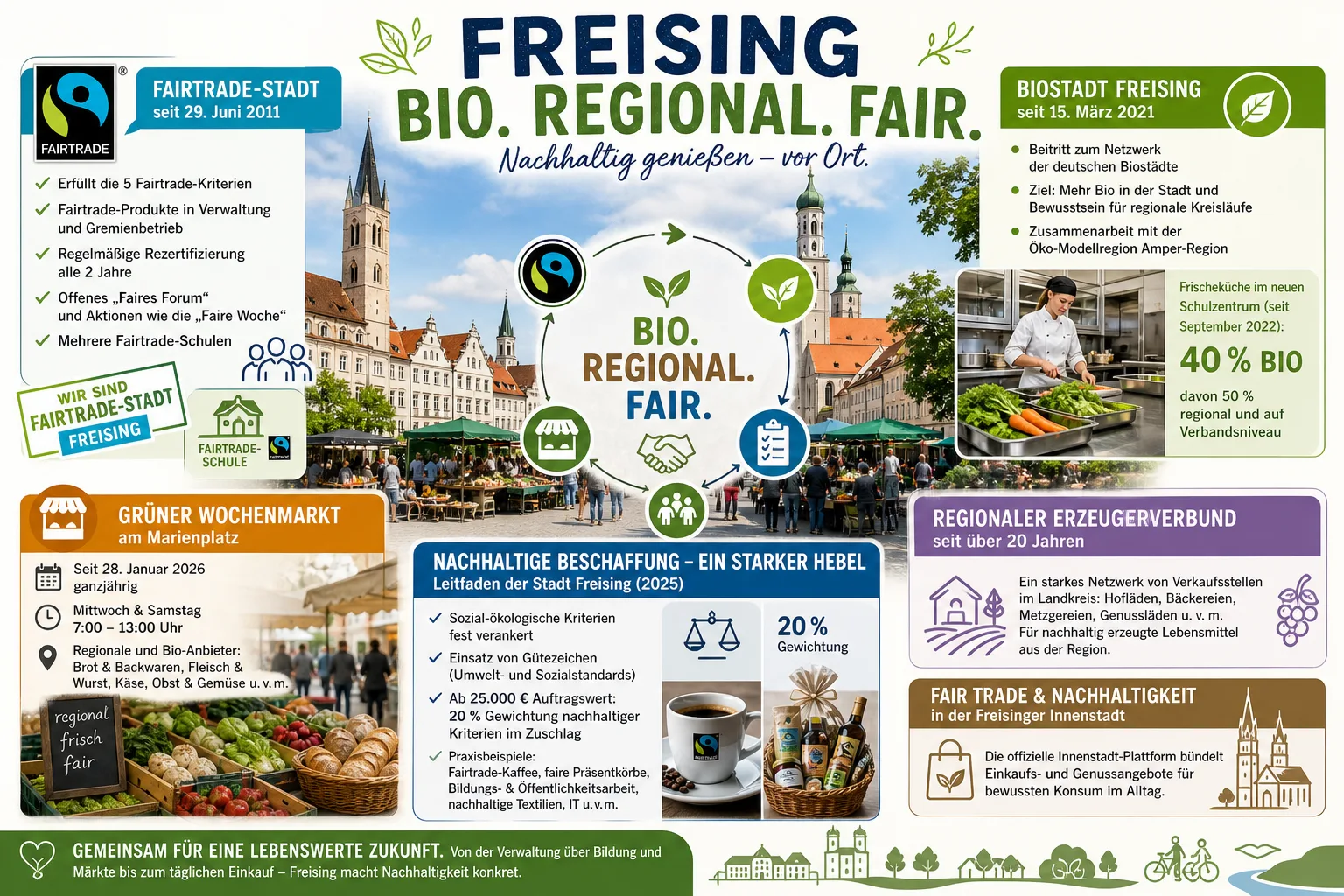
If you are visiting Freising in the near future or want to make your everyday life more conscious, you can easily combine enjoyment and sustainability: shop regionally, find organic offers, recognize fairly traded products – and transparently check which initiatives and seals are actually active locally at the moment.
Why sustainable enjoyment in Freising will be easy to plan in the future
Sustainable enjoyment is most practical when everyday decisions are made quickly: short distances, clear labeling, reliable information, and recurring shopping opportunities. For your next visits to the old town, around Marienplatz, or in the districts, you can orient yourself by three questions:
- Regional: Is the origin transparently named (farm, region, processing)?
- Organic: Are there recognized organic seals (EU organic logo, organic associations) and traceable information?
- Fair: Are Fairtrade or comparable standards indicated (e.g., for coffee, cocoa, tea, sugar)?
So that you don't have to "believe" anything, but can decide reliably, the best starting point is always: official registers, municipal event announcements, and seal databases (links in the sources at the end).
Enjoy fair: How to check and use Fairtrade offers on your next city stroll
If you want to consume fairly in the coming weeks, a two-step approach is worthwhile:
- Check status: Check in advance in the official Fairtrade Towns Register whether Freising is currently listed as a Fairtrade Town and what criteria are behind it (e.g., use of fair products in administration, campaigns, educational work).
- Find on site: When visiting a café or shopping, look for Fairtrade labels (e.g., for coffee, tea, cocoa) and ask specifically: “What seal is this?” or “Which products are fair certified?”
Practical for your next visit: Plan one or two stops (café or shop) where you specifically choose a fair product – and make it a point to actively ask about the origin/standard. This way, “fair” becomes verifiable instead of just a marketing word.
Organic & regional: How to reliably recognize offers in the near future (without guessing)
For your next purchases or restaurant visits, the rule is: “Organic” is only truly reliable if there are recognized standards. Guidance is provided by:
- EU organic logo (legally regulated minimum standard in the EU)
- Organic association labels (e.g., Bioland, Naturland, Demeter – often stricter additional requirements)
- Transparent origin (region, farm, processing; ideally clearly signposted)
If you specifically want to look for municipal organic initiatives, you can look up Freising in the network of German organic cities (if listed). For your everyday life, the immediate benefit is: You will often find information there on topics such as communal catering, regional value creation, or public relations – and can use this information as a “compass” for your next decisions.
Your next market visit: shop regionally without long research
If the Green Weekly Market in Freising continues to take place regularly as announced (it is often communicated for Wednesdays and Saturdays), it can be the fastest way to regional food for your next visit. Since market days and stall occupancy can change, the most reliable for your planning is:
- Check the current notices from the city the day before (e.g., city website/event calendar).
- Plan early (better selection) or shortly before closing (sometimes good leftovers) – depending on what is important to you.
- Ask three standard questions at the stall: Origin, cultivation/processing, seasonality. This way you get clarity in just a few minutes.
If you want to make your shopping especially sustainable, next time bring: cloth bags, bread bags, container/box for delicacies, and a small cooler bag. This way you can shop more spontaneously and avoid single-use packaging.
If you attend municipal events in the future: How to recognize sustainable procurement
At receptions, meetings, cultural or educational formats that you might attend in the coming months, you will sometimes come across notes such as “fair”, “organic” or “regional” at the catering. For you as a guest, it is crucial whether such statements are traceable.
How to recognize reputable sustainable procurement:
- Concrete criteria instead of generalities (e.g., “Fairtrade certified”, “EU organic”, “regional from ...”).
- Evidence (seals, suppliers, product lists or public procurement guidelines).
- Transparency on how sustainability is considered in tenders (e.g., based on guidelines/strategies).
If you want to go deeper, official introductions to sustainable/“green” public procurement offer a good foundation (see sources below). This will help you better assess statements at events in the future.
Concrete mini-plan for your next Freising day (organic, regional, fair)
This is how you can easily structure your next day in Freising – without sustainability becoming an “extra task”:
- Morning: Choose a breakfast/drink where you consciously order a fair product (e.g., Fairtrade coffee) and ask about the seal.
- Forenoon: Market or city center shopping: focus on seasonal + regional (vegetables/fruit, bread, cheese). Actively ask about the origin.
- Lunch: Choose a dish that visibly meets at least one of the criteria: organic (EU organic/association organic) or regional (clearly named) or fair (for typical import products).
- Afternoon: Souvenir alternative: durable regional products (e.g., honey, spreads, baked goods) – with clear origin.
This process is deliberately designed so that you make one verifiable sustainability decision at each station – realistic, suitable for everyday life, and still effective.
Good to know: How to avoid greenwashing on your next shopping trip
- “Regional” is not automatically defined: Ask about the specific region/distance.
- “Sustainable” without a standard is too vague: Ask for seals or traceable criteria.
- “Near-organic” or “from controlled cultivation” is not the same as certified organic: Look for official labels.
- Fair is especially relevant for imported products (cocoa, coffee, tea): Here, independent certifications are often the quickest check.