Experience Animals Live: Farms & Petting Zoos Freising
Experience Animals Live: Farms & Petting Zoos near Freising (Planning for 2026/2027)
This guide helps you plan future farm and animal experiences around Freising: interactive farms, educational programs, holiday activities, alpaca walks – plus a hygiene and animal welfare checklist for families and groups.
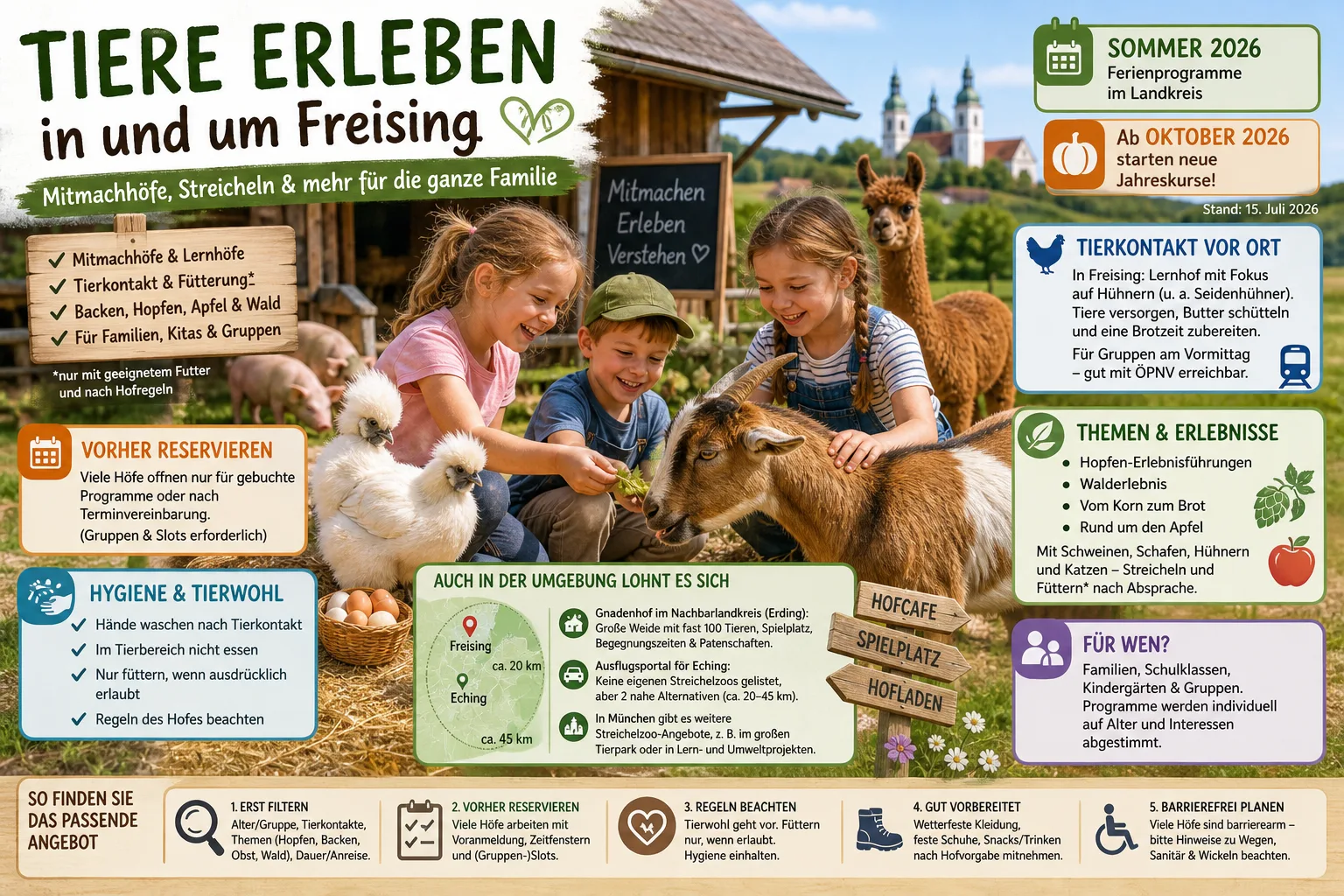
Educational Farm in Freising: Chickens, Butter & Snack Time
For future morning excursions in Freising itself, educational programs with a focus on chickens are particularly suitable if you want to teach not only “petting” but also responsible interaction with animals. Such programs often revolve around questions like: What does species-appropriate husbandry mean? How does feeding work? Why are rest periods and retreat spaces important?
If you are planning a visit, depending on the provider and age group, the program may include points such as:
- Caring for animals (guided): Feeding, checking water, refilling bedding – with a focus on animal welfare and safety.
- Shaking butter: Cream is turned into butter by shaking; ideal as a hands-on station for children’s groups.
- Shared snack time: Tasting in a designated area (not in the barn), combined with a handwashing routine.
If you are out with kindergarten or primary school children, be sure to plan extra time for the journey (walking, toilets, changing into barn clothes). If arriving by public transport, it is also advisable to check the route from the station to the farm in advance (walking time, shade, stroller suitability).
Petting, Feeding, Participating: Offers & Booking
For planned animal experiences around Freising, it is often the case that many farms operate by advance booking and time slots instead of continuous opening hours. This may be unfamiliar for visitors, but in practice it often leads to better conditions – less stress for animals, smaller groups, and more time for questions.
You can typically expect the following booking rules for future visits:
- Entry only as part of booked programs or by appointment.
- Feeding only with farm-provided or approved feed (brought snacks are often not allowed).
- Clear group requirements: minimum/maximum sizes, age specifications, accompanying persons, duration.
- Weather and safety rules: e.g. sturdy shoes, rainwear, possible cancellation in case of severe weather.
If you want to choose between an “educational project day” and a “leisure visit”, these questions can help you decide:
- Are you looking for a lot of animal contact or more for agriculture & nature knowledge?
- Do you want free time (play, picnic) or a guided tour?
- Do you need to consider allergies, fear of animals, or mobility restrictions?
Seasonal Holiday Programs and Annual Courses (Summer/Autumn 2026)
For the summer holidays 2026 and autumn 2026, the region is expected to offer more holiday formats again – from half-day programs to course series. If you want to plan specifically for the next holidays, it is worthwhile to compare programs early and ask directly about age groups, group sizes, and supervision scope.
Common course formats you may encounter when searching for future dates around Freising:
- Farm morning for children: barn tour, guided feeding, nature play, shared snack time.
- Harvest and garden modules: e.g. harvesting vegetables, processing herbs, getting to know seasonal products.
- Forest and nature days: tracking, habitats, insect and soil science, playful learning.
- Annual courses (often starting in autumn): recurring dates where children accompany the same farm for months and experience the annual cycle.
For families, course series are particularly practical because children develop routines: rules for interacting with animals, hand hygiene, respectful behavior in the barn, and a realistic picture of how much work animal husbandry involves.
Freising Surroundings: Animal Sanctuaries, Alpaca Tours & Alternatives
If you plan for a wider radius for upcoming weekends, the options expand significantly: In addition to classic animal experience offers, animal sanctuaries are also a good choice if you value encounters, respect, and animal welfare. Such visits are often calmer and focus on observation, distance, and guided encounter times.
Llama and alpaca walks are also popular for planned outings. Usually: small groups, clear procedures, and an introduction to behavior, leash handling, stress signals, and breaks. If you want to book such a tour, pay special attention to provider notes about children (minimum age), bringing dogs, route length, and weather rules.
For a day trip, you can also consider animal parks or environmental stations in the wider area. Before booking, two checks are especially helpful: ticket/slot system (if available) and rules on feeding & animal contact, which can vary greatly depending on the facility.
Plan Safely: Animal Welfare, Hygiene & Practical Tips
To ensure that future animal visits remain pleasant for everyone, hygiene and animal-appropriate behavior are crucial. Expert agencies point out that animals can transmit germs and consistent handwashing is a key protection – especially before eating and after contact with barn areas.
Rules you should firmly plan for your next visit
- Only use permitted feed: Brought bread, sweets, or fruit can harm animals or break rules.
- Wash or disinfect hands (if washing facilities are not directly available): after animal contact, after the barn, before every snack.
- Do not eat in the barn: Have snacks in designated areas instead.
- Do not harass animals: Respect retreat opportunities, do not chase, do not pick up, no flash photos.
- Closed shoes & appropriate clothing: Protection against foot injuries, mud, ticks; depending on the weather, sun or rain protection.
Planning checklist for families, schools, and groups
- Clarify target group: toddlers, kindergarten, primary school, or older children – duration, content, and safety rules depend on this.
- Check conditions: toilets, changing facilities, shaded areas, seating, drinking water.
- Ask about accessibility: paths, steps, barn access, quiet areas.
- Arrival & time slots: parking/public transport, buffer for changing, handwashing, toilet breaks.
- Consider health: allergies, asthma, fear of animals; if necessary, plan an alternative program without barn contact.
If you coordinate these points with the provider in advance, the chances of a relaxed, safe, and truly educational animal day increase – whether as a family outing, school project day, or holiday program.