From Memento Mori to Death Positive: Encountering Death and Understanding Life More Consciously
Date and Time
Location
Price
About this Event
Mood
Venue Type
From Memento Mori to Death Positive: Encountering Death, Understanding Life
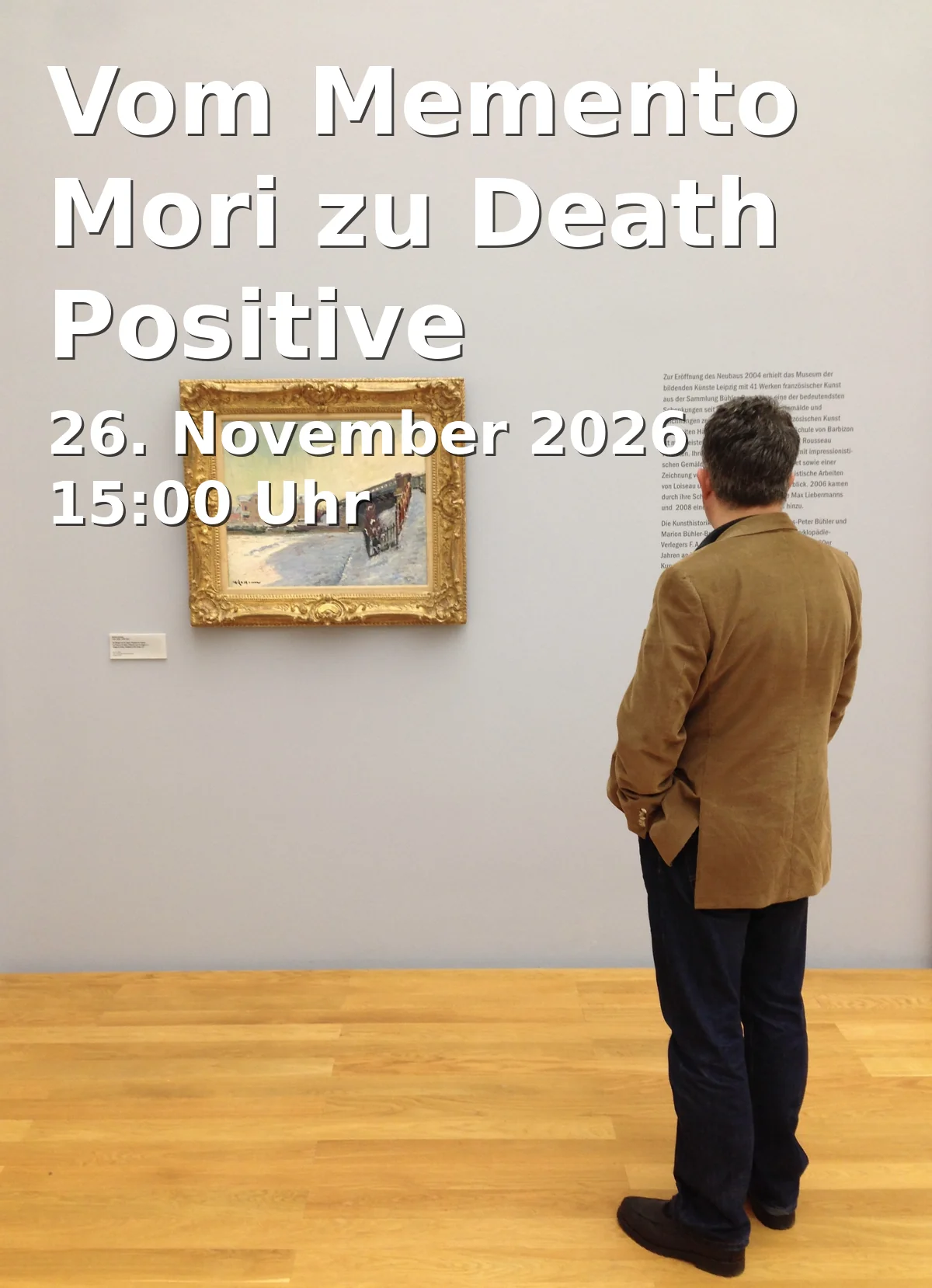
This special educational format opens a space for a mindful engagement with transience, situated between art, theology, and personal reflection. In the Diocese Museum Freising, the quiet atmosphere of historical artworks combines with an open conversation about mortality, hope, and the conscious joy of life.
Vanitas and Memento Mori in Art
In the first part, participants discover traditional Vanitas and Memento Mori motifs in the exhibition. Art educator and museum chaplain Stephan Kaupe accompanies the interactive-dialogical encounter and shows how references to death and transience become visible in religious images and cultural testimonies. This examination opens a pathway to Christian spirituality, faith practice, and the question of how people have dealt with their finitude across different times.
Death Positive: New Perspectives on Finitude
The subsequent impulse and reflection session introduces the modern Death-Positive movement. It does not perceive death solely as a threat, but as a part of life that can be discussed openly. Formats of dialogue at the coffin, digital applications for remembering the limited lifespan, and new forms of personal provision exemplify a societal change in the way we deal with dying and death.
Faith, Hope, and Joy of Life
The focus is on the comparison between the classical Christian memory of mortality and today's ideological approaches. The Christian tradition connects the awareness of transience with the hope for life after death. This gives rise to an exciting theological dialogue: How does the relationship to one's own finitude change when the perspective of an afterlife is added or consciously omitted?
An Experience of Faith between Museum and Conversation
The event invites a religious experience that goes beyond pure knowledge transfer. Calmness, reflection, and shared contemplation create a spiritual community in which personal questions find their place. The format is suitable for anyone interested in theology, religious art, spirituality, or a more conscious approach to life.
Participation is limited to a maximum of 14 people. The course fee includes admission to the Diocese Museum Freising.
Conclusion
The event opens a respectful and at the same time modern approach to a often suppressed topic. Visitors can expect a blend of art observation, theological reflection, and social dialogue. Those who wish to understand transience not only as an end but also as an invitation to greater awareness and joy of life can experience an inspiring afternoon at the Diocese Museum Freising.