
Freising
Saarstraße 2, 85354 Freising, Deutschland
Christ Ascension Church Freising | Services & Photos
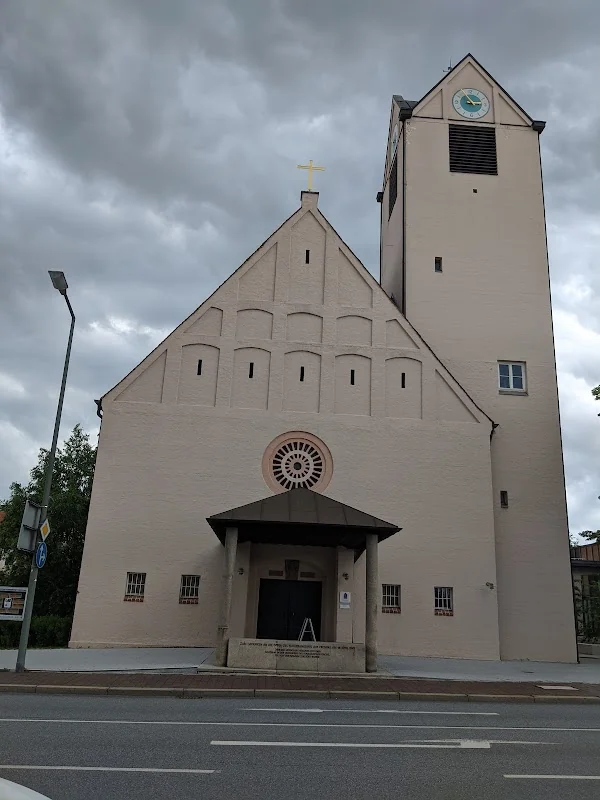
The Christ Ascension Church in Freising is more than just a Protestant house of worship in a central location. It is located at Saarstraße 2 on the southern edge of the historic town center, just a few steps from the train station, and together with the modern community center forms a vibrant ensemble of church, parish office, deanery, and community rooms. Those looking for a church that combines historical depth, clear architecture, and an active community life will find a place here with a distinctive atmosphere. The official community describes the house of worship as bright, open, and inviting, and this impression shapes the first visit: plenty of light, clear lines, a calm spatial effect, and an altar area that has acquired an independent artistic language through the renovation of 2014. The church is thus not only a place for services but also a destination for people seeking photos, interested in architecture, or wanting to get to know community life in Freising. ([freising-evangelisch.de](https://freising-evangelisch.de/ueber-uns/christi-himmelfahrts-kirche/))
Services, Devotions, and Church Program in Freising
The most important search impulse around the Christ Ascension Church is the ongoing community life. The official service overview lists the church in the city center as a fixed Sunday location with a service at 9:30 AM. Additionally, there is the weekly devotion Silence Before God on Wednesdays at 6:30 PM, the Peace Prayer on the first Monday of the month, and the service in a different way, which takes place four times a year on Fridays at 6 PM. This is particularly helpful for visitors because the church plays a visible role not only on major holidays but also in the everyday life of the community. The page on current services explicitly names the church as the church at the train station and invites people to come there to find peace and experience silence. This character makes it interesting for many people who are not looking for a pure sightseeing object in Freising but for an open spiritual place. There are also suitable formats for families: The children's service takes place monthly in the large hall of the community center or in the Christ Ascension Church, and Church Colorful is celebrated several times a year in the Christ Ascension community center, aimed at families across generations. Thus, the location at Saarstraße 2 is not only a Sunday service location but a center for different forms of church. ([freising-evangelisch.de](https://freising-evangelisch.de/gottesdienst/gottesdienst-ueberblick/))
Particularly noteworthy is how naturally the church is integrated into current community life. The official page lists recurring services, devotions, and special formats that structure the year and appeal to a broad target audience: people seeking peace, families with children, community members interested in liturgical experiments, and visitors who consciously want to experience the calm weekly rhythm in a city center location. The Christ Ascension Church thus functions on two levels: on one hand, it is a clearly located house of worship with fixed times and contacts, and on the other hand, it is an open meeting place understood by the community as a reliable place for faith, encounter, and orientation. The fact that the location is directly at the train station further enhances this role, as it makes spontaneous visits and the way to devotions or services particularly accessible. Therefore, anyone looking for programs, service times, or a church offering in Freising will find not only appointments here but also a very lively church center in the everyday life of the city. ([freising-evangelisch.de](https://freising-evangelisch.de/gottesdienst/gottesdienst-ueberblick/))
History of the Christ Ascension Church since 1864
The history of the Christ Ascension Church goes back much further than the current building. On the official history page of the community, the chronicle begins in 1864 with the consecration of the first Protestant or Evangelical church in Freising. Even then, the place was a sign of Protestant presence in a city whose religious and urban history is strongly shaped by other traditions. The page mentions a neo-Gothic architectural style for this early building, two bells, and an organ that was donated from Oberallershausen. In the following decades, the community was further shaped: in 1922, three new bells were consecrated, and in 1937, a new double prospect organ was added. Then came the dramatic break of World War II. On April 18, 1945, the church was completely destroyed by a bombing raid on the train station area. The fact that the current location is so closely associated with the proximity to the train station adds an additional layer to this history. The church is thus not only spatially located at the train station but is historically linked to the train station environment and the upheavals of the city's history. ([freising-evangelisch.de](https://freising-evangelisch.de/ueber-uns/christi-himmelfahrts-kirche/geschichte/))
The reconstruction took place in the early 1950s. On May 22, 1952, the newly constructed church was consecrated and received the name Christ Ascension Church. The page notes that the tower was only laid in the foundation at that time. The architects were government master builder J. Ott from Günzburg and Friedrich Zeitler, and an altar painting from the 16th century by Jörg Breu was loaned to the church by the regional church. In 1953, the installation of a new slider organ with two manuals and pedal by organ builder Paul Ott followed, as well as the addition of the Our Father bell to the bells. In 1998, the church became a deanery church, in 2002 it received a 26-meter-high tower from architect Franz Lichtblau from Munich, and in 2014 it was consecrated again after extensive interior renovation and redesign of the altar area. The official history page thus makes it clear that the church is not to be read as a static monument but as a grown community image with several layers: foundation, destruction, reconstruction, expansion, and artistic renewal. This development explains why the Christ Ascension Church today is both historically, functionally, and aesthetically interesting. ([freising-evangelisch.de](https://freising-evangelisch.de/ueber-uns/christi-himmelfahrts-kirche/geschichte/))
Directions to Saarstraße 2 and Parking near the Train Station
For finding the Christ Ascension Church, directions and parking play an important role because the location is in the middle of Freising and at the same time in close proximity to the train station. The official church description clearly states that the house of worship is located on the southern edge of the historic town center and near the train station. This makes the church easily accessible both by public transport and on foot from the city center. Those arriving by train benefit from the short distance between the train station and the church ensemble. Those coming on foot from the center move through a part of the city that is well developed and designed for short distances. The city of Freising also points out that there are about 3,500 public parking spaces available in the city center. For the immediate train station area, it mentions the P+R lot at the train station with 700 parking spaces. This is particularly relevant for visitors to the church because the location at Saarstraße 2 lies in this central area. Additionally, the city refers to other parking garages and large parking lots, including various facilities near the city center and train station. In practice, this means: The Christ Ascension Church is not on the outskirts with difficult accessibility but a centrally connected place where arrival, short visits, and longer stays can be well planned. ([freising-evangelisch.de](https://freising-evangelisch.de/ueber-uns/christi-himmelfahrts-kirche/))
Especially during events, services, or meetings in the community center, this location is a real advantage. The city of Freising provides a parking guide that lists all parking options in the city and is also available online. This makes it significantly easier for people coming from outside or who have little time to arrive. For the Christ Ascension Church itself, the community does not mention a dedicated parking lot, but the combination of proximity to the train station, city center location, and the large number of public parking spaces in the vicinity makes the location practically very attractive. Those arriving by car can orient themselves to the city parking garages and P+R offers; those traveling without a car can reach the church particularly conveniently via the train station. For visitors wondering whether the church is more of a remote sacred building or a well-integrated city destination, the answer is clear: it is centrally located, visible, and conveniently accessible. This is important not only for services but also for visits as part of a city walk, for family programs, for community events, and for people seeking photos or information about the church. ([freising.de](https://www.freising.de/leben-wohnen/mobilitaet-verkehrswende/parkplatzangebot))
Photos, Tour, and the Artistically Designed Altar Area
Those looking for photos of the Christ Ascension Church will find a detailed tour with interior views and close-ups on the official website. Particularly valuable is that the images not only show the exterior view but also explain the character of the interior. The tour describes bright limestone slabs on the floor, refurbished wooden church benches arranged in 1952, and additional chairs. The baptismal font made of shell limestone stands in the center of the community in front of the slightly elevated altar area. The simple cross in the archway to the altar area and the altar cross take up the same design language. For photos and visual impressions, the central installation Transformation, designed by Werner Mally, is also important. The curved, colored stripes consist of seat shells from used wooden chairs and connect art, memory, and liturgy into a distinctive image. The official community describes this work as formative for the space, and this gives the church a very own visual language that can be particularly well recognized in photos. ([freising-evangelisch.de](https://freising-evangelisch.de/ueber-uns/christi-himmelfahrts-kirche/rundgang/))
The tour also makes it clear that the interior is not only aesthetically pleasing but also functionally well thought out. The wood for the altar, pulpit, and lectern comes from an almost 200-year-old oak; the pulpit and altar are cut from a single piece of the trunk. This connects the church with a natural material and a clear liturgical function. Next to the pulpit are rods in the liturgical colors of the church year, to the left of it is the Easter candle, and at the front, the installation Transformation draws attention. On the gallery stands the large pipe work of the organ, while the round church window above the entrance portal serves as a recognition sign for the community. There is even a small room for devotion and meditation described, as well as the writing room with concerns and information. For keyword searches around photos, this is a great advantage because the official tour provides many illustrative motifs: gallery, organ, rose window, altar area, baptismal font, meditation corner, and the artistic design from 2014. The church is thus not only a space for services but also a photogenic example of a successful interplay of architecture, art, and community life. ([freising-evangelisch.de](https://freising-evangelisch.de/ueber-uns/christi-himmelfahrts-kirche/rundgang/))
Community Center, Rooms, and Events at Saarstraße 2
The Christ Ascension Church includes not only the church building itself but an entire location with a community center, parish office, deanery, and rooms for community work. The official community describes the Evangelical Community Center Christ Ascension as a modern new building that was constructed after severe flood damage and consecrated in December 2018. It houses the parish office, the deanery, rooms for community work, and a dedicated youth area. This is central to understanding the location because the church should not be seen as a standalone building but as part of a functioning church campus. The rooms at Saarstraße 2 are usable for various forms of community life. The community even points out that its rooms and gardens are also available for rentals. Additionally, services and baptisms can be celebrated outdoors in the large garden at the back. For people looking for an event location with a church character, this is particularly interesting because the place offers not only indoor spaces but also a protected outdoor area with real utility. ([freising-evangelisch.de](https://freising-evangelisch.de/ueber-uns/gemeinde-zentren/))
The current program also shows that the community center is closely intertwined with the life of the community. Church Colorful takes place several times a year in the Christ Ascension community center, children's services are celebrated monthly in the large hall of the community center or in the church, and other meetings for adults use different rooms of the location. The official pages also mention the address Martin-Luther-Straße 10 or the access Saarstraße 2. The proximity of the church, community center, and train station makes it uncomplicated for groups, families, children, and older community members to use. So, anyone searching for the term Christ Ascension community center does not mean just any side room but a modern, well-equipped center with clear functions. For Freising, this ensemble is a church center of urban relevance: it bundles administration, pastoral care, education, youth offerings, and services in close proximity to the church. This concentration of functions also explains why the location is often searched together with community life, the program, or the address. ([freising-evangelisch.de](https://freising-evangelisch.de/ueber-uns/gemeinde-zentren/))
Architecture, Furnishings, and Special Details of the Church Space
The architectural impact of the Christ Ascension Church is an essential part of its identity. The official church description emphasizes the bright, open, and inviting character of the space. The interior renovation of 2014, the liturgical reorganization, and the art concept by Werner Mally did not simply modernize the space but gave it a clear theological and artistic center. The Bavarian Chamber of Architects classifies the project as renovation and monument protection and notes the completion of the renovation in October 2014. The interplay of seating, gallery, altar area, and installation is visible as a formative architectural theme there. For search queries regarding altar area, architecture, or Werner Mally, it is particularly important that the church was not only renovated but rethought in its liturgical structure. The altar stands centrally in the altar area, the historical baptismal font is placed in front of it, and the artistic work at the front connects the name of the church with an abstract design language developed from used chair seats. This creates a church space that is both familiar and surprising. ([freising-evangelisch.de](https://freising-evangelisch.de/ueber-uns/christi-himmelfahrts-kirche/transformation/))
The furnishings themselves also tell of care and continuity. The limestone slabs on the floor, the refurbished church benches in their original arrangement from 1952, and the large pipe work of the organ on the gallery form a clearly readable space. The round window above the entrance portal acts as a design sign and is used by the community itself as a recognition sign on letters and publications. The small devotion and meditation room at the entrance door is another detail that facilitates the use of the building in everyday life: it provides space for silent prayer, retreat, and a safe space for families with children during the service. This mix of sacred dignity and practical openness is likely one of the reasons why the church is perceived as bright, inviting, and special. Those taking photos or documenting on-site will find many motifs with a clear reference to community identity: altar cross, baptismal font, rose window, gallery, organ, art installation, and the interplay between light and material. This is where the uniqueness of this location lies. It is not only historically interesting but also currently designed in such a way that it convincingly connects faith, community, and visual impact. ([freising-evangelisch.de](https://freising-evangelisch.de/ueber-uns/christi-himmelfahrts-kirche/rundgang/))
Practically important for a visit are also the contact and office hours of the parish office. The community names the parish office at Martin-Luther-Straße 10 with access via Saarstraße 2, open on Tuesdays from 9:30 AM to 12:30 PM and Thursdays from 3:00 PM to 6:00 PM. Outside of office hours, contact can be made via email, and in urgent pastoral matters, the responsible person can be reached via the answering machine. This information is particularly useful if someone wants to contact the church not only for a visit but also for baptism, wedding, confirmation, pastoral care, or a community inquiry. This closes the circle between architecture, program, and organizational reality: the Christ Ascension Church is an aesthetically strong building but at the same time an actively used place with clear points of contact and regular operation. Therefore, anyone wanting to understand the location in Freising today should always read it as a combination of church, community center, event venue, and spiritual focal point. This added value makes it relevant for seekers, visitors, and community members alike. ([freising-evangelisch.de](https://freising-evangelisch.de/ueber-uns/gemeinde-zentren/))
Sources:
- Christ Ascension Church – Official Community Page
- Christ Ascension Church – History
- Service Overview – Evangelical Lutheran Congregation Freising
- Current Services – Evangelical Lutheran Congregation Freising
- Community Centers – Evangelical Lutheran Congregation Freising
- Tour – Christ Ascension Church
- Bavarian Chamber of Architects – Evangelical Lutheran Church Christ Ascension Freising
- City of Freising – Parking Offer
Mehr anzeigenWeniger anzeigen
Christ Ascension Church Freising | Services & Photos
The Christ Ascension Church in Freising is more than just a Protestant house of worship in a central location. It is located at Saarstraße 2 on the southern edge of the historic town center, just a few steps from the train station, and together with the modern community center forms a vibrant ensemble of church, parish office, deanery, and community rooms. Those looking for a church that combines historical depth, clear architecture, and an active community life will find a place here with a distinctive atmosphere. The official community describes the house of worship as bright, open, and inviting, and this impression shapes the first visit: plenty of light, clear lines, a calm spatial effect, and an altar area that has acquired an independent artistic language through the renovation of 2014. The church is thus not only a place for services but also a destination for people seeking photos, interested in architecture, or wanting to get to know community life in Freising. ([freising-evangelisch.de](https://freising-evangelisch.de/ueber-uns/christi-himmelfahrts-kirche/))
Services, Devotions, and Church Program in Freising
The most important search impulse around the Christ Ascension Church is the ongoing community life. The official service overview lists the church in the city center as a fixed Sunday location with a service at 9:30 AM. Additionally, there is the weekly devotion Silence Before God on Wednesdays at 6:30 PM, the Peace Prayer on the first Monday of the month, and the service in a different way, which takes place four times a year on Fridays at 6 PM. This is particularly helpful for visitors because the church plays a visible role not only on major holidays but also in the everyday life of the community. The page on current services explicitly names the church as the church at the train station and invites people to come there to find peace and experience silence. This character makes it interesting for many people who are not looking for a pure sightseeing object in Freising but for an open spiritual place. There are also suitable formats for families: The children's service takes place monthly in the large hall of the community center or in the Christ Ascension Church, and Church Colorful is celebrated several times a year in the Christ Ascension community center, aimed at families across generations. Thus, the location at Saarstraße 2 is not only a Sunday service location but a center for different forms of church. ([freising-evangelisch.de](https://freising-evangelisch.de/gottesdienst/gottesdienst-ueberblick/))
Particularly noteworthy is how naturally the church is integrated into current community life. The official page lists recurring services, devotions, and special formats that structure the year and appeal to a broad target audience: people seeking peace, families with children, community members interested in liturgical experiments, and visitors who consciously want to experience the calm weekly rhythm in a city center location. The Christ Ascension Church thus functions on two levels: on one hand, it is a clearly located house of worship with fixed times and contacts, and on the other hand, it is an open meeting place understood by the community as a reliable place for faith, encounter, and orientation. The fact that the location is directly at the train station further enhances this role, as it makes spontaneous visits and the way to devotions or services particularly accessible. Therefore, anyone looking for programs, service times, or a church offering in Freising will find not only appointments here but also a very lively church center in the everyday life of the city. ([freising-evangelisch.de](https://freising-evangelisch.de/gottesdienst/gottesdienst-ueberblick/))
History of the Christ Ascension Church since 1864
The history of the Christ Ascension Church goes back much further than the current building. On the official history page of the community, the chronicle begins in 1864 with the consecration of the first Protestant or Evangelical church in Freising. Even then, the place was a sign of Protestant presence in a city whose religious and urban history is strongly shaped by other traditions. The page mentions a neo-Gothic architectural style for this early building, two bells, and an organ that was donated from Oberallershausen. In the following decades, the community was further shaped: in 1922, three new bells were consecrated, and in 1937, a new double prospect organ was added. Then came the dramatic break of World War II. On April 18, 1945, the church was completely destroyed by a bombing raid on the train station area. The fact that the current location is so closely associated with the proximity to the train station adds an additional layer to this history. The church is thus not only spatially located at the train station but is historically linked to the train station environment and the upheavals of the city's history. ([freising-evangelisch.de](https://freising-evangelisch.de/ueber-uns/christi-himmelfahrts-kirche/geschichte/))
The reconstruction took place in the early 1950s. On May 22, 1952, the newly constructed church was consecrated and received the name Christ Ascension Church. The page notes that the tower was only laid in the foundation at that time. The architects were government master builder J. Ott from Günzburg and Friedrich Zeitler, and an altar painting from the 16th century by Jörg Breu was loaned to the church by the regional church. In 1953, the installation of a new slider organ with two manuals and pedal by organ builder Paul Ott followed, as well as the addition of the Our Father bell to the bells. In 1998, the church became a deanery church, in 2002 it received a 26-meter-high tower from architect Franz Lichtblau from Munich, and in 2014 it was consecrated again after extensive interior renovation and redesign of the altar area. The official history page thus makes it clear that the church is not to be read as a static monument but as a grown community image with several layers: foundation, destruction, reconstruction, expansion, and artistic renewal. This development explains why the Christ Ascension Church today is both historically, functionally, and aesthetically interesting. ([freising-evangelisch.de](https://freising-evangelisch.de/ueber-uns/christi-himmelfahrts-kirche/geschichte/))
Directions to Saarstraße 2 and Parking near the Train Station
For finding the Christ Ascension Church, directions and parking play an important role because the location is in the middle of Freising and at the same time in close proximity to the train station. The official church description clearly states that the house of worship is located on the southern edge of the historic town center and near the train station. This makes the church easily accessible both by public transport and on foot from the city center. Those arriving by train benefit from the short distance between the train station and the church ensemble. Those coming on foot from the center move through a part of the city that is well developed and designed for short distances. The city of Freising also points out that there are about 3,500 public parking spaces available in the city center. For the immediate train station area, it mentions the P+R lot at the train station with 700 parking spaces. This is particularly relevant for visitors to the church because the location at Saarstraße 2 lies in this central area. Additionally, the city refers to other parking garages and large parking lots, including various facilities near the city center and train station. In practice, this means: The Christ Ascension Church is not on the outskirts with difficult accessibility but a centrally connected place where arrival, short visits, and longer stays can be well planned. ([freising-evangelisch.de](https://freising-evangelisch.de/ueber-uns/christi-himmelfahrts-kirche/))
Especially during events, services, or meetings in the community center, this location is a real advantage. The city of Freising provides a parking guide that lists all parking options in the city and is also available online. This makes it significantly easier for people coming from outside or who have little time to arrive. For the Christ Ascension Church itself, the community does not mention a dedicated parking lot, but the combination of proximity to the train station, city center location, and the large number of public parking spaces in the vicinity makes the location practically very attractive. Those arriving by car can orient themselves to the city parking garages and P+R offers; those traveling without a car can reach the church particularly conveniently via the train station. For visitors wondering whether the church is more of a remote sacred building or a well-integrated city destination, the answer is clear: it is centrally located, visible, and conveniently accessible. This is important not only for services but also for visits as part of a city walk, for family programs, for community events, and for people seeking photos or information about the church. ([freising.de](https://www.freising.de/leben-wohnen/mobilitaet-verkehrswende/parkplatzangebot))
Photos, Tour, and the Artistically Designed Altar Area
Those looking for photos of the Christ Ascension Church will find a detailed tour with interior views and close-ups on the official website. Particularly valuable is that the images not only show the exterior view but also explain the character of the interior. The tour describes bright limestone slabs on the floor, refurbished wooden church benches arranged in 1952, and additional chairs. The baptismal font made of shell limestone stands in the center of the community in front of the slightly elevated altar area. The simple cross in the archway to the altar area and the altar cross take up the same design language. For photos and visual impressions, the central installation Transformation, designed by Werner Mally, is also important. The curved, colored stripes consist of seat shells from used wooden chairs and connect art, memory, and liturgy into a distinctive image. The official community describes this work as formative for the space, and this gives the church a very own visual language that can be particularly well recognized in photos. ([freising-evangelisch.de](https://freising-evangelisch.de/ueber-uns/christi-himmelfahrts-kirche/rundgang/))
The tour also makes it clear that the interior is not only aesthetically pleasing but also functionally well thought out. The wood for the altar, pulpit, and lectern comes from an almost 200-year-old oak; the pulpit and altar are cut from a single piece of the trunk. This connects the church with a natural material and a clear liturgical function. Next to the pulpit are rods in the liturgical colors of the church year, to the left of it is the Easter candle, and at the front, the installation Transformation draws attention. On the gallery stands the large pipe work of the organ, while the round church window above the entrance portal serves as a recognition sign for the community. There is even a small room for devotion and meditation described, as well as the writing room with concerns and information. For keyword searches around photos, this is a great advantage because the official tour provides many illustrative motifs: gallery, organ, rose window, altar area, baptismal font, meditation corner, and the artistic design from 2014. The church is thus not only a space for services but also a photogenic example of a successful interplay of architecture, art, and community life. ([freising-evangelisch.de](https://freising-evangelisch.de/ueber-uns/christi-himmelfahrts-kirche/rundgang/))
Community Center, Rooms, and Events at Saarstraße 2
The Christ Ascension Church includes not only the church building itself but an entire location with a community center, parish office, deanery, and rooms for community work. The official community describes the Evangelical Community Center Christ Ascension as a modern new building that was constructed after severe flood damage and consecrated in December 2018. It houses the parish office, the deanery, rooms for community work, and a dedicated youth area. This is central to understanding the location because the church should not be seen as a standalone building but as part of a functioning church campus. The rooms at Saarstraße 2 are usable for various forms of community life. The community even points out that its rooms and gardens are also available for rentals. Additionally, services and baptisms can be celebrated outdoors in the large garden at the back. For people looking for an event location with a church character, this is particularly interesting because the place offers not only indoor spaces but also a protected outdoor area with real utility. ([freising-evangelisch.de](https://freising-evangelisch.de/ueber-uns/gemeinde-zentren/))
The current program also shows that the community center is closely intertwined with the life of the community. Church Colorful takes place several times a year in the Christ Ascension community center, children's services are celebrated monthly in the large hall of the community center or in the church, and other meetings for adults use different rooms of the location. The official pages also mention the address Martin-Luther-Straße 10 or the access Saarstraße 2. The proximity of the church, community center, and train station makes it uncomplicated for groups, families, children, and older community members to use. So, anyone searching for the term Christ Ascension community center does not mean just any side room but a modern, well-equipped center with clear functions. For Freising, this ensemble is a church center of urban relevance: it bundles administration, pastoral care, education, youth offerings, and services in close proximity to the church. This concentration of functions also explains why the location is often searched together with community life, the program, or the address. ([freising-evangelisch.de](https://freising-evangelisch.de/ueber-uns/gemeinde-zentren/))
Architecture, Furnishings, and Special Details of the Church Space
The architectural impact of the Christ Ascension Church is an essential part of its identity. The official church description emphasizes the bright, open, and inviting character of the space. The interior renovation of 2014, the liturgical reorganization, and the art concept by Werner Mally did not simply modernize the space but gave it a clear theological and artistic center. The Bavarian Chamber of Architects classifies the project as renovation and monument protection and notes the completion of the renovation in October 2014. The interplay of seating, gallery, altar area, and installation is visible as a formative architectural theme there. For search queries regarding altar area, architecture, or Werner Mally, it is particularly important that the church was not only renovated but rethought in its liturgical structure. The altar stands centrally in the altar area, the historical baptismal font is placed in front of it, and the artistic work at the front connects the name of the church with an abstract design language developed from used chair seats. This creates a church space that is both familiar and surprising. ([freising-evangelisch.de](https://freising-evangelisch.de/ueber-uns/christi-himmelfahrts-kirche/transformation/))
The furnishings themselves also tell of care and continuity. The limestone slabs on the floor, the refurbished church benches in their original arrangement from 1952, and the large pipe work of the organ on the gallery form a clearly readable space. The round window above the entrance portal acts as a design sign and is used by the community itself as a recognition sign on letters and publications. The small devotion and meditation room at the entrance door is another detail that facilitates the use of the building in everyday life: it provides space for silent prayer, retreat, and a safe space for families with children during the service. This mix of sacred dignity and practical openness is likely one of the reasons why the church is perceived as bright, inviting, and special. Those taking photos or documenting on-site will find many motifs with a clear reference to community identity: altar cross, baptismal font, rose window, gallery, organ, art installation, and the interplay between light and material. This is where the uniqueness of this location lies. It is not only historically interesting but also currently designed in such a way that it convincingly connects faith, community, and visual impact. ([freising-evangelisch.de](https://freising-evangelisch.de/ueber-uns/christi-himmelfahrts-kirche/rundgang/))
Practically important for a visit are also the contact and office hours of the parish office. The community names the parish office at Martin-Luther-Straße 10 with access via Saarstraße 2, open on Tuesdays from 9:30 AM to 12:30 PM and Thursdays from 3:00 PM to 6:00 PM. Outside of office hours, contact can be made via email, and in urgent pastoral matters, the responsible person can be reached via the answering machine. This information is particularly useful if someone wants to contact the church not only for a visit but also for baptism, wedding, confirmation, pastoral care, or a community inquiry. This closes the circle between architecture, program, and organizational reality: the Christ Ascension Church is an aesthetically strong building but at the same time an actively used place with clear points of contact and regular operation. Therefore, anyone wanting to understand the location in Freising today should always read it as a combination of church, community center, event venue, and spiritual focal point. This added value makes it relevant for seekers, visitors, and community members alike. ([freising-evangelisch.de](https://freising-evangelisch.de/ueber-uns/gemeinde-zentren/))
Sources:
- Christ Ascension Church – Official Community Page
- Christ Ascension Church – History
- Service Overview – Evangelical Lutheran Congregation Freising
- Current Services – Evangelical Lutheran Congregation Freising
- Community Centers – Evangelical Lutheran Congregation Freising
- Tour – Christ Ascension Church
- Bavarian Chamber of Architects – Evangelical Lutheran Church Christ Ascension Freising
- City of Freising – Parking Offer
Christ Ascension Church Freising | Services & Photos
The Christ Ascension Church in Freising is more than just a Protestant house of worship in a central location. It is located at Saarstraße 2 on the southern edge of the historic town center, just a few steps from the train station, and together with the modern community center forms a vibrant ensemble of church, parish office, deanery, and community rooms. Those looking for a church that combines historical depth, clear architecture, and an active community life will find a place here with a distinctive atmosphere. The official community describes the house of worship as bright, open, and inviting, and this impression shapes the first visit: plenty of light, clear lines, a calm spatial effect, and an altar area that has acquired an independent artistic language through the renovation of 2014. The church is thus not only a place for services but also a destination for people seeking photos, interested in architecture, or wanting to get to know community life in Freising. ([freising-evangelisch.de](https://freising-evangelisch.de/ueber-uns/christi-himmelfahrts-kirche/))
Services, Devotions, and Church Program in Freising
The most important search impulse around the Christ Ascension Church is the ongoing community life. The official service overview lists the church in the city center as a fixed Sunday location with a service at 9:30 AM. Additionally, there is the weekly devotion Silence Before God on Wednesdays at 6:30 PM, the Peace Prayer on the first Monday of the month, and the service in a different way, which takes place four times a year on Fridays at 6 PM. This is particularly helpful for visitors because the church plays a visible role not only on major holidays but also in the everyday life of the community. The page on current services explicitly names the church as the church at the train station and invites people to come there to find peace and experience silence. This character makes it interesting for many people who are not looking for a pure sightseeing object in Freising but for an open spiritual place. There are also suitable formats for families: The children's service takes place monthly in the large hall of the community center or in the Christ Ascension Church, and Church Colorful is celebrated several times a year in the Christ Ascension community center, aimed at families across generations. Thus, the location at Saarstraße 2 is not only a Sunday service location but a center for different forms of church. ([freising-evangelisch.de](https://freising-evangelisch.de/gottesdienst/gottesdienst-ueberblick/))
Particularly noteworthy is how naturally the church is integrated into current community life. The official page lists recurring services, devotions, and special formats that structure the year and appeal to a broad target audience: people seeking peace, families with children, community members interested in liturgical experiments, and visitors who consciously want to experience the calm weekly rhythm in a city center location. The Christ Ascension Church thus functions on two levels: on one hand, it is a clearly located house of worship with fixed times and contacts, and on the other hand, it is an open meeting place understood by the community as a reliable place for faith, encounter, and orientation. The fact that the location is directly at the train station further enhances this role, as it makes spontaneous visits and the way to devotions or services particularly accessible. Therefore, anyone looking for programs, service times, or a church offering in Freising will find not only appointments here but also a very lively church center in the everyday life of the city. ([freising-evangelisch.de](https://freising-evangelisch.de/gottesdienst/gottesdienst-ueberblick/))
History of the Christ Ascension Church since 1864
The history of the Christ Ascension Church goes back much further than the current building. On the official history page of the community, the chronicle begins in 1864 with the consecration of the first Protestant or Evangelical church in Freising. Even then, the place was a sign of Protestant presence in a city whose religious and urban history is strongly shaped by other traditions. The page mentions a neo-Gothic architectural style for this early building, two bells, and an organ that was donated from Oberallershausen. In the following decades, the community was further shaped: in 1922, three new bells were consecrated, and in 1937, a new double prospect organ was added. Then came the dramatic break of World War II. On April 18, 1945, the church was completely destroyed by a bombing raid on the train station area. The fact that the current location is so closely associated with the proximity to the train station adds an additional layer to this history. The church is thus not only spatially located at the train station but is historically linked to the train station environment and the upheavals of the city's history. ([freising-evangelisch.de](https://freising-evangelisch.de/ueber-uns/christi-himmelfahrts-kirche/geschichte/))
The reconstruction took place in the early 1950s. On May 22, 1952, the newly constructed church was consecrated and received the name Christ Ascension Church. The page notes that the tower was only laid in the foundation at that time. The architects were government master builder J. Ott from Günzburg and Friedrich Zeitler, and an altar painting from the 16th century by Jörg Breu was loaned to the church by the regional church. In 1953, the installation of a new slider organ with two manuals and pedal by organ builder Paul Ott followed, as well as the addition of the Our Father bell to the bells. In 1998, the church became a deanery church, in 2002 it received a 26-meter-high tower from architect Franz Lichtblau from Munich, and in 2014 it was consecrated again after extensive interior renovation and redesign of the altar area. The official history page thus makes it clear that the church is not to be read as a static monument but as a grown community image with several layers: foundation, destruction, reconstruction, expansion, and artistic renewal. This development explains why the Christ Ascension Church today is both historically, functionally, and aesthetically interesting. ([freising-evangelisch.de](https://freising-evangelisch.de/ueber-uns/christi-himmelfahrts-kirche/geschichte/))
Directions to Saarstraße 2 and Parking near the Train Station
For finding the Christ Ascension Church, directions and parking play an important role because the location is in the middle of Freising and at the same time in close proximity to the train station. The official church description clearly states that the house of worship is located on the southern edge of the historic town center and near the train station. This makes the church easily accessible both by public transport and on foot from the city center. Those arriving by train benefit from the short distance between the train station and the church ensemble. Those coming on foot from the center move through a part of the city that is well developed and designed for short distances. The city of Freising also points out that there are about 3,500 public parking spaces available in the city center. For the immediate train station area, it mentions the P+R lot at the train station with 700 parking spaces. This is particularly relevant for visitors to the church because the location at Saarstraße 2 lies in this central area. Additionally, the city refers to other parking garages and large parking lots, including various facilities near the city center and train station. In practice, this means: The Christ Ascension Church is not on the outskirts with difficult accessibility but a centrally connected place where arrival, short visits, and longer stays can be well planned. ([freising-evangelisch.de](https://freising-evangelisch.de/ueber-uns/christi-himmelfahrts-kirche/))
Especially during events, services, or meetings in the community center, this location is a real advantage. The city of Freising provides a parking guide that lists all parking options in the city and is also available online. This makes it significantly easier for people coming from outside or who have little time to arrive. For the Christ Ascension Church itself, the community does not mention a dedicated parking lot, but the combination of proximity to the train station, city center location, and the large number of public parking spaces in the vicinity makes the location practically very attractive. Those arriving by car can orient themselves to the city parking garages and P+R offers; those traveling without a car can reach the church particularly conveniently via the train station. For visitors wondering whether the church is more of a remote sacred building or a well-integrated city destination, the answer is clear: it is centrally located, visible, and conveniently accessible. This is important not only for services but also for visits as part of a city walk, for family programs, for community events, and for people seeking photos or information about the church. ([freising.de](https://www.freising.de/leben-wohnen/mobilitaet-verkehrswende/parkplatzangebot))
Photos, Tour, and the Artistically Designed Altar Area
Those looking for photos of the Christ Ascension Church will find a detailed tour with interior views and close-ups on the official website. Particularly valuable is that the images not only show the exterior view but also explain the character of the interior. The tour describes bright limestone slabs on the floor, refurbished wooden church benches arranged in 1952, and additional chairs. The baptismal font made of shell limestone stands in the center of the community in front of the slightly elevated altar area. The simple cross in the archway to the altar area and the altar cross take up the same design language. For photos and visual impressions, the central installation Transformation, designed by Werner Mally, is also important. The curved, colored stripes consist of seat shells from used wooden chairs and connect art, memory, and liturgy into a distinctive image. The official community describes this work as formative for the space, and this gives the church a very own visual language that can be particularly well recognized in photos. ([freising-evangelisch.de](https://freising-evangelisch.de/ueber-uns/christi-himmelfahrts-kirche/rundgang/))
The tour also makes it clear that the interior is not only aesthetically pleasing but also functionally well thought out. The wood for the altar, pulpit, and lectern comes from an almost 200-year-old oak; the pulpit and altar are cut from a single piece of the trunk. This connects the church with a natural material and a clear liturgical function. Next to the pulpit are rods in the liturgical colors of the church year, to the left of it is the Easter candle, and at the front, the installation Transformation draws attention. On the gallery stands the large pipe work of the organ, while the round church window above the entrance portal serves as a recognition sign for the community. There is even a small room for devotion and meditation described, as well as the writing room with concerns and information. For keyword searches around photos, this is a great advantage because the official tour provides many illustrative motifs: gallery, organ, rose window, altar area, baptismal font, meditation corner, and the artistic design from 2014. The church is thus not only a space for services but also a photogenic example of a successful interplay of architecture, art, and community life. ([freising-evangelisch.de](https://freising-evangelisch.de/ueber-uns/christi-himmelfahrts-kirche/rundgang/))
Community Center, Rooms, and Events at Saarstraße 2
The Christ Ascension Church includes not only the church building itself but an entire location with a community center, parish office, deanery, and rooms for community work. The official community describes the Evangelical Community Center Christ Ascension as a modern new building that was constructed after severe flood damage and consecrated in December 2018. It houses the parish office, the deanery, rooms for community work, and a dedicated youth area. This is central to understanding the location because the church should not be seen as a standalone building but as part of a functioning church campus. The rooms at Saarstraße 2 are usable for various forms of community life. The community even points out that its rooms and gardens are also available for rentals. Additionally, services and baptisms can be celebrated outdoors in the large garden at the back. For people looking for an event location with a church character, this is particularly interesting because the place offers not only indoor spaces but also a protected outdoor area with real utility. ([freising-evangelisch.de](https://freising-evangelisch.de/ueber-uns/gemeinde-zentren/))
The current program also shows that the community center is closely intertwined with the life of the community. Church Colorful takes place several times a year in the Christ Ascension community center, children's services are celebrated monthly in the large hall of the community center or in the church, and other meetings for adults use different rooms of the location. The official pages also mention the address Martin-Luther-Straße 10 or the access Saarstraße 2. The proximity of the church, community center, and train station makes it uncomplicated for groups, families, children, and older community members to use. So, anyone searching for the term Christ Ascension community center does not mean just any side room but a modern, well-equipped center with clear functions. For Freising, this ensemble is a church center of urban relevance: it bundles administration, pastoral care, education, youth offerings, and services in close proximity to the church. This concentration of functions also explains why the location is often searched together with community life, the program, or the address. ([freising-evangelisch.de](https://freising-evangelisch.de/ueber-uns/gemeinde-zentren/))
Architecture, Furnishings, and Special Details of the Church Space
The architectural impact of the Christ Ascension Church is an essential part of its identity. The official church description emphasizes the bright, open, and inviting character of the space. The interior renovation of 2014, the liturgical reorganization, and the art concept by Werner Mally did not simply modernize the space but gave it a clear theological and artistic center. The Bavarian Chamber of Architects classifies the project as renovation and monument protection and notes the completion of the renovation in October 2014. The interplay of seating, gallery, altar area, and installation is visible as a formative architectural theme there. For search queries regarding altar area, architecture, or Werner Mally, it is particularly important that the church was not only renovated but rethought in its liturgical structure. The altar stands centrally in the altar area, the historical baptismal font is placed in front of it, and the artistic work at the front connects the name of the church with an abstract design language developed from used chair seats. This creates a church space that is both familiar and surprising. ([freising-evangelisch.de](https://freising-evangelisch.de/ueber-uns/christi-himmelfahrts-kirche/transformation/))
The furnishings themselves also tell of care and continuity. The limestone slabs on the floor, the refurbished church benches in their original arrangement from 1952, and the large pipe work of the organ on the gallery form a clearly readable space. The round window above the entrance portal acts as a design sign and is used by the community itself as a recognition sign on letters and publications. The small devotion and meditation room at the entrance door is another detail that facilitates the use of the building in everyday life: it provides space for silent prayer, retreat, and a safe space for families with children during the service. This mix of sacred dignity and practical openness is likely one of the reasons why the church is perceived as bright, inviting, and special. Those taking photos or documenting on-site will find many motifs with a clear reference to community identity: altar cross, baptismal font, rose window, gallery, organ, art installation, and the interplay between light and material. This is where the uniqueness of this location lies. It is not only historically interesting but also currently designed in such a way that it convincingly connects faith, community, and visual impact. ([freising-evangelisch.de](https://freising-evangelisch.de/ueber-uns/christi-himmelfahrts-kirche/rundgang/))
Practically important for a visit are also the contact and office hours of the parish office. The community names the parish office at Martin-Luther-Straße 10 with access via Saarstraße 2, open on Tuesdays from 9:30 AM to 12:30 PM and Thursdays from 3:00 PM to 6:00 PM. Outside of office hours, contact can be made via email, and in urgent pastoral matters, the responsible person can be reached via the answering machine. This information is particularly useful if someone wants to contact the church not only for a visit but also for baptism, wedding, confirmation, pastoral care, or a community inquiry. This closes the circle between architecture, program, and organizational reality: the Christ Ascension Church is an aesthetically strong building but at the same time an actively used place with clear points of contact and regular operation. Therefore, anyone wanting to understand the location in Freising today should always read it as a combination of church, community center, event venue, and spiritual focal point. This added value makes it relevant for seekers, visitors, and community members alike. ([freising-evangelisch.de](https://freising-evangelisch.de/ueber-uns/gemeinde-zentren/))
Sources:
- Christ Ascension Church – Official Community Page
- Christ Ascension Church – History
- Service Overview – Evangelical Lutheran Congregation Freising
- Current Services – Evangelical Lutheran Congregation Freising
- Community Centers – Evangelical Lutheran Congregation Freising
- Tour – Christ Ascension Church
- Bavarian Chamber of Architects – Evangelical Lutheran Church Christ Ascension Freising
- City of Freising – Parking Offer
Upcoming Events
No events found
Frequently Asked Questions
Reviews
Erika Zinn
9. June 2025
First of all, I want to say THANK YOU for this wonderful Pentecost service 2025 that I experienced on TV.
Frank Wedemeyer
28. December 2017
A very nice simple modern kitchen.
Frauke Hannemann
23. March 2023
Simply and plainly designed. The cross at the altar is designed with chairs. What do chairs mean???? I find it an interesting question....
Oliver Schade
1. November 2019
I was in this church for the very first time ever in a church. I really liked how the services were held.
Fritz Ott
18. April 2023
Beautiful deanery church in Freising and at the same time our venue for evangelical church concerts.