
Freising
u. Domberggasse 2, 85354 Freising, Deutschland
Domberg Academy | Program & Events
The Domberg Academy in Freising is a place for adult education, dialogue, and contemporary topics, consciously understanding itself as a space for new thinking, new believing, and new shaping. It is operated by the Foundation for Adult Education of the Archdiocese of Munich and Freising; the location is at Untere Domberggasse 2 on the Freising Domberg. The academy builds on a long educational tradition of the place and describes itself as an institution that aims to reach people both digitally and analogously. This is precisely where its special position lies: it is not a classic event venue with a rigid profile, but a versatile educational place where societal debates, religious questions, cultural perspectives, and personal development come together. Those searching for Domberg Academy Freising, for events, programs, or new impulses for thought will find an offering that is consciously interdisciplinary, open, and focused on current questions. ([domberg-akademie.de](https://domberg-akademie.de/ueber-uns))
The website clearly shows how broad the self-understanding is. The program ranges from discussions and lectures to workshops and creative formats, as well as podcasts, magazines, and experimental projects in the education lab. Particularly striking is the claim not only to convey knowledge but also to enable encounters and shift perspectives. The Domberg Academy works with thematic specials, seasonal focuses, and educational areas that address socially relevant questions. This creates a profile that is attractive both for people from Freising and the Munich region as well as for those interested from further away. The connection of Catholic adult education, societal reflection, and modern format selection makes the Domberg Academy a location where program, attitude, and public life are closely intertwined. ([domberg-akademie.de](https://domberg-akademie.de/specials))
Program and Events in Freising
Those searching for the Domberg Academy through the keyword program or events will land directly at the central heart of the website: the event calendar. There, visitors can filter by current dates, past events, themes, and specials. The calendar shows that the academy not only offers individual evenings but also maintains a continuously developed annual and thematic program. Various formats are visible on the page, such as in-person events, online offerings, multi-day seminars, series, and project-related specials. This diversity is no coincidence but part of the concept of adult education that works closely with societal developments and meets people where they currently stand. The Domberg Academy makes it clear that program does not just mean a list of dates but a curated thematic landscape intended to provide orientation. ([domberg-akademie.de](https://domberg-akademie.de/veranstaltungen))
The thematic order follows clear focuses: Democracy & Ethics, Religion & Church, Environment & Sustainability, Culture & Creativity, Pedagogy & Personality, and Workshop Future. These six areas structure the offerings on the homepage and on the subpages. In addition, there are specials and education lab formats that are often designed to be more experimental, cooperative, and project-oriented. This results in a program that responds to societal crises, future questions, and cultural transformation processes. The website emphasizes that the academy wants to inspire people to participate, think along, and get involved. Therefore, those searching for Domberg Academy events will find not just traditional educational evenings but a content-driven program with a recognizable profile: dialogue-oriented, interdisciplinary, and strongly focused on the present and future. ([domberg-akademie.de](https://domberg-akademie.de/))
Among the special strengths of the event program is the connection of local references with supra-regional themes. The Domberg Academy works in Freising but thinks thematically far beyond the city. The website features events on questions of democracy, climate, culture, grief, church, and digital future. Both lectures and discussion formats as well as creative and participatory approaches are employed. This makes the program accessible to very diverse target groups: those engaged in the church, socially interested individuals, educators, culturally curious people, or those dealing with questions of meaning, life, and future. This breadth explains why terms like program, events, and Freising are so closely linked in search queries. The Domberg Academy is not a place of a single theme but a place where various topics are brought into a productive context. ([domberg-akademie.de](https://domberg-akademie.de/))
Grief Support, Farewells, and Comfort
A particularly strong thematic field of the Domberg Academy is grief support. The website dedicates a whole series of events, lectures, and texts to the seasonal theme Of Small and Large Farewells - How We Grieve and Find Comfort. This addresses not only a personal but also a societal topic: How do we deal with losses, farewells, and death, and how can comfort look in a complex present? The spectrum ranges from spiritual and psychological approaches to interreligious perspectives and practical help for dealing with grieving people. Those searching for Domberg Academy grief support will find not a marginal topic but a focus that is visibly and content-wise intensively worked out on the website. ([domberg-akademie.de](https://domberg-akademie.de/veranstaltungen-detail/trost-finden?utm_source=openai))
Particularly noteworthy is the qualification course for volunteer grief support. According to the website, it has been newly designed, runs over several months, and is aimed at people who want to accompany the grieving spiritually and with cultural and religious sensitivity. The course includes 80 teaching units of basic qualification, 15 teaching units for deepening in the focus of spiritual, intercultural, and interreligious grief support, as well as practical experience at a self-chosen location. Additionally, the course is registered for certification and is oriented towards current quality requirements from the field of grief qualification. These facts show that the Domberg Academy not only sets individual impulses in this area but also offers structured and professionally grounded further education. For search queries like grief support, comfort, or farewell, the institution is therefore very relevant in content. ([domberg-akademie.de](https://domberg-akademie.de/veranstaltungen-detail/qualifizierungskurs-ehrenamtliche-trauerbegleitung?utm_source=openai))
The accompanying formats around the seasonal theme are also remarkable. The website lists events on grief and societal norms, digital comfort, grief WORD, interreligious perspectives, and biographical questions around end and beginning. This diversity makes it clear that grief is not simplified at the Domberg Academy. Rather, grief is understood as a field where personal experience, language, ritual, spirituality, and societal recognition interact. This is precisely where the added value for visitors lies: they receive not only information but also orientation and a space for resonance. The Domberg Academy positions itself as an educational place where loss is not silenced but where people can find concrete linguistic, spiritual, and practical support. ([domberg-akademie.de](https://domberg-akademie.de/veranstaltungen-detail/ist-mein-normal-dein-normal-trauer-und-gesellschaftliche-normen?utm_source=openai))
Podcast, Magazine, and Digital Offerings
The Domberg Academy is not only a place for in-person events but also a content provider with a digital profile. The podcast page presents several formats, including The Sky Opens Up and Made in Diversity. The description makes it clear that it deals with questions of faith, experiences of discrimination, and new perspectives on church and societal topics. In the episodes, the creators talk with guests who rethink faith, shape digital church, or reflect on future questions. For seekers looking for Domberg Academy podcast or Domberg Academy YouTube, it is also interesting that the website refers to social media channels like YouTube, Instagram, Facebook, and X in the footer. This makes it clear: the academy works not only with events but also with a cross-media educational logic. ([domberg-akademie.de](https://domberg-akademie.de/specials/podcast))
This digital and editorial dimension becomes particularly visible in the DA Magazine. The website explains that each issue is dedicated to a seasonal theme that is examined from various perspectives. The magazine is published three times a year, comprises 36 pages, and is available free of charge. The archive contains topics such as Future Courage, What is Your Privilege?, Achieving Peace, Searching for Meaning, Denied Access, More than Everything, Mental Health, The Power of the Arts, and Promises of Healing AI. Thus, the magazine is not just an information sheet but an editorial medium that brings together debates, education, and reflection. Those searching for Domberg Academy magazine will therefore receive not only program information but also a thematic access to the institution's fundamental attitude. ([domberg-akademie.de](https://domberg-akademie.de/magazin))
The digital offerings are also closely linked to the claim to reach people everywhere. On the homepage, the academy describes its concept as an innovative offering for adult education that works both digitally and analogously and provides content whenever needed. This formulation is important because it shows how the Domberg Academy understands its work: not as a rigid presence house but as a content campus with different access points. For the search intents podcast, magazine, and YouTube, this is relevant because the institution consciously distributes its content across multiple channels and multiplies its educational work in doing so. In practice, this means: if someone wants to deepen a topic, they often find not only an event but also background texts, magazine articles, or audios. This media interlinking enhances visibility and ensures that the Domberg Academy remains present even outside of classic event times. ([domberg-akademie.de](https://domberg-akademie.de/magazin))
Hinüber, Unbubble, and the Education Lab
The education lab of the Domberg Academy is the place for experimental, innovative, and socially particularly sensitive formats. The page programmatically states that education must be radically oriented towards people and therefore needs new paths, experiments, and courage for the new. In the education lab, the academy responds to current developments and aims to work across educational boundaries. This includes, according to its own description, new educational places, open-ended processes, knowledge-intensive settings, and existential questions. Here, search terms like hinüber, Unbubble, climate change, conspiracy theories, or GlaubensLab come together. The Domberg Academy thus shows that it does not only offer classic adult education but also formats that translate societal conflicts, polarization, and transformation into creative learning processes. ([domberg-akademie.de](https://domberg-akademie.de/bildungslabor))
A good example of this is Unbubble. The project focuses on low-threshold encounters in places where people come together anyway, such as after screenings, during breaks, or at markets. The goal is to strengthen conversational ability, attentive listening, and perspective shifts. The description emphasizes that the format is dialogical and outreach-oriented, reaching people not first with knowledge but with encounters. The project hinüber also fits into this logic of change: it concerns the future of the church in times of upheaval, networks, local change processes, and the questions of what is hinüber, what should be preserved, and how transitions can succeed. Thus, the academy addresses search queries for Domberg Academy hinüber not just as a keyword but as a concrete transformation project. ([domberg-akademie.de](https://domberg-akademie.de/bildungslabor/unbubble?utm_source=openai))
The education lab also includes the political simulation More Politics Dare!, the lecture performance How Do I Become a Sweet Potato?, the escape game Climate Change, and the interactive energy learning path. These projects show how broadly the academy understands experimental education: politically, culturally, ecologically, and digitally. Particularly interesting is that the formats often use playful or theatrical elements to make complex content accessible. For instance, racism and discrimination sensitivity is addressed in a lecture performance, while climate knowledge is conveyed through a mobile escape game. This is important from an SEO perspective because the Domberg Academy thus stands out not only with classic terms like program or events but also with search queries for innovative educational formats. Those searching for new access points to societal questions will find here an unusually diverse platform. ([domberg-akademie.de](https://domberg-akademie.de/bildungslabor))
Directions, Parking, and Contact in Freising
The practical side of the Domberg Academy is clearly and user-friendly documented. The address is Untere Domberggasse 2, 85354 Freising. For travel by car, the website recommends free parking at the Luitpoldanlage; alternatively, the Luitpoldstraße parking lot is mentioned, from which it takes about five minutes on foot to reach the academy. Those traveling by public transport can head to Freising train station and take one of the buses 650, 621, 622, or 632 towards Freising to the Heiliggeistgasse stop. Alternatively, the walk from the station takes about 15 minutes. This information is particularly important for search queries like Domberg Academy Freising or Domberg Academy Munich because it transparently makes the actual accessibility of the place clear. ([domberg-akademie.de](https://domberg-akademie.de/anfahrt))
The contact information is also clearly visible on the website. The phone number +49 (0) 8161 181-2177, the email address info@domberg-akademie.de, and the opening hours from Monday to Friday are provided. This is important for interested parties, groups, cooperation partners, and participants because the Domberg Academy organizes many formats through registration, course management, and direct inquiries. The website also shows that the academy, in addition to general contact details, also lists team-related contacts, such as for management, course management, or thematic departments. This creates a structure that is both institutionally clear and personally accessible. For users from the Munich and Freising region, the Domberg Academy is thus an educational place with very concrete paths, clear opening hours, and understandable contact options. ([domberg-akademie.de](https://domberg-akademie.de/kontakt))
The mobility information further emphasizes the regional connection of the academy. It is not isolated but is reachable in just a few minutes from the station and is embedded in the Freising city center as well as the Domberg. This location strengthens the perception as a place where city, church, education, and public life come together. For SEO search, this is useful because Freising as a place, directions, and parking are often searched together. The Domberg Academy directly answers these questions on its page without detours. This reduces the barrier to visiting and simultaneously increases the chance that even people without local knowledge can easily find their way. ([domberg-akademie.de](https://domberg-akademie.de/anfahrt))
History, Mission, and Educational Areas
The history of the Domberg Academy is closely linked to the educational history of the Freising Domberg. The website describes the place as being shaped by education since the 8th century, starting with the medieval cathedral school, through the philosophical-theological college, to the educational center in the Cardinal Döpfner House. The Foundation for the Educational Center became the Domberg Academy in spring 2020. This historical context is important because it does not present the location as a random event venue but as a developed educational hub with a long tradition. The Domberg is explicitly described on the website as mons doctus, meaning a place of learning and education. Those interested in Domberg Academy Pfrang, history, or background will also recognize the institutional continuity and the claim to open up the future from tradition. ([domberg-akademie.de](https://domberg-akademie.de/ueber-uns))
The current self-understanding is shaped by the director Dr. Claudia Pfrang and the academy team. In the imprint, Dr. Claudia Pfrang is named as the authorized representative and responsible for content; on the about us page, a current job advertisement for a speaker for personality development and pedagogy is also displayed. This shows two things: first, the institution is visibly and professionally organized in terms of personnel; second, it is developing further and apparently seeking additional professional reinforcement. In content, the academy understands itself as a holistic educational institution that considers the person in all dimensions, meaning interactively, sensually, intellectually, and practically. This formulation is central for SEO analysis because it makes the guiding idea behind the search terms Domberg Academy job offers, Pfrang, and Munich visible. ([domberg-akademie.de](https://domberg-akademie.de/impressum))
The six educational areas of the website are also part of this profile. Democracy & Ethics works with political and ethical questions, Religion & Church with questions of meaning and interreligious discourse, Environment & Sustainability with climate questions and concrete courses of action, Culture & Creativity with artistic and societal forms of expression, Pedagogy & Personality with resource orientation and successful living, and Workshop Future with digital competencies and transformation questions. This structure is not only editorially clean but also strong for search engine relevance because it clearly bundles central thematic fields. The Domberg Academy is thus a place where program, education, faith, and society are not separated but thought together. This makes it accessible to Freising, Munich, and a broader audience. ([domberg-akademie.de](https://domberg-akademie.de/))
In the end, the picture emerges of a modern Catholic adult education institution that connects its historical roots with a very current thematic approach. The Domberg Academy publishes events, offers podcasts and magazines, develops new formats in the education lab, and simultaneously answers very practical questions about directions, parking, and contact. Those searching for Domberg Academy Freising, Domberg Academy program, grief support, hinüber, or magazine will therefore not encounter random individual content but a consistent, editorially well-prepared overall offering. This interplay of tradition, present, and future makes the Domberg Academy a profile-strong address in Freising. ([domberg-akademie.de](https://domberg-akademie.de/ueber-uns))
Sources:
Show moreShow less
Domberg Academy | Program & Events
The Domberg Academy in Freising is a place for adult education, dialogue, and contemporary topics, consciously understanding itself as a space for new thinking, new believing, and new shaping. It is operated by the Foundation for Adult Education of the Archdiocese of Munich and Freising; the location is at Untere Domberggasse 2 on the Freising Domberg. The academy builds on a long educational tradition of the place and describes itself as an institution that aims to reach people both digitally and analogously. This is precisely where its special position lies: it is not a classic event venue with a rigid profile, but a versatile educational place where societal debates, religious questions, cultural perspectives, and personal development come together. Those searching for Domberg Academy Freising, for events, programs, or new impulses for thought will find an offering that is consciously interdisciplinary, open, and focused on current questions. ([domberg-akademie.de](https://domberg-akademie.de/ueber-uns))
The website clearly shows how broad the self-understanding is. The program ranges from discussions and lectures to workshops and creative formats, as well as podcasts, magazines, and experimental projects in the education lab. Particularly striking is the claim not only to convey knowledge but also to enable encounters and shift perspectives. The Domberg Academy works with thematic specials, seasonal focuses, and educational areas that address socially relevant questions. This creates a profile that is attractive both for people from Freising and the Munich region as well as for those interested from further away. The connection of Catholic adult education, societal reflection, and modern format selection makes the Domberg Academy a location where program, attitude, and public life are closely intertwined. ([domberg-akademie.de](https://domberg-akademie.de/specials))
Program and Events in Freising
Those searching for the Domberg Academy through the keyword program or events will land directly at the central heart of the website: the event calendar. There, visitors can filter by current dates, past events, themes, and specials. The calendar shows that the academy not only offers individual evenings but also maintains a continuously developed annual and thematic program. Various formats are visible on the page, such as in-person events, online offerings, multi-day seminars, series, and project-related specials. This diversity is no coincidence but part of the concept of adult education that works closely with societal developments and meets people where they currently stand. The Domberg Academy makes it clear that program does not just mean a list of dates but a curated thematic landscape intended to provide orientation. ([domberg-akademie.de](https://domberg-akademie.de/veranstaltungen))
The thematic order follows clear focuses: Democracy & Ethics, Religion & Church, Environment & Sustainability, Culture & Creativity, Pedagogy & Personality, and Workshop Future. These six areas structure the offerings on the homepage and on the subpages. In addition, there are specials and education lab formats that are often designed to be more experimental, cooperative, and project-oriented. This results in a program that responds to societal crises, future questions, and cultural transformation processes. The website emphasizes that the academy wants to inspire people to participate, think along, and get involved. Therefore, those searching for Domberg Academy events will find not just traditional educational evenings but a content-driven program with a recognizable profile: dialogue-oriented, interdisciplinary, and strongly focused on the present and future. ([domberg-akademie.de](https://domberg-akademie.de/))
Among the special strengths of the event program is the connection of local references with supra-regional themes. The Domberg Academy works in Freising but thinks thematically far beyond the city. The website features events on questions of democracy, climate, culture, grief, church, and digital future. Both lectures and discussion formats as well as creative and participatory approaches are employed. This makes the program accessible to very diverse target groups: those engaged in the church, socially interested individuals, educators, culturally curious people, or those dealing with questions of meaning, life, and future. This breadth explains why terms like program, events, and Freising are so closely linked in search queries. The Domberg Academy is not a place of a single theme but a place where various topics are brought into a productive context. ([domberg-akademie.de](https://domberg-akademie.de/))
Grief Support, Farewells, and Comfort
A particularly strong thematic field of the Domberg Academy is grief support. The website dedicates a whole series of events, lectures, and texts to the seasonal theme Of Small and Large Farewells - How We Grieve and Find Comfort. This addresses not only a personal but also a societal topic: How do we deal with losses, farewells, and death, and how can comfort look in a complex present? The spectrum ranges from spiritual and psychological approaches to interreligious perspectives and practical help for dealing with grieving people. Those searching for Domberg Academy grief support will find not a marginal topic but a focus that is visibly and content-wise intensively worked out on the website. ([domberg-akademie.de](https://domberg-akademie.de/veranstaltungen-detail/trost-finden?utm_source=openai))
Particularly noteworthy is the qualification course for volunteer grief support. According to the website, it has been newly designed, runs over several months, and is aimed at people who want to accompany the grieving spiritually and with cultural and religious sensitivity. The course includes 80 teaching units of basic qualification, 15 teaching units for deepening in the focus of spiritual, intercultural, and interreligious grief support, as well as practical experience at a self-chosen location. Additionally, the course is registered for certification and is oriented towards current quality requirements from the field of grief qualification. These facts show that the Domberg Academy not only sets individual impulses in this area but also offers structured and professionally grounded further education. For search queries like grief support, comfort, or farewell, the institution is therefore very relevant in content. ([domberg-akademie.de](https://domberg-akademie.de/veranstaltungen-detail/qualifizierungskurs-ehrenamtliche-trauerbegleitung?utm_source=openai))
The accompanying formats around the seasonal theme are also remarkable. The website lists events on grief and societal norms, digital comfort, grief WORD, interreligious perspectives, and biographical questions around end and beginning. This diversity makes it clear that grief is not simplified at the Domberg Academy. Rather, grief is understood as a field where personal experience, language, ritual, spirituality, and societal recognition interact. This is precisely where the added value for visitors lies: they receive not only information but also orientation and a space for resonance. The Domberg Academy positions itself as an educational place where loss is not silenced but where people can find concrete linguistic, spiritual, and practical support. ([domberg-akademie.de](https://domberg-akademie.de/veranstaltungen-detail/ist-mein-normal-dein-normal-trauer-und-gesellschaftliche-normen?utm_source=openai))
Podcast, Magazine, and Digital Offerings
The Domberg Academy is not only a place for in-person events but also a content provider with a digital profile. The podcast page presents several formats, including The Sky Opens Up and Made in Diversity. The description makes it clear that it deals with questions of faith, experiences of discrimination, and new perspectives on church and societal topics. In the episodes, the creators talk with guests who rethink faith, shape digital church, or reflect on future questions. For seekers looking for Domberg Academy podcast or Domberg Academy YouTube, it is also interesting that the website refers to social media channels like YouTube, Instagram, Facebook, and X in the footer. This makes it clear: the academy works not only with events but also with a cross-media educational logic. ([domberg-akademie.de](https://domberg-akademie.de/specials/podcast))
This digital and editorial dimension becomes particularly visible in the DA Magazine. The website explains that each issue is dedicated to a seasonal theme that is examined from various perspectives. The magazine is published three times a year, comprises 36 pages, and is available free of charge. The archive contains topics such as Future Courage, What is Your Privilege?, Achieving Peace, Searching for Meaning, Denied Access, More than Everything, Mental Health, The Power of the Arts, and Promises of Healing AI. Thus, the magazine is not just an information sheet but an editorial medium that brings together debates, education, and reflection. Those searching for Domberg Academy magazine will therefore receive not only program information but also a thematic access to the institution's fundamental attitude. ([domberg-akademie.de](https://domberg-akademie.de/magazin))
The digital offerings are also closely linked to the claim to reach people everywhere. On the homepage, the academy describes its concept as an innovative offering for adult education that works both digitally and analogously and provides content whenever needed. This formulation is important because it shows how the Domberg Academy understands its work: not as a rigid presence house but as a content campus with different access points. For the search intents podcast, magazine, and YouTube, this is relevant because the institution consciously distributes its content across multiple channels and multiplies its educational work in doing so. In practice, this means: if someone wants to deepen a topic, they often find not only an event but also background texts, magazine articles, or audios. This media interlinking enhances visibility and ensures that the Domberg Academy remains present even outside of classic event times. ([domberg-akademie.de](https://domberg-akademie.de/magazin))
Hinüber, Unbubble, and the Education Lab
The education lab of the Domberg Academy is the place for experimental, innovative, and socially particularly sensitive formats. The page programmatically states that education must be radically oriented towards people and therefore needs new paths, experiments, and courage for the new. In the education lab, the academy responds to current developments and aims to work across educational boundaries. This includes, according to its own description, new educational places, open-ended processes, knowledge-intensive settings, and existential questions. Here, search terms like hinüber, Unbubble, climate change, conspiracy theories, or GlaubensLab come together. The Domberg Academy thus shows that it does not only offer classic adult education but also formats that translate societal conflicts, polarization, and transformation into creative learning processes. ([domberg-akademie.de](https://domberg-akademie.de/bildungslabor))
A good example of this is Unbubble. The project focuses on low-threshold encounters in places where people come together anyway, such as after screenings, during breaks, or at markets. The goal is to strengthen conversational ability, attentive listening, and perspective shifts. The description emphasizes that the format is dialogical and outreach-oriented, reaching people not first with knowledge but with encounters. The project hinüber also fits into this logic of change: it concerns the future of the church in times of upheaval, networks, local change processes, and the questions of what is hinüber, what should be preserved, and how transitions can succeed. Thus, the academy addresses search queries for Domberg Academy hinüber not just as a keyword but as a concrete transformation project. ([domberg-akademie.de](https://domberg-akademie.de/bildungslabor/unbubble?utm_source=openai))
The education lab also includes the political simulation More Politics Dare!, the lecture performance How Do I Become a Sweet Potato?, the escape game Climate Change, and the interactive energy learning path. These projects show how broadly the academy understands experimental education: politically, culturally, ecologically, and digitally. Particularly interesting is that the formats often use playful or theatrical elements to make complex content accessible. For instance, racism and discrimination sensitivity is addressed in a lecture performance, while climate knowledge is conveyed through a mobile escape game. This is important from an SEO perspective because the Domberg Academy thus stands out not only with classic terms like program or events but also with search queries for innovative educational formats. Those searching for new access points to societal questions will find here an unusually diverse platform. ([domberg-akademie.de](https://domberg-akademie.de/bildungslabor))
Directions, Parking, and Contact in Freising
The practical side of the Domberg Academy is clearly and user-friendly documented. The address is Untere Domberggasse 2, 85354 Freising. For travel by car, the website recommends free parking at the Luitpoldanlage; alternatively, the Luitpoldstraße parking lot is mentioned, from which it takes about five minutes on foot to reach the academy. Those traveling by public transport can head to Freising train station and take one of the buses 650, 621, 622, or 632 towards Freising to the Heiliggeistgasse stop. Alternatively, the walk from the station takes about 15 minutes. This information is particularly important for search queries like Domberg Academy Freising or Domberg Academy Munich because it transparently makes the actual accessibility of the place clear. ([domberg-akademie.de](https://domberg-akademie.de/anfahrt))
The contact information is also clearly visible on the website. The phone number +49 (0) 8161 181-2177, the email address info@domberg-akademie.de, and the opening hours from Monday to Friday are provided. This is important for interested parties, groups, cooperation partners, and participants because the Domberg Academy organizes many formats through registration, course management, and direct inquiries. The website also shows that the academy, in addition to general contact details, also lists team-related contacts, such as for management, course management, or thematic departments. This creates a structure that is both institutionally clear and personally accessible. For users from the Munich and Freising region, the Domberg Academy is thus an educational place with very concrete paths, clear opening hours, and understandable contact options. ([domberg-akademie.de](https://domberg-akademie.de/kontakt))
The mobility information further emphasizes the regional connection of the academy. It is not isolated but is reachable in just a few minutes from the station and is embedded in the Freising city center as well as the Domberg. This location strengthens the perception as a place where city, church, education, and public life come together. For SEO search, this is useful because Freising as a place, directions, and parking are often searched together. The Domberg Academy directly answers these questions on its page without detours. This reduces the barrier to visiting and simultaneously increases the chance that even people without local knowledge can easily find their way. ([domberg-akademie.de](https://domberg-akademie.de/anfahrt))
History, Mission, and Educational Areas
The history of the Domberg Academy is closely linked to the educational history of the Freising Domberg. The website describes the place as being shaped by education since the 8th century, starting with the medieval cathedral school, through the philosophical-theological college, to the educational center in the Cardinal Döpfner House. The Foundation for the Educational Center became the Domberg Academy in spring 2020. This historical context is important because it does not present the location as a random event venue but as a developed educational hub with a long tradition. The Domberg is explicitly described on the website as mons doctus, meaning a place of learning and education. Those interested in Domberg Academy Pfrang, history, or background will also recognize the institutional continuity and the claim to open up the future from tradition. ([domberg-akademie.de](https://domberg-akademie.de/ueber-uns))
The current self-understanding is shaped by the director Dr. Claudia Pfrang and the academy team. In the imprint, Dr. Claudia Pfrang is named as the authorized representative and responsible for content; on the about us page, a current job advertisement for a speaker for personality development and pedagogy is also displayed. This shows two things: first, the institution is visibly and professionally organized in terms of personnel; second, it is developing further and apparently seeking additional professional reinforcement. In content, the academy understands itself as a holistic educational institution that considers the person in all dimensions, meaning interactively, sensually, intellectually, and practically. This formulation is central for SEO analysis because it makes the guiding idea behind the search terms Domberg Academy job offers, Pfrang, and Munich visible. ([domberg-akademie.de](https://domberg-akademie.de/impressum))
The six educational areas of the website are also part of this profile. Democracy & Ethics works with political and ethical questions, Religion & Church with questions of meaning and interreligious discourse, Environment & Sustainability with climate questions and concrete courses of action, Culture & Creativity with artistic and societal forms of expression, Pedagogy & Personality with resource orientation and successful living, and Workshop Future with digital competencies and transformation questions. This structure is not only editorially clean but also strong for search engine relevance because it clearly bundles central thematic fields. The Domberg Academy is thus a place where program, education, faith, and society are not separated but thought together. This makes it accessible to Freising, Munich, and a broader audience. ([domberg-akademie.de](https://domberg-akademie.de/))
In the end, the picture emerges of a modern Catholic adult education institution that connects its historical roots with a very current thematic approach. The Domberg Academy publishes events, offers podcasts and magazines, develops new formats in the education lab, and simultaneously answers very practical questions about directions, parking, and contact. Those searching for Domberg Academy Freising, Domberg Academy program, grief support, hinüber, or magazine will therefore not encounter random individual content but a consistent, editorially well-prepared overall offering. This interplay of tradition, present, and future makes the Domberg Academy a profile-strong address in Freising. ([domberg-akademie.de](https://domberg-akademie.de/ueber-uns))
Sources:
Domberg Academy | Program & Events
The Domberg Academy in Freising is a place for adult education, dialogue, and contemporary topics, consciously understanding itself as a space for new thinking, new believing, and new shaping. It is operated by the Foundation for Adult Education of the Archdiocese of Munich and Freising; the location is at Untere Domberggasse 2 on the Freising Domberg. The academy builds on a long educational tradition of the place and describes itself as an institution that aims to reach people both digitally and analogously. This is precisely where its special position lies: it is not a classic event venue with a rigid profile, but a versatile educational place where societal debates, religious questions, cultural perspectives, and personal development come together. Those searching for Domberg Academy Freising, for events, programs, or new impulses for thought will find an offering that is consciously interdisciplinary, open, and focused on current questions. ([domberg-akademie.de](https://domberg-akademie.de/ueber-uns))
The website clearly shows how broad the self-understanding is. The program ranges from discussions and lectures to workshops and creative formats, as well as podcasts, magazines, and experimental projects in the education lab. Particularly striking is the claim not only to convey knowledge but also to enable encounters and shift perspectives. The Domberg Academy works with thematic specials, seasonal focuses, and educational areas that address socially relevant questions. This creates a profile that is attractive both for people from Freising and the Munich region as well as for those interested from further away. The connection of Catholic adult education, societal reflection, and modern format selection makes the Domberg Academy a location where program, attitude, and public life are closely intertwined. ([domberg-akademie.de](https://domberg-akademie.de/specials))
Program and Events in Freising
Those searching for the Domberg Academy through the keyword program or events will land directly at the central heart of the website: the event calendar. There, visitors can filter by current dates, past events, themes, and specials. The calendar shows that the academy not only offers individual evenings but also maintains a continuously developed annual and thematic program. Various formats are visible on the page, such as in-person events, online offerings, multi-day seminars, series, and project-related specials. This diversity is no coincidence but part of the concept of adult education that works closely with societal developments and meets people where they currently stand. The Domberg Academy makes it clear that program does not just mean a list of dates but a curated thematic landscape intended to provide orientation. ([domberg-akademie.de](https://domberg-akademie.de/veranstaltungen))
The thematic order follows clear focuses: Democracy & Ethics, Religion & Church, Environment & Sustainability, Culture & Creativity, Pedagogy & Personality, and Workshop Future. These six areas structure the offerings on the homepage and on the subpages. In addition, there are specials and education lab formats that are often designed to be more experimental, cooperative, and project-oriented. This results in a program that responds to societal crises, future questions, and cultural transformation processes. The website emphasizes that the academy wants to inspire people to participate, think along, and get involved. Therefore, those searching for Domberg Academy events will find not just traditional educational evenings but a content-driven program with a recognizable profile: dialogue-oriented, interdisciplinary, and strongly focused on the present and future. ([domberg-akademie.de](https://domberg-akademie.de/))
Among the special strengths of the event program is the connection of local references with supra-regional themes. The Domberg Academy works in Freising but thinks thematically far beyond the city. The website features events on questions of democracy, climate, culture, grief, church, and digital future. Both lectures and discussion formats as well as creative and participatory approaches are employed. This makes the program accessible to very diverse target groups: those engaged in the church, socially interested individuals, educators, culturally curious people, or those dealing with questions of meaning, life, and future. This breadth explains why terms like program, events, and Freising are so closely linked in search queries. The Domberg Academy is not a place of a single theme but a place where various topics are brought into a productive context. ([domberg-akademie.de](https://domberg-akademie.de/))
Grief Support, Farewells, and Comfort
A particularly strong thematic field of the Domberg Academy is grief support. The website dedicates a whole series of events, lectures, and texts to the seasonal theme Of Small and Large Farewells - How We Grieve and Find Comfort. This addresses not only a personal but also a societal topic: How do we deal with losses, farewells, and death, and how can comfort look in a complex present? The spectrum ranges from spiritual and psychological approaches to interreligious perspectives and practical help for dealing with grieving people. Those searching for Domberg Academy grief support will find not a marginal topic but a focus that is visibly and content-wise intensively worked out on the website. ([domberg-akademie.de](https://domberg-akademie.de/veranstaltungen-detail/trost-finden?utm_source=openai))
Particularly noteworthy is the qualification course for volunteer grief support. According to the website, it has been newly designed, runs over several months, and is aimed at people who want to accompany the grieving spiritually and with cultural and religious sensitivity. The course includes 80 teaching units of basic qualification, 15 teaching units for deepening in the focus of spiritual, intercultural, and interreligious grief support, as well as practical experience at a self-chosen location. Additionally, the course is registered for certification and is oriented towards current quality requirements from the field of grief qualification. These facts show that the Domberg Academy not only sets individual impulses in this area but also offers structured and professionally grounded further education. For search queries like grief support, comfort, or farewell, the institution is therefore very relevant in content. ([domberg-akademie.de](https://domberg-akademie.de/veranstaltungen-detail/qualifizierungskurs-ehrenamtliche-trauerbegleitung?utm_source=openai))
The accompanying formats around the seasonal theme are also remarkable. The website lists events on grief and societal norms, digital comfort, grief WORD, interreligious perspectives, and biographical questions around end and beginning. This diversity makes it clear that grief is not simplified at the Domberg Academy. Rather, grief is understood as a field where personal experience, language, ritual, spirituality, and societal recognition interact. This is precisely where the added value for visitors lies: they receive not only information but also orientation and a space for resonance. The Domberg Academy positions itself as an educational place where loss is not silenced but where people can find concrete linguistic, spiritual, and practical support. ([domberg-akademie.de](https://domberg-akademie.de/veranstaltungen-detail/ist-mein-normal-dein-normal-trauer-und-gesellschaftliche-normen?utm_source=openai))
Podcast, Magazine, and Digital Offerings
The Domberg Academy is not only a place for in-person events but also a content provider with a digital profile. The podcast page presents several formats, including The Sky Opens Up and Made in Diversity. The description makes it clear that it deals with questions of faith, experiences of discrimination, and new perspectives on church and societal topics. In the episodes, the creators talk with guests who rethink faith, shape digital church, or reflect on future questions. For seekers looking for Domberg Academy podcast or Domberg Academy YouTube, it is also interesting that the website refers to social media channels like YouTube, Instagram, Facebook, and X in the footer. This makes it clear: the academy works not only with events but also with a cross-media educational logic. ([domberg-akademie.de](https://domberg-akademie.de/specials/podcast))
This digital and editorial dimension becomes particularly visible in the DA Magazine. The website explains that each issue is dedicated to a seasonal theme that is examined from various perspectives. The magazine is published three times a year, comprises 36 pages, and is available free of charge. The archive contains topics such as Future Courage, What is Your Privilege?, Achieving Peace, Searching for Meaning, Denied Access, More than Everything, Mental Health, The Power of the Arts, and Promises of Healing AI. Thus, the magazine is not just an information sheet but an editorial medium that brings together debates, education, and reflection. Those searching for Domberg Academy magazine will therefore receive not only program information but also a thematic access to the institution's fundamental attitude. ([domberg-akademie.de](https://domberg-akademie.de/magazin))
The digital offerings are also closely linked to the claim to reach people everywhere. On the homepage, the academy describes its concept as an innovative offering for adult education that works both digitally and analogously and provides content whenever needed. This formulation is important because it shows how the Domberg Academy understands its work: not as a rigid presence house but as a content campus with different access points. For the search intents podcast, magazine, and YouTube, this is relevant because the institution consciously distributes its content across multiple channels and multiplies its educational work in doing so. In practice, this means: if someone wants to deepen a topic, they often find not only an event but also background texts, magazine articles, or audios. This media interlinking enhances visibility and ensures that the Domberg Academy remains present even outside of classic event times. ([domberg-akademie.de](https://domberg-akademie.de/magazin))
Hinüber, Unbubble, and the Education Lab
The education lab of the Domberg Academy is the place for experimental, innovative, and socially particularly sensitive formats. The page programmatically states that education must be radically oriented towards people and therefore needs new paths, experiments, and courage for the new. In the education lab, the academy responds to current developments and aims to work across educational boundaries. This includes, according to its own description, new educational places, open-ended processes, knowledge-intensive settings, and existential questions. Here, search terms like hinüber, Unbubble, climate change, conspiracy theories, or GlaubensLab come together. The Domberg Academy thus shows that it does not only offer classic adult education but also formats that translate societal conflicts, polarization, and transformation into creative learning processes. ([domberg-akademie.de](https://domberg-akademie.de/bildungslabor))
A good example of this is Unbubble. The project focuses on low-threshold encounters in places where people come together anyway, such as after screenings, during breaks, or at markets. The goal is to strengthen conversational ability, attentive listening, and perspective shifts. The description emphasizes that the format is dialogical and outreach-oriented, reaching people not first with knowledge but with encounters. The project hinüber also fits into this logic of change: it concerns the future of the church in times of upheaval, networks, local change processes, and the questions of what is hinüber, what should be preserved, and how transitions can succeed. Thus, the academy addresses search queries for Domberg Academy hinüber not just as a keyword but as a concrete transformation project. ([domberg-akademie.de](https://domberg-akademie.de/bildungslabor/unbubble?utm_source=openai))
The education lab also includes the political simulation More Politics Dare!, the lecture performance How Do I Become a Sweet Potato?, the escape game Climate Change, and the interactive energy learning path. These projects show how broadly the academy understands experimental education: politically, culturally, ecologically, and digitally. Particularly interesting is that the formats often use playful or theatrical elements to make complex content accessible. For instance, racism and discrimination sensitivity is addressed in a lecture performance, while climate knowledge is conveyed through a mobile escape game. This is important from an SEO perspective because the Domberg Academy thus stands out not only with classic terms like program or events but also with search queries for innovative educational formats. Those searching for new access points to societal questions will find here an unusually diverse platform. ([domberg-akademie.de](https://domberg-akademie.de/bildungslabor))
Directions, Parking, and Contact in Freising
The practical side of the Domberg Academy is clearly and user-friendly documented. The address is Untere Domberggasse 2, 85354 Freising. For travel by car, the website recommends free parking at the Luitpoldanlage; alternatively, the Luitpoldstraße parking lot is mentioned, from which it takes about five minutes on foot to reach the academy. Those traveling by public transport can head to Freising train station and take one of the buses 650, 621, 622, or 632 towards Freising to the Heiliggeistgasse stop. Alternatively, the walk from the station takes about 15 minutes. This information is particularly important for search queries like Domberg Academy Freising or Domberg Academy Munich because it transparently makes the actual accessibility of the place clear. ([domberg-akademie.de](https://domberg-akademie.de/anfahrt))
The contact information is also clearly visible on the website. The phone number +49 (0) 8161 181-2177, the email address info@domberg-akademie.de, and the opening hours from Monday to Friday are provided. This is important for interested parties, groups, cooperation partners, and participants because the Domberg Academy organizes many formats through registration, course management, and direct inquiries. The website also shows that the academy, in addition to general contact details, also lists team-related contacts, such as for management, course management, or thematic departments. This creates a structure that is both institutionally clear and personally accessible. For users from the Munich and Freising region, the Domberg Academy is thus an educational place with very concrete paths, clear opening hours, and understandable contact options. ([domberg-akademie.de](https://domberg-akademie.de/kontakt))
The mobility information further emphasizes the regional connection of the academy. It is not isolated but is reachable in just a few minutes from the station and is embedded in the Freising city center as well as the Domberg. This location strengthens the perception as a place where city, church, education, and public life come together. For SEO search, this is useful because Freising as a place, directions, and parking are often searched together. The Domberg Academy directly answers these questions on its page without detours. This reduces the barrier to visiting and simultaneously increases the chance that even people without local knowledge can easily find their way. ([domberg-akademie.de](https://domberg-akademie.de/anfahrt))
History, Mission, and Educational Areas
The history of the Domberg Academy is closely linked to the educational history of the Freising Domberg. The website describes the place as being shaped by education since the 8th century, starting with the medieval cathedral school, through the philosophical-theological college, to the educational center in the Cardinal Döpfner House. The Foundation for the Educational Center became the Domberg Academy in spring 2020. This historical context is important because it does not present the location as a random event venue but as a developed educational hub with a long tradition. The Domberg is explicitly described on the website as mons doctus, meaning a place of learning and education. Those interested in Domberg Academy Pfrang, history, or background will also recognize the institutional continuity and the claim to open up the future from tradition. ([domberg-akademie.de](https://domberg-akademie.de/ueber-uns))
The current self-understanding is shaped by the director Dr. Claudia Pfrang and the academy team. In the imprint, Dr. Claudia Pfrang is named as the authorized representative and responsible for content; on the about us page, a current job advertisement for a speaker for personality development and pedagogy is also displayed. This shows two things: first, the institution is visibly and professionally organized in terms of personnel; second, it is developing further and apparently seeking additional professional reinforcement. In content, the academy understands itself as a holistic educational institution that considers the person in all dimensions, meaning interactively, sensually, intellectually, and practically. This formulation is central for SEO analysis because it makes the guiding idea behind the search terms Domberg Academy job offers, Pfrang, and Munich visible. ([domberg-akademie.de](https://domberg-akademie.de/impressum))
The six educational areas of the website are also part of this profile. Democracy & Ethics works with political and ethical questions, Religion & Church with questions of meaning and interreligious discourse, Environment & Sustainability with climate questions and concrete courses of action, Culture & Creativity with artistic and societal forms of expression, Pedagogy & Personality with resource orientation and successful living, and Workshop Future with digital competencies and transformation questions. This structure is not only editorially clean but also strong for search engine relevance because it clearly bundles central thematic fields. The Domberg Academy is thus a place where program, education, faith, and society are not separated but thought together. This makes it accessible to Freising, Munich, and a broader audience. ([domberg-akademie.de](https://domberg-akademie.de/))
In the end, the picture emerges of a modern Catholic adult education institution that connects its historical roots with a very current thematic approach. The Domberg Academy publishes events, offers podcasts and magazines, develops new formats in the education lab, and simultaneously answers very practical questions about directions, parking, and contact. Those searching for Domberg Academy Freising, Domberg Academy program, grief support, hinüber, or magazine will therefore not encounter random individual content but a consistent, editorially well-prepared overall offering. This interplay of tradition, present, and future makes the Domberg Academy a profile-strong address in Freising. ([domberg-akademie.de](https://domberg-akademie.de/ueber-uns))
Sources:
Upcoming Events

An End Can Be a Beginning – Seminar with Judith Terhar
An intense seminar day in Freising: Judith Terhar opens a protected space for reflection, biographical work, and new beginnings. #Freising #BiographicalWork
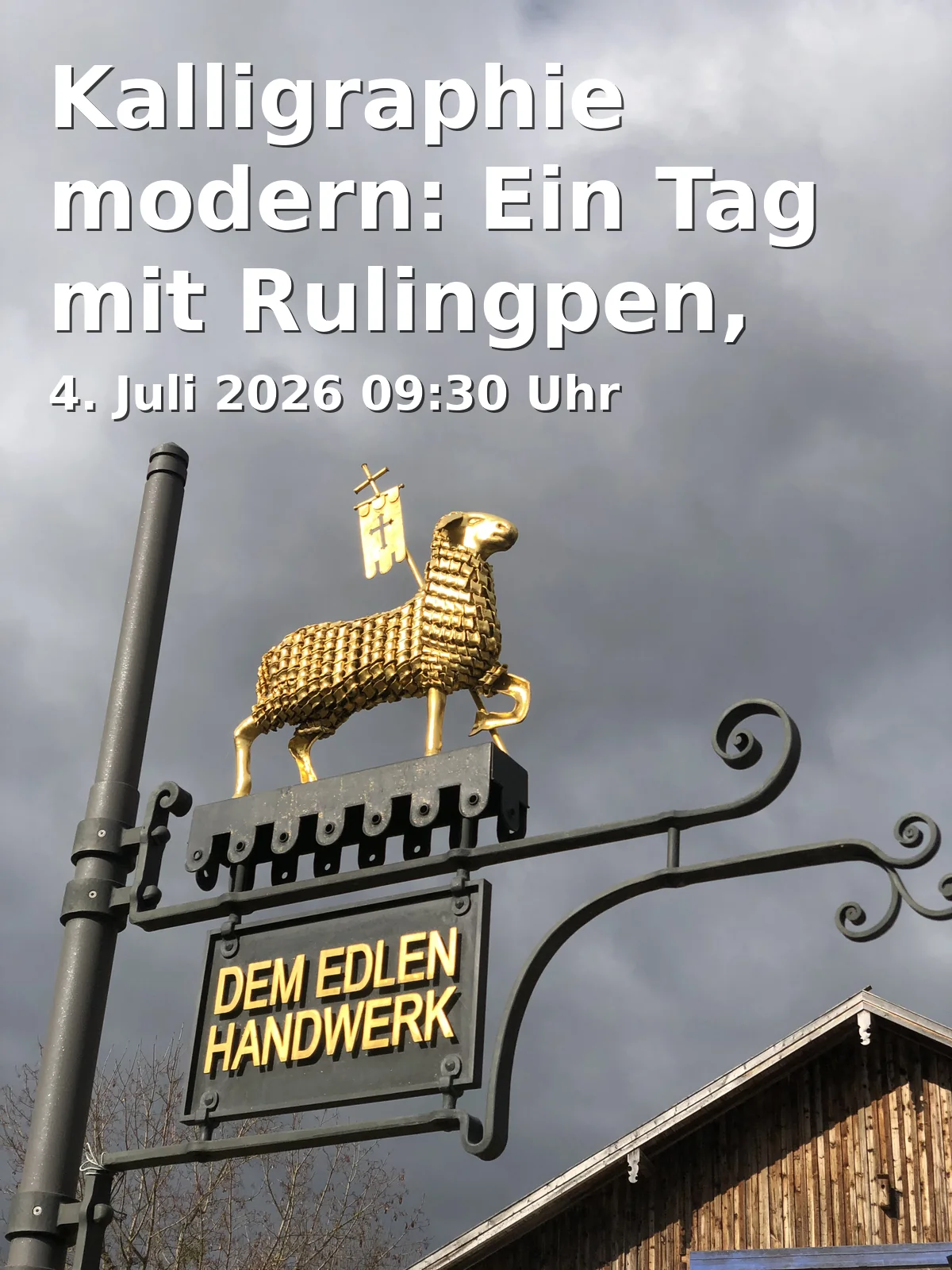
Modern Calligraphy: A Day with Ruling Pen, Flex Nib, Calli Pen, and Folded Nib
A day for all who want to discover writing as art: modern calligraphy on the Domberg in Freising. 04.07.2026, 80 €. #Calligraphy
Frequently Asked Questions
Reviews
No reviews found