
Am Hofgarten 4, Freising-Weihenstephan
Am Hofgarten 4, 85354 Freising, Germany
Hofgarten Freising | Opening Hours & Directions
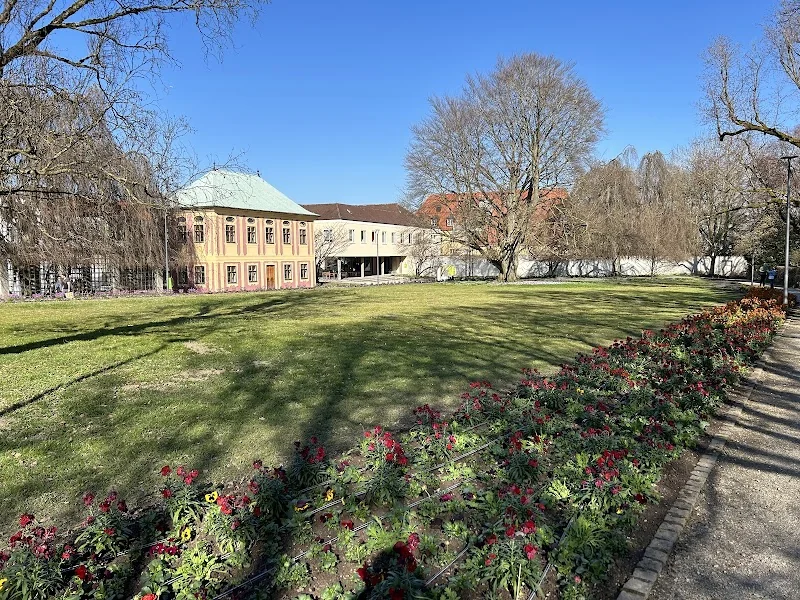
The Hofgarten in Freising is not an ordinary city garden, but a special part of the Weihenstephan Gardens on the Weihenstephan campus. Those who take the path to Weihenstephan Hill encounter a facility that harmoniously combines history, garden art, and relaxation. Here, old trees stand next to seasonal plantings, the Salettl adds a distinctive historical accent, and from the observation terrace, one can enjoy a wide view over the landscape to the Alps in good weather. The Hofgarten is thus both a quiet place for a stroll and a site where the botanical and gardening expertise of HSWT becomes visible. At the same time, it is easily accessible, free of charge, and embedded in the larger context of the Weihenstephan Gardens. This blend of tranquility, knowledge, and atmosphere makes it equally interesting for visitors to Freising, students, garden enthusiasts, and locals. ([hswt.de](https://www.hswt.de/forschung/forschungseinrichtungen/weihenstephaner-gaerten/der-hofgarten?utm_source=openai))
Opening Hours, Admission, and Practical Information
For visitor planning, the Hofgarten is very straightforward. The official HSWT website states that the Hofgarten and the Parterregarten are accessible year-round. For the rest of the Weihenstephan Gardens, the regular opening hours apply from April 1 to October 31, daily from 9:00 AM to 6:00 PM; during the months of June to August, the facility is even open until 7:00 PM. Admission is free, making the Hofgarten a particularly low-threshold destination. Those simply looking for a short break, a walk, or a few quiet minutes with a view can come without a ticket and without much preparation. The surrounding rules are also clearly defined: Dogs are allowed on a leash in the Hofgarten, while restrictions apply in other garden areas. For groups, it is also important that guided tours are generally bookable and not just open to informal walkers. The Hofgarten is thus a place where leisure experience and order go hand in hand. ([hswt.de](https://www.hswt.de/en/about/organisation/central-facilities/weihenstephan-gardens))
Especially for those seeking information on opening hours, admission, and visiting rules, this mix is important as it makes planning the garden facility very manageable. Unlike some other parks, there is no entrance barrier here, no complicated reservation for individual visitors, and no hidden ticket logic. The Weihenstephan Gardens are explicitly designed as learning, exhibition, and recreation spaces; the Hofgarten is one of the places where this idea is most immediately felt. Visitors can explore the paths at their own pace, absorb the atmosphere, and connect the Hofgarten with other areas of the campus. Those who come in spring experience the bloom particularly impressively, those who take advantage of the long opening hours in summer benefit from a very generous time window, and those who visit in autumn experience the seasonal changes of the garden. Thus, the Hofgarten is not only an attractive destination but also a recurring experience. ([hswt.de](https://www.hswt.de/en/about/organisation/central-facilities/weihenstephan-gardens))
History of the Hofgarten and the Salettl
The historical depth of the Hofgarten is one of the most important reasons for its special charm. According to HSWT, the park-like Hofgarten encompasses the former core area of the monastery garden of the Benedictines, which was once located in Weihenstephan. Its current appearance was shaped after several redesigns around 1950. Thus, the facility is not just a randomly new ornamental garden, but a place where monastic gardening culture, later landscape transformations, and modern care culture overlap. At the center stands the Salettl, which was renovated in the 1990s and serves as an impressive Baroque building reminiscent of the former garden casino of the Weihenstephan abbots. This connection of religious, territorial, and gardening past makes the Hofgarten a piece of living cultural history of Freising. Therefore, walking through the facility means moving not only among plants but also among historical layers that have remained well readable to this day. ([hswt.de](https://www.hswt.de/forschung/forschungseinrichtungen/weihenstephaner-gaerten/der-hofgarten?utm_source=openai))
The tourist and municipal aspects also emphasize this character. The city of Freising describes the Hofgarten as an idyllic area on Weihenstephan Hill, which is particularly striking with its old tree population, beautiful viewpoints, and the Salettl as the former garden casino of the abbots. The district of Freising additionally highlights that the former monastery garden is designed park-like and features blood beeches, silver maples, gingerbread trees, and an old ginkgo. This mix of history and botanical diversity explains why the Hofgarten is exciting not only for walkers but also for those interested in landscape architecture, horticulture, and monument atmosphere. The historical identity of the place was recently emphasized again when HSWT announced a redesign for 2025 that consciously incorporates historical elements and translates them into a contemporary, sustainable form. Thus, the Hofgarten remains not a static monument but a vibrant, evolving place. ([tourismus-kreis-freising.de](https://www.tourismus-kreis-freising.de/attraktionen/weihenstephaner-gaerten-hofgarten-925d6bb582))
Directions to Hofgarten Freising and Parking on Campus
The address is clear: Am Hofgarten 4, 85354 Freising. The Hofgarten is thus located directly in the heart of the Weihenstephan campus and is part of a densely networked university area. On the HSWT page for the Weihenstephan campus, the contact address Am Hofgarten 4 is mentioned; several campus buildings are also listed in the immediate vicinity, such as A1, A2, A3, A4, A5, A6, and A8 at the Hofgarten address, as well as other buildings in the area of Weihenstephan Hill and the perennial garden. This clearly shows that the Hofgarten is not an isolated park but embedded in a university and garden ensemble. Therefore, visitors are best oriented by the campus layout map of HSWT. For visitors who wish to use public transport, the city of Freising mentions in the service area for directions and parking, among other things, the city bus line 636, which runs from Freising over the Domberg and Weihenstephaner Straße towards Weihenstephan. ([hswt.de](https://www.hswt.de/studium/im-studium/campusleben/campus-weihenstephan))
When it comes to parking, an honest assessment is important. The official Hofgarten pages do not mention a separate designated visitor parking lot specifically for the Hofgarten. Instead, the HSWT pages refer to the layout plan and the general directions to the campus. This is less spectacular for visitors than a specifically marked parking lot right in front of the garden gate, but it is transparent: The Hofgarten is part of a university location where orientation about campus structure is more important than a single parking promise. Those arriving by car from Munich, Augsburg, or Nuremberg will find the general driving routes via A9, A92, and A8 to Freising-Mitte or Allershausen on the city's directions page. For practical visits, this means: check directions beforehand, use the campus map, and consider the city bus connection if necessary. This combination is the most realistic and reliable way to plan for the Hofgarten. ([tourismus.freising.de](https://tourismus.freising.de/en/service/getting-here-parking?utm_source=openai))
Observation Terrace, Old Trees, and Seasonal Planting
The landscape quality of the Hofgarten thrives on strong individual motifs and a very conscious interplay of planting. The district of Freising explicitly mentions blood beeches, silver maples, gingerbread trees, and an old ginkgo as noteworthy tree populations. Additionally, there are varied perennials and seasonal bedding plantings that make the Hofgarten appear differently throughout the year. HSWT and the Freising tourism page also emphasize that the Hofgarten remains attractive with old trees, shrubs, and beds even with the changing seasons. In spring, the magnolias stand out particularly, while in summer and autumn, the changing plant images shape the garden. This rhythm makes the Hofgarten interesting for repeated visits because the atmosphere of the place never feels entirely the same. The garden is not only beautiful but also consciously designed garden architecture with readable structures and a high degree of recognition. ([tourismus-kreis-freising.de](https://www.tourismus-kreis-freising.de/attraktionen/weihenstephaner-gaerten-hofgarten-925d6bb582))
Particularly impressive is the observation terrace. The tourist Freising page speaks of a breathtaking panoramic view, while the district of Freising emphasizes that in good weather, a beautiful long-distance view is created. This view gives the Hofgarten its additional appeal: it is not only a garden to look at but also a place for contemplation. This fits with the current development of the Hofgarten, which HSWT described for 2025. Planned or already initiated there is an open forest clearing atmosphere with flowering, colorful beds, replanted original tree populations, restored natural stone paths, and renewed tuff stone walls west of the Salettl. The idea behind this is clear: the Hofgarten should become more sustainable, easier to maintain, and at the same time more vibrant. For visitors, this means a mix of preservation and reinterpretation, exactly that tension that often makes historical garden facilities so fascinating. ([tourismus.freising.de](https://tourismus.freising.de/en/sights/garden-visions/the-gardens-at-weihenstephan))
Guided Tours, Weihenstephan Gardens, and the Role of the Campus
The Hofgarten is part of a larger system, and that is exactly what makes it appealing. HSWT describes the Weihenstephan Gardens as teaching and experimental gardens of the university, whose design and development are based on ecological, aesthetic, and maintenance criteria. They serve the education of students and research on outdoor plants, their use, and care. At the same time, the gardens are known far beyond Bavaria and are a preferred recreational area for many Freising residents. In this context, the Hofgarten is not just a decorative fringe area but a central building block of this green university landscape. For visitors, this is important because here they experience not just a park but also a place where insights from research and teaching become directly visible. The connection between knowledge production and garden experience is one of the reasons why Weihenstephan is so strongly associated with horticulture and landscape architecture. ([hswt.de](https://www.hswt.de/en/about/organisation/central-facilities/weihenstephan-gardens))
Even in guided tours, this special position is evident. HSWT offers group tours for up to 25 people from May to October; the duration is about 90 minutes and includes, among other things, the Parterregarten, the Hofgarten with changing flora, and the Oberdieckgarten. This gives the visit a depth of content that goes beyond a normal walk. The tours not only explain individual plants but also the design intention behind the areas and the maintenance principles of the facility. This is particularly exciting for those who not only find the Hofgarten beautiful but also want to understand it as an example of modern and historical gardening culture. HSWT also points out that the Weihenstephan campus is the largest green campus in Germany and has a strong historical and scientific impact. In combination with the Hofgarten, this creates a place where Freising as an educational and garden city becomes particularly convincingly tangible. ([hswt.de](https://www.hswt.de/en/about/organisation/central-facilities/weihenstephan-gardens))
Why the Hofgarten Freising is Gaining Attention Today
The Hofgarten is attractive not only because of its history and view but also because it asserts itself as a contemporary open space. The current redesign, which HSWT presented for 2025, shows very well how historical identity and sustainable future are to be brought together. The garden space is to become easier to maintain and to do without irrigation, while at the same time gaining significantly in atmosphere with colorful beds, old tree populations, and restored design elements. Especially at a time when many green spaces have to balance use, climate adaptation, and cost economy, this is a remarkable approach. The Hofgarten thus becomes an example of how historical garden spaces can evolve without losing their character. This is interesting not only for gardening professionals but also for visitors who want to experience a special mix of past and future on their paths through Freising. ([hswt.de](https://www.hswt.de/news-list/detail/hofgarten-neugestaltung-zu-bluetenreicher-waldlichtungsatmosphaere))
For visitors, the Hofgarten is also a place that can be well combined with other stations. Those exploring the Weihenstephan campus can connect the Hofgarten with the Parterregarten, Oberdieckgarten, or other parts of the Weihenstephan Gardens. Those starting in downtown Freising already experience the walk up the hill as an appealing contrast between urban structure and green height. And those simply wanting to switch off for a moment find here a quiet counterpoint to the rhythm of everyday life. This explains why the Hofgarten in Freising is sought after both as a search term for opening hours and directions as well as a place for history, views, blooms, and relaxation. It is a garden that does not need to be loud to make an impression. This quiet yet precisely designed quality makes it one of the most convincing green places in the city. ([tourismus.freising.de](https://tourismus.freising.de/en/sights/garden-visions/the-gardens-at-weihenstephan))
Sources:
- HSWT - The Hofgarten ([hswt.de](https://www.hswt.de/forschung/forschungseinrichtungen/weihenstephaner-gaerten/der-hofgarten?utm_source=openai))
- HSWT - The Weihenstephan Gardens ([hswt.de](https://www.hswt.de/en/about/organisation/central-facilities/weihenstephan-gardens))
- Tourism Freising - The Gardens at Weihenstephan ([tourismus.freising.de](https://tourismus.freising.de/en/sights/garden-visions/the-gardens-at-weihenstephan))
- District of Freising - Weihenstephaner Gardens - Hofgarten ([tourismus-kreis-freising.de](https://www.tourismus-kreis-freising.de/attraktionen/weihenstephaner-gaerten-hofgarten-925d6bb582))
- HSWT News - Hofgarten: Redesign for Flowering Forest Clearing Atmosphere ([hswt.de](https://www.hswt.de/news-list/detail/hofgarten-neugestaltung-zu-bluetenreicher-waldlichtungsatmosphaere))
- HSWT - Campus Weihenstephan ([hswt.de](https://www.hswt.de/studium/im-studium/campusleben/campus-weihenstephan))
- Tourism Freising - Getting Here & Parking ([tourismus.freising.de](https://tourismus.freising.de/en/service/getting-here-parking?utm_source=openai))
Show moreShow less
Hofgarten Freising | Opening Hours & Directions
The Hofgarten in Freising is not an ordinary city garden, but a special part of the Weihenstephan Gardens on the Weihenstephan campus. Those who take the path to Weihenstephan Hill encounter a facility that harmoniously combines history, garden art, and relaxation. Here, old trees stand next to seasonal plantings, the Salettl adds a distinctive historical accent, and from the observation terrace, one can enjoy a wide view over the landscape to the Alps in good weather. The Hofgarten is thus both a quiet place for a stroll and a site where the botanical and gardening expertise of HSWT becomes visible. At the same time, it is easily accessible, free of charge, and embedded in the larger context of the Weihenstephan Gardens. This blend of tranquility, knowledge, and atmosphere makes it equally interesting for visitors to Freising, students, garden enthusiasts, and locals. ([hswt.de](https://www.hswt.de/forschung/forschungseinrichtungen/weihenstephaner-gaerten/der-hofgarten?utm_source=openai))
Opening Hours, Admission, and Practical Information
For visitor planning, the Hofgarten is very straightforward. The official HSWT website states that the Hofgarten and the Parterregarten are accessible year-round. For the rest of the Weihenstephan Gardens, the regular opening hours apply from April 1 to October 31, daily from 9:00 AM to 6:00 PM; during the months of June to August, the facility is even open until 7:00 PM. Admission is free, making the Hofgarten a particularly low-threshold destination. Those simply looking for a short break, a walk, or a few quiet minutes with a view can come without a ticket and without much preparation. The surrounding rules are also clearly defined: Dogs are allowed on a leash in the Hofgarten, while restrictions apply in other garden areas. For groups, it is also important that guided tours are generally bookable and not just open to informal walkers. The Hofgarten is thus a place where leisure experience and order go hand in hand. ([hswt.de](https://www.hswt.de/en/about/organisation/central-facilities/weihenstephan-gardens))
Especially for those seeking information on opening hours, admission, and visiting rules, this mix is important as it makes planning the garden facility very manageable. Unlike some other parks, there is no entrance barrier here, no complicated reservation for individual visitors, and no hidden ticket logic. The Weihenstephan Gardens are explicitly designed as learning, exhibition, and recreation spaces; the Hofgarten is one of the places where this idea is most immediately felt. Visitors can explore the paths at their own pace, absorb the atmosphere, and connect the Hofgarten with other areas of the campus. Those who come in spring experience the bloom particularly impressively, those who take advantage of the long opening hours in summer benefit from a very generous time window, and those who visit in autumn experience the seasonal changes of the garden. Thus, the Hofgarten is not only an attractive destination but also a recurring experience. ([hswt.de](https://www.hswt.de/en/about/organisation/central-facilities/weihenstephan-gardens))
History of the Hofgarten and the Salettl
The historical depth of the Hofgarten is one of the most important reasons for its special charm. According to HSWT, the park-like Hofgarten encompasses the former core area of the monastery garden of the Benedictines, which was once located in Weihenstephan. Its current appearance was shaped after several redesigns around 1950. Thus, the facility is not just a randomly new ornamental garden, but a place where monastic gardening culture, later landscape transformations, and modern care culture overlap. At the center stands the Salettl, which was renovated in the 1990s and serves as an impressive Baroque building reminiscent of the former garden casino of the Weihenstephan abbots. This connection of religious, territorial, and gardening past makes the Hofgarten a piece of living cultural history of Freising. Therefore, walking through the facility means moving not only among plants but also among historical layers that have remained well readable to this day. ([hswt.de](https://www.hswt.de/forschung/forschungseinrichtungen/weihenstephaner-gaerten/der-hofgarten?utm_source=openai))
The tourist and municipal aspects also emphasize this character. The city of Freising describes the Hofgarten as an idyllic area on Weihenstephan Hill, which is particularly striking with its old tree population, beautiful viewpoints, and the Salettl as the former garden casino of the abbots. The district of Freising additionally highlights that the former monastery garden is designed park-like and features blood beeches, silver maples, gingerbread trees, and an old ginkgo. This mix of history and botanical diversity explains why the Hofgarten is exciting not only for walkers but also for those interested in landscape architecture, horticulture, and monument atmosphere. The historical identity of the place was recently emphasized again when HSWT announced a redesign for 2025 that consciously incorporates historical elements and translates them into a contemporary, sustainable form. Thus, the Hofgarten remains not a static monument but a vibrant, evolving place. ([tourismus-kreis-freising.de](https://www.tourismus-kreis-freising.de/attraktionen/weihenstephaner-gaerten-hofgarten-925d6bb582))
Directions to Hofgarten Freising and Parking on Campus
The address is clear: Am Hofgarten 4, 85354 Freising. The Hofgarten is thus located directly in the heart of the Weihenstephan campus and is part of a densely networked university area. On the HSWT page for the Weihenstephan campus, the contact address Am Hofgarten 4 is mentioned; several campus buildings are also listed in the immediate vicinity, such as A1, A2, A3, A4, A5, A6, and A8 at the Hofgarten address, as well as other buildings in the area of Weihenstephan Hill and the perennial garden. This clearly shows that the Hofgarten is not an isolated park but embedded in a university and garden ensemble. Therefore, visitors are best oriented by the campus layout map of HSWT. For visitors who wish to use public transport, the city of Freising mentions in the service area for directions and parking, among other things, the city bus line 636, which runs from Freising over the Domberg and Weihenstephaner Straße towards Weihenstephan. ([hswt.de](https://www.hswt.de/studium/im-studium/campusleben/campus-weihenstephan))
When it comes to parking, an honest assessment is important. The official Hofgarten pages do not mention a separate designated visitor parking lot specifically for the Hofgarten. Instead, the HSWT pages refer to the layout plan and the general directions to the campus. This is less spectacular for visitors than a specifically marked parking lot right in front of the garden gate, but it is transparent: The Hofgarten is part of a university location where orientation about campus structure is more important than a single parking promise. Those arriving by car from Munich, Augsburg, or Nuremberg will find the general driving routes via A9, A92, and A8 to Freising-Mitte or Allershausen on the city's directions page. For practical visits, this means: check directions beforehand, use the campus map, and consider the city bus connection if necessary. This combination is the most realistic and reliable way to plan for the Hofgarten. ([tourismus.freising.de](https://tourismus.freising.de/en/service/getting-here-parking?utm_source=openai))
Observation Terrace, Old Trees, and Seasonal Planting
The landscape quality of the Hofgarten thrives on strong individual motifs and a very conscious interplay of planting. The district of Freising explicitly mentions blood beeches, silver maples, gingerbread trees, and an old ginkgo as noteworthy tree populations. Additionally, there are varied perennials and seasonal bedding plantings that make the Hofgarten appear differently throughout the year. HSWT and the Freising tourism page also emphasize that the Hofgarten remains attractive with old trees, shrubs, and beds even with the changing seasons. In spring, the magnolias stand out particularly, while in summer and autumn, the changing plant images shape the garden. This rhythm makes the Hofgarten interesting for repeated visits because the atmosphere of the place never feels entirely the same. The garden is not only beautiful but also consciously designed garden architecture with readable structures and a high degree of recognition. ([tourismus-kreis-freising.de](https://www.tourismus-kreis-freising.de/attraktionen/weihenstephaner-gaerten-hofgarten-925d6bb582))
Particularly impressive is the observation terrace. The tourist Freising page speaks of a breathtaking panoramic view, while the district of Freising emphasizes that in good weather, a beautiful long-distance view is created. This view gives the Hofgarten its additional appeal: it is not only a garden to look at but also a place for contemplation. This fits with the current development of the Hofgarten, which HSWT described for 2025. Planned or already initiated there is an open forest clearing atmosphere with flowering, colorful beds, replanted original tree populations, restored natural stone paths, and renewed tuff stone walls west of the Salettl. The idea behind this is clear: the Hofgarten should become more sustainable, easier to maintain, and at the same time more vibrant. For visitors, this means a mix of preservation and reinterpretation, exactly that tension that often makes historical garden facilities so fascinating. ([tourismus.freising.de](https://tourismus.freising.de/en/sights/garden-visions/the-gardens-at-weihenstephan))
Guided Tours, Weihenstephan Gardens, and the Role of the Campus
The Hofgarten is part of a larger system, and that is exactly what makes it appealing. HSWT describes the Weihenstephan Gardens as teaching and experimental gardens of the university, whose design and development are based on ecological, aesthetic, and maintenance criteria. They serve the education of students and research on outdoor plants, their use, and care. At the same time, the gardens are known far beyond Bavaria and are a preferred recreational area for many Freising residents. In this context, the Hofgarten is not just a decorative fringe area but a central building block of this green university landscape. For visitors, this is important because here they experience not just a park but also a place where insights from research and teaching become directly visible. The connection between knowledge production and garden experience is one of the reasons why Weihenstephan is so strongly associated with horticulture and landscape architecture. ([hswt.de](https://www.hswt.de/en/about/organisation/central-facilities/weihenstephan-gardens))
Even in guided tours, this special position is evident. HSWT offers group tours for up to 25 people from May to October; the duration is about 90 minutes and includes, among other things, the Parterregarten, the Hofgarten with changing flora, and the Oberdieckgarten. This gives the visit a depth of content that goes beyond a normal walk. The tours not only explain individual plants but also the design intention behind the areas and the maintenance principles of the facility. This is particularly exciting for those who not only find the Hofgarten beautiful but also want to understand it as an example of modern and historical gardening culture. HSWT also points out that the Weihenstephan campus is the largest green campus in Germany and has a strong historical and scientific impact. In combination with the Hofgarten, this creates a place where Freising as an educational and garden city becomes particularly convincingly tangible. ([hswt.de](https://www.hswt.de/en/about/organisation/central-facilities/weihenstephan-gardens))
Why the Hofgarten Freising is Gaining Attention Today
The Hofgarten is attractive not only because of its history and view but also because it asserts itself as a contemporary open space. The current redesign, which HSWT presented for 2025, shows very well how historical identity and sustainable future are to be brought together. The garden space is to become easier to maintain and to do without irrigation, while at the same time gaining significantly in atmosphere with colorful beds, old tree populations, and restored design elements. Especially at a time when many green spaces have to balance use, climate adaptation, and cost economy, this is a remarkable approach. The Hofgarten thus becomes an example of how historical garden spaces can evolve without losing their character. This is interesting not only for gardening professionals but also for visitors who want to experience a special mix of past and future on their paths through Freising. ([hswt.de](https://www.hswt.de/news-list/detail/hofgarten-neugestaltung-zu-bluetenreicher-waldlichtungsatmosphaere))
For visitors, the Hofgarten is also a place that can be well combined with other stations. Those exploring the Weihenstephan campus can connect the Hofgarten with the Parterregarten, Oberdieckgarten, or other parts of the Weihenstephan Gardens. Those starting in downtown Freising already experience the walk up the hill as an appealing contrast between urban structure and green height. And those simply wanting to switch off for a moment find here a quiet counterpoint to the rhythm of everyday life. This explains why the Hofgarten in Freising is sought after both as a search term for opening hours and directions as well as a place for history, views, blooms, and relaxation. It is a garden that does not need to be loud to make an impression. This quiet yet precisely designed quality makes it one of the most convincing green places in the city. ([tourismus.freising.de](https://tourismus.freising.de/en/sights/garden-visions/the-gardens-at-weihenstephan))
Sources:
- HSWT - The Hofgarten ([hswt.de](https://www.hswt.de/forschung/forschungseinrichtungen/weihenstephaner-gaerten/der-hofgarten?utm_source=openai))
- HSWT - The Weihenstephan Gardens ([hswt.de](https://www.hswt.de/en/about/organisation/central-facilities/weihenstephan-gardens))
- Tourism Freising - The Gardens at Weihenstephan ([tourismus.freising.de](https://tourismus.freising.de/en/sights/garden-visions/the-gardens-at-weihenstephan))
- District of Freising - Weihenstephaner Gardens - Hofgarten ([tourismus-kreis-freising.de](https://www.tourismus-kreis-freising.de/attraktionen/weihenstephaner-gaerten-hofgarten-925d6bb582))
- HSWT News - Hofgarten: Redesign for Flowering Forest Clearing Atmosphere ([hswt.de](https://www.hswt.de/news-list/detail/hofgarten-neugestaltung-zu-bluetenreicher-waldlichtungsatmosphaere))
- HSWT - Campus Weihenstephan ([hswt.de](https://www.hswt.de/studium/im-studium/campusleben/campus-weihenstephan))
- Tourism Freising - Getting Here & Parking ([tourismus.freising.de](https://tourismus.freising.de/en/service/getting-here-parking?utm_source=openai))
Hofgarten Freising | Opening Hours & Directions
The Hofgarten in Freising is not an ordinary city garden, but a special part of the Weihenstephan Gardens on the Weihenstephan campus. Those who take the path to Weihenstephan Hill encounter a facility that harmoniously combines history, garden art, and relaxation. Here, old trees stand next to seasonal plantings, the Salettl adds a distinctive historical accent, and from the observation terrace, one can enjoy a wide view over the landscape to the Alps in good weather. The Hofgarten is thus both a quiet place for a stroll and a site where the botanical and gardening expertise of HSWT becomes visible. At the same time, it is easily accessible, free of charge, and embedded in the larger context of the Weihenstephan Gardens. This blend of tranquility, knowledge, and atmosphere makes it equally interesting for visitors to Freising, students, garden enthusiasts, and locals. ([hswt.de](https://www.hswt.de/forschung/forschungseinrichtungen/weihenstephaner-gaerten/der-hofgarten?utm_source=openai))
Opening Hours, Admission, and Practical Information
For visitor planning, the Hofgarten is very straightforward. The official HSWT website states that the Hofgarten and the Parterregarten are accessible year-round. For the rest of the Weihenstephan Gardens, the regular opening hours apply from April 1 to October 31, daily from 9:00 AM to 6:00 PM; during the months of June to August, the facility is even open until 7:00 PM. Admission is free, making the Hofgarten a particularly low-threshold destination. Those simply looking for a short break, a walk, or a few quiet minutes with a view can come without a ticket and without much preparation. The surrounding rules are also clearly defined: Dogs are allowed on a leash in the Hofgarten, while restrictions apply in other garden areas. For groups, it is also important that guided tours are generally bookable and not just open to informal walkers. The Hofgarten is thus a place where leisure experience and order go hand in hand. ([hswt.de](https://www.hswt.de/en/about/organisation/central-facilities/weihenstephan-gardens))
Especially for those seeking information on opening hours, admission, and visiting rules, this mix is important as it makes planning the garden facility very manageable. Unlike some other parks, there is no entrance barrier here, no complicated reservation for individual visitors, and no hidden ticket logic. The Weihenstephan Gardens are explicitly designed as learning, exhibition, and recreation spaces; the Hofgarten is one of the places where this idea is most immediately felt. Visitors can explore the paths at their own pace, absorb the atmosphere, and connect the Hofgarten with other areas of the campus. Those who come in spring experience the bloom particularly impressively, those who take advantage of the long opening hours in summer benefit from a very generous time window, and those who visit in autumn experience the seasonal changes of the garden. Thus, the Hofgarten is not only an attractive destination but also a recurring experience. ([hswt.de](https://www.hswt.de/en/about/organisation/central-facilities/weihenstephan-gardens))
History of the Hofgarten and the Salettl
The historical depth of the Hofgarten is one of the most important reasons for its special charm. According to HSWT, the park-like Hofgarten encompasses the former core area of the monastery garden of the Benedictines, which was once located in Weihenstephan. Its current appearance was shaped after several redesigns around 1950. Thus, the facility is not just a randomly new ornamental garden, but a place where monastic gardening culture, later landscape transformations, and modern care culture overlap. At the center stands the Salettl, which was renovated in the 1990s and serves as an impressive Baroque building reminiscent of the former garden casino of the Weihenstephan abbots. This connection of religious, territorial, and gardening past makes the Hofgarten a piece of living cultural history of Freising. Therefore, walking through the facility means moving not only among plants but also among historical layers that have remained well readable to this day. ([hswt.de](https://www.hswt.de/forschung/forschungseinrichtungen/weihenstephaner-gaerten/der-hofgarten?utm_source=openai))
The tourist and municipal aspects also emphasize this character. The city of Freising describes the Hofgarten as an idyllic area on Weihenstephan Hill, which is particularly striking with its old tree population, beautiful viewpoints, and the Salettl as the former garden casino of the abbots. The district of Freising additionally highlights that the former monastery garden is designed park-like and features blood beeches, silver maples, gingerbread trees, and an old ginkgo. This mix of history and botanical diversity explains why the Hofgarten is exciting not only for walkers but also for those interested in landscape architecture, horticulture, and monument atmosphere. The historical identity of the place was recently emphasized again when HSWT announced a redesign for 2025 that consciously incorporates historical elements and translates them into a contemporary, sustainable form. Thus, the Hofgarten remains not a static monument but a vibrant, evolving place. ([tourismus-kreis-freising.de](https://www.tourismus-kreis-freising.de/attraktionen/weihenstephaner-gaerten-hofgarten-925d6bb582))
Directions to Hofgarten Freising and Parking on Campus
The address is clear: Am Hofgarten 4, 85354 Freising. The Hofgarten is thus located directly in the heart of the Weihenstephan campus and is part of a densely networked university area. On the HSWT page for the Weihenstephan campus, the contact address Am Hofgarten 4 is mentioned; several campus buildings are also listed in the immediate vicinity, such as A1, A2, A3, A4, A5, A6, and A8 at the Hofgarten address, as well as other buildings in the area of Weihenstephan Hill and the perennial garden. This clearly shows that the Hofgarten is not an isolated park but embedded in a university and garden ensemble. Therefore, visitors are best oriented by the campus layout map of HSWT. For visitors who wish to use public transport, the city of Freising mentions in the service area for directions and parking, among other things, the city bus line 636, which runs from Freising over the Domberg and Weihenstephaner Straße towards Weihenstephan. ([hswt.de](https://www.hswt.de/studium/im-studium/campusleben/campus-weihenstephan))
When it comes to parking, an honest assessment is important. The official Hofgarten pages do not mention a separate designated visitor parking lot specifically for the Hofgarten. Instead, the HSWT pages refer to the layout plan and the general directions to the campus. This is less spectacular for visitors than a specifically marked parking lot right in front of the garden gate, but it is transparent: The Hofgarten is part of a university location where orientation about campus structure is more important than a single parking promise. Those arriving by car from Munich, Augsburg, or Nuremberg will find the general driving routes via A9, A92, and A8 to Freising-Mitte or Allershausen on the city's directions page. For practical visits, this means: check directions beforehand, use the campus map, and consider the city bus connection if necessary. This combination is the most realistic and reliable way to plan for the Hofgarten. ([tourismus.freising.de](https://tourismus.freising.de/en/service/getting-here-parking?utm_source=openai))
Observation Terrace, Old Trees, and Seasonal Planting
The landscape quality of the Hofgarten thrives on strong individual motifs and a very conscious interplay of planting. The district of Freising explicitly mentions blood beeches, silver maples, gingerbread trees, and an old ginkgo as noteworthy tree populations. Additionally, there are varied perennials and seasonal bedding plantings that make the Hofgarten appear differently throughout the year. HSWT and the Freising tourism page also emphasize that the Hofgarten remains attractive with old trees, shrubs, and beds even with the changing seasons. In spring, the magnolias stand out particularly, while in summer and autumn, the changing plant images shape the garden. This rhythm makes the Hofgarten interesting for repeated visits because the atmosphere of the place never feels entirely the same. The garden is not only beautiful but also consciously designed garden architecture with readable structures and a high degree of recognition. ([tourismus-kreis-freising.de](https://www.tourismus-kreis-freising.de/attraktionen/weihenstephaner-gaerten-hofgarten-925d6bb582))
Particularly impressive is the observation terrace. The tourist Freising page speaks of a breathtaking panoramic view, while the district of Freising emphasizes that in good weather, a beautiful long-distance view is created. This view gives the Hofgarten its additional appeal: it is not only a garden to look at but also a place for contemplation. This fits with the current development of the Hofgarten, which HSWT described for 2025. Planned or already initiated there is an open forest clearing atmosphere with flowering, colorful beds, replanted original tree populations, restored natural stone paths, and renewed tuff stone walls west of the Salettl. The idea behind this is clear: the Hofgarten should become more sustainable, easier to maintain, and at the same time more vibrant. For visitors, this means a mix of preservation and reinterpretation, exactly that tension that often makes historical garden facilities so fascinating. ([tourismus.freising.de](https://tourismus.freising.de/en/sights/garden-visions/the-gardens-at-weihenstephan))
Guided Tours, Weihenstephan Gardens, and the Role of the Campus
The Hofgarten is part of a larger system, and that is exactly what makes it appealing. HSWT describes the Weihenstephan Gardens as teaching and experimental gardens of the university, whose design and development are based on ecological, aesthetic, and maintenance criteria. They serve the education of students and research on outdoor plants, their use, and care. At the same time, the gardens are known far beyond Bavaria and are a preferred recreational area for many Freising residents. In this context, the Hofgarten is not just a decorative fringe area but a central building block of this green university landscape. For visitors, this is important because here they experience not just a park but also a place where insights from research and teaching become directly visible. The connection between knowledge production and garden experience is one of the reasons why Weihenstephan is so strongly associated with horticulture and landscape architecture. ([hswt.de](https://www.hswt.de/en/about/organisation/central-facilities/weihenstephan-gardens))
Even in guided tours, this special position is evident. HSWT offers group tours for up to 25 people from May to October; the duration is about 90 minutes and includes, among other things, the Parterregarten, the Hofgarten with changing flora, and the Oberdieckgarten. This gives the visit a depth of content that goes beyond a normal walk. The tours not only explain individual plants but also the design intention behind the areas and the maintenance principles of the facility. This is particularly exciting for those who not only find the Hofgarten beautiful but also want to understand it as an example of modern and historical gardening culture. HSWT also points out that the Weihenstephan campus is the largest green campus in Germany and has a strong historical and scientific impact. In combination with the Hofgarten, this creates a place where Freising as an educational and garden city becomes particularly convincingly tangible. ([hswt.de](https://www.hswt.de/en/about/organisation/central-facilities/weihenstephan-gardens))
Why the Hofgarten Freising is Gaining Attention Today
The Hofgarten is attractive not only because of its history and view but also because it asserts itself as a contemporary open space. The current redesign, which HSWT presented for 2025, shows very well how historical identity and sustainable future are to be brought together. The garden space is to become easier to maintain and to do without irrigation, while at the same time gaining significantly in atmosphere with colorful beds, old tree populations, and restored design elements. Especially at a time when many green spaces have to balance use, climate adaptation, and cost economy, this is a remarkable approach. The Hofgarten thus becomes an example of how historical garden spaces can evolve without losing their character. This is interesting not only for gardening professionals but also for visitors who want to experience a special mix of past and future on their paths through Freising. ([hswt.de](https://www.hswt.de/news-list/detail/hofgarten-neugestaltung-zu-bluetenreicher-waldlichtungsatmosphaere))
For visitors, the Hofgarten is also a place that can be well combined with other stations. Those exploring the Weihenstephan campus can connect the Hofgarten with the Parterregarten, Oberdieckgarten, or other parts of the Weihenstephan Gardens. Those starting in downtown Freising already experience the walk up the hill as an appealing contrast between urban structure and green height. And those simply wanting to switch off for a moment find here a quiet counterpoint to the rhythm of everyday life. This explains why the Hofgarten in Freising is sought after both as a search term for opening hours and directions as well as a place for history, views, blooms, and relaxation. It is a garden that does not need to be loud to make an impression. This quiet yet precisely designed quality makes it one of the most convincing green places in the city. ([tourismus.freising.de](https://tourismus.freising.de/en/sights/garden-visions/the-gardens-at-weihenstephan))
Sources:
- HSWT - The Hofgarten ([hswt.de](https://www.hswt.de/forschung/forschungseinrichtungen/weihenstephaner-gaerten/der-hofgarten?utm_source=openai))
- HSWT - The Weihenstephan Gardens ([hswt.de](https://www.hswt.de/en/about/organisation/central-facilities/weihenstephan-gardens))
- Tourism Freising - The Gardens at Weihenstephan ([tourismus.freising.de](https://tourismus.freising.de/en/sights/garden-visions/the-gardens-at-weihenstephan))
- District of Freising - Weihenstephaner Gardens - Hofgarten ([tourismus-kreis-freising.de](https://www.tourismus-kreis-freising.de/attraktionen/weihenstephaner-gaerten-hofgarten-925d6bb582))
- HSWT News - Hofgarten: Redesign for Flowering Forest Clearing Atmosphere ([hswt.de](https://www.hswt.de/news-list/detail/hofgarten-neugestaltung-zu-bluetenreicher-waldlichtungsatmosphaere))
- HSWT - Campus Weihenstephan ([hswt.de](https://www.hswt.de/studium/im-studium/campusleben/campus-weihenstephan))
- Tourism Freising - Getting Here & Parking ([tourismus.freising.de](https://tourismus.freising.de/en/service/getting-here-parking?utm_source=openai))
Upcoming Events
No events found
Frequently Asked Questions
Reviews
Paulina G
15. May 2022
A beautiful garden at any time of the year. I've seen it in autumn, winter and spring and can't wait to visit in summer. The plants are stunning and the view is lovely.
Eva-Maria
3. August 2025
Spacious courtyard garden with ancient trees and beautiful viewpoints overlooking the Erdinger Moos.
Abrahamson Norman
23. July 2021
Simply a very beautiful and very well-kept garden 😍
Torsten Zender
25. April 2021
A beautifully landscaped garden. All plants are described. Secluded spots to linger in pleasant tranquility.
Claudia
14. November 2022
Absolutely beautiful on November 13, 2022. A lovely place to linger. A wonderful display of colors on the trees and bushes...