
Freising
Johannisstraße, 85354 Freising, Deutschland
Johannispark | Freising & Park Area
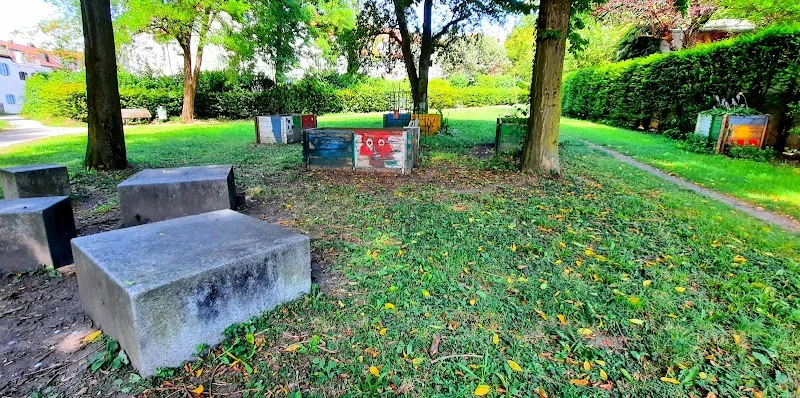
The Johannispark in Freising is not a loud event backdrop, but an inner-city green space with history, quality of location, and surprisingly many reasons to visit. Those searching for Johannispark Freising, Johannisstraße Freising, directions, parking, or pictures usually mean this very space between the old town, Karlwirtskreuzung, and Moosach. The city of Freising describes the area as a place that has changed over decades: from private gardens to a small public green area with a fountain, to a building block of urban development. This is exactly what gives it its character. It is simultaneously close to everyday life, near traffic, and quiet enough to be perceived as a green interspace. This makes the Johannispark so interesting for visitors, residents, and anyone who wants to understand Freising better. ([freising.de](https://www.freising.de/rathaus/thema-des-monats/reaktivierung-johannispark))
Johannispark Freising: Location, Green Character, and First Impression
The location is perhaps the strongest argument for the Johannispark. It is located on Johannisstraße in 85354 Freising, in a section that is close to the old town and also forms an important traffic axis. The city explicitly names the area between Karlwirtskreuzung and Moosach. This very location between movement and retreat shapes the atmosphere: On one side, there is urban life with street traffic, bus connections, and short distances to the city center. On the other side, the area stands as a green space that promises relaxation and makes Freising feel like a green city. Those considering the Johannispark as a destination for a walk will therefore discover not a classic large park, but a smaller, urbanistically embedded green area with a special local reference. ([freising.de](https://www.freising.de/rathaus/thema-des-monats/reaktivierung-johannispark))
This is important for search intent because many users are not just looking for a park, but for orientation: Where is Johannispark? How do you get there? Are there parking spaces? How does it fit into the city? The official representation of the city of Freising shows that the place is being discussed precisely at this intersection between mobility and quality of stay. Even in historical retrospect, it becomes clear that the park does not exist by chance, but has emerged from an urban development that repeatedly responded to open space, traffic, and visitor flows. Thus, the Johannispark is less an isolated destination than a readable urban building block, where the development of Freising can be well traced. ([freising.de](https://www.freising.de/rathaus/thema-des-monats/reaktivierung-johannispark))
History of Johannispark on Johannisstraße
The history of Johannispark does not begin with its current name, but with the use of the area itself. According to the city of Freising, there were initially private gardens here in the first half of the 20th century. From the mid-1950s, a small public green area with a fountain emerged. At the same time, Johannisstraße was built in the 1950s, significantly changing the surrounding area. From a rather quiet garden area, it became an urban space increasingly shaped by traffic. This development explains why the Johannispark has repeatedly been a topic over the past decades: It was never just a piece of lawn, but a place where urban growth, infrastructure, and the desire to stay directly meet. ([freising.de](https://www.freising.de/rathaus/thema-des-monats/reaktivierung-johannispark))
Later, the area was planned even more clearly. A development plan from 1991 envisioned a park with a restroom for the open space. Additionally, the street space was to be separated from the green area by a row of trees, and a network of paths was to create connections to the surrounding urban spaces. A bridge over the Moosach was already planned at that time but was only partially realized. The site then reappears in the history of city council and planning when the city adopted its integrated urban development concept in 2011. This already included a pick-up and drop-off point for tourist buses in the area near Karlwirtskreuzung. Thus, Johannispark is not just a green space, but also a recurring reference point for municipal urban development. ([freising.de](https://www.freising.de/rathaus/thema-des-monats/reaktivierung-johannispark))
Directions to Johannispark: Train Station, Bus Line 631, and Paths to the Old Town
Those wishing to visit Johannispark without a car will find good public transport connections in Freising. The Freising Tourist Information explicitly describes the city center connection via public transport, mentioning bus line 631 among others. This runs between Freising train station, Fürstendamm, Johannisstraße, Obere Hauptstraße, Domberg, and back to Freising train station. This makes it clear: The area around Johannispark is not isolated but integrated into the city center and train station network. For guests coming from the train station, this is particularly convenient because the park or the adjacent green area can be incorporated into a walk towards the old town, Domberg, or Moosach. ([tourismus.freising.de](https://tourismus.freising.de/service/anreise-parken))
The topic of detours and traffic management also shows how central Johannisstraße is in the Freising traffic network. The city informs on its public transport page about current routes and that Johannisstraße is used as a detour route during certain construction phases. This indirectly highlights how important the street is for the city. For visitors to Johannispark, this means: The area is located in a lively traffic corridor but is still easily accessible via footpaths, city buses, and proximity to the train station. Those preferring a quiet arrival should best take the train to Freising, switch to the city bus there, or continue on foot. This combination of central location and good accessibility makes the place particularly relevant for inquiries about directions and buses. ([tourismus.freising.de](https://tourismus.freising.de/service/anreise-parken))
Parking around Johannispark: Central Parking Spaces in Freising
When it comes to parking, one should understand Johannispark as part of the Freising old town zone and not as an isolated facility with its own large garage directly at the entrance. The city of Freising names several specific options for visitors to the city center. These include the parking garage at Wörth/Domberg on Bahnhofstraße, the old town parking garage on Alois-Steinecker-Straße, the lower old town parking garage on Dr.-von-Daller-Straße, and the Luitpoldanlage as a free large parking lot with a maximum parking duration of 24 hours. Additionally, paid large parking lots such as Angerbadergasse, Kammergasse, and Wippenhauser Straße are listed. For the search Johannispark Freising parking, this is the most important practical information, as it allows one to place the parking question in the context of visiting the city center. ([tourismus.freising.de](https://tourismus.freising.de/service/anreise-parken))
The city supplements this overview with an interactive map and a parking guide for the city center. This shows that Freising focuses on orientation and short distances when it comes to parking. This is relevant for Johannispark because the area itself is located on a heavily trafficked street, and the direct street space should not be confused with a classic forecourt. Those arriving by car should best park in the inner-city parking garages or designated large parking lots and combine the visit with a walk through the city center. This is often the most pleasant solution for families, day visitors, and travelers who want to experience the old town, Domberg, or Moosach alongside the park. Thus, Johannispark becomes part of a larger walking and visiting space, rather than being reduced to a narrow parking space. ([tourismus.freising.de](https://tourismus.freising.de/service/anreise-parken))
Johannis Fountain, Moosach, and the Planned Quality of Stay
The special appeal of Johannispark also lies in the question of how a traffic-adjacent area can again become a place of stay. This was precisely the aim of the city of Freising in its description from 2021. The planned revitalization of Johannispark included additional benches, a new Johannis fountain, a new restroom at the same location, and a bridge over the Wörthmoosach. Furthermore, the path network was to be improved, and the park spatially defined by column oaks and further planting. These measures clearly show that it was not only about beautification but about regaining quality of stay in a loud, heavily trafficked urban area. The park should welcome guests but also better structure daily foot traffic. ([freising.de](https://www.freising.de/rathaus/thema-des-monats/reaktivierung-johannispark))
For Freising, this is more than a single green project. The city links Johannispark with its urban development concept, the traffic calming of Oberen Hauptstraße, and the question of how tourist and city buses can be sensibly integrated. This is where the planning added value becomes evident: Johannispark is a place where traffic is not simply to be displaced but organized. According to the city, the area is to be upgraded without losing its green character. The cycling traffic was also considered in the planning. In 2024, the city stated that cycling facilities would be established in Johannisstraße as part of the Johannispark project and that the existing sidewalk would be widened. This creates a space where pedestrians, cyclists, buses, and green areas do not appear as contradictions but as thoughtfully combined urban building blocks. ([freising.de](https://www.freising.de/rathaus/thema-des-monats/reaktivierung-johannispark))
Images, Orientation, and Practical Tips for the Visit
Those searching for Johannispark Freising images will find a particularly helpful historical perspective on the official city page. There are photos from the years 1960 to 1980 as well as a postcard from around 1960 showing the fountain newly built by the city at that time. These images are not only nice archival material but also explain why the place is perceived so differently today: It was once a small, almost idyllic green space and was then long overshadowed by traffic and construction circumstances. The images therefore help with orientation as well as with contextualization. Those visiting the park on-site will more easily recognize that it is a space with much history and a clear urban planning history. ([freising.de](https://www.freising.de/rathaus/thema-des-monats/reaktivierung-johannispark))
The visit is especially practical when combined with a walk through the city center. The city of Freising itself points out that the area near Johannisstraße, the old town, and Domberg is easily accessible by bus, train, and footpaths. Those wanting to take photos will find interesting perspectives in the interplay between street, green space, and Moosach, especially since the area is not large spatially but very dense urbanistically. For visitors, a slow walk is therefore more worthwhile than a quick passage. This allows one to see how historical development, current planning, and the present character of Johannispark overlap. This is exactly what makes it a place that often appears small in search engines but shows surprisingly much history and Freising urban culture on-site. ([tourismus.freising.de](https://tourismus.freising.de/service/anreise-parken))
Sources:
Show moreShow less
Johannispark | Freising & Park Area
The Johannispark in Freising is not a loud event backdrop, but an inner-city green space with history, quality of location, and surprisingly many reasons to visit. Those searching for Johannispark Freising, Johannisstraße Freising, directions, parking, or pictures usually mean this very space between the old town, Karlwirtskreuzung, and Moosach. The city of Freising describes the area as a place that has changed over decades: from private gardens to a small public green area with a fountain, to a building block of urban development. This is exactly what gives it its character. It is simultaneously close to everyday life, near traffic, and quiet enough to be perceived as a green interspace. This makes the Johannispark so interesting for visitors, residents, and anyone who wants to understand Freising better. ([freising.de](https://www.freising.de/rathaus/thema-des-monats/reaktivierung-johannispark))
Johannispark Freising: Location, Green Character, and First Impression
The location is perhaps the strongest argument for the Johannispark. It is located on Johannisstraße in 85354 Freising, in a section that is close to the old town and also forms an important traffic axis. The city explicitly names the area between Karlwirtskreuzung and Moosach. This very location between movement and retreat shapes the atmosphere: On one side, there is urban life with street traffic, bus connections, and short distances to the city center. On the other side, the area stands as a green space that promises relaxation and makes Freising feel like a green city. Those considering the Johannispark as a destination for a walk will therefore discover not a classic large park, but a smaller, urbanistically embedded green area with a special local reference. ([freising.de](https://www.freising.de/rathaus/thema-des-monats/reaktivierung-johannispark))
This is important for search intent because many users are not just looking for a park, but for orientation: Where is Johannispark? How do you get there? Are there parking spaces? How does it fit into the city? The official representation of the city of Freising shows that the place is being discussed precisely at this intersection between mobility and quality of stay. Even in historical retrospect, it becomes clear that the park does not exist by chance, but has emerged from an urban development that repeatedly responded to open space, traffic, and visitor flows. Thus, the Johannispark is less an isolated destination than a readable urban building block, where the development of Freising can be well traced. ([freising.de](https://www.freising.de/rathaus/thema-des-monats/reaktivierung-johannispark))
History of Johannispark on Johannisstraße
The history of Johannispark does not begin with its current name, but with the use of the area itself. According to the city of Freising, there were initially private gardens here in the first half of the 20th century. From the mid-1950s, a small public green area with a fountain emerged. At the same time, Johannisstraße was built in the 1950s, significantly changing the surrounding area. From a rather quiet garden area, it became an urban space increasingly shaped by traffic. This development explains why the Johannispark has repeatedly been a topic over the past decades: It was never just a piece of lawn, but a place where urban growth, infrastructure, and the desire to stay directly meet. ([freising.de](https://www.freising.de/rathaus/thema-des-monats/reaktivierung-johannispark))
Later, the area was planned even more clearly. A development plan from 1991 envisioned a park with a restroom for the open space. Additionally, the street space was to be separated from the green area by a row of trees, and a network of paths was to create connections to the surrounding urban spaces. A bridge over the Moosach was already planned at that time but was only partially realized. The site then reappears in the history of city council and planning when the city adopted its integrated urban development concept in 2011. This already included a pick-up and drop-off point for tourist buses in the area near Karlwirtskreuzung. Thus, Johannispark is not just a green space, but also a recurring reference point for municipal urban development. ([freising.de](https://www.freising.de/rathaus/thema-des-monats/reaktivierung-johannispark))
Directions to Johannispark: Train Station, Bus Line 631, and Paths to the Old Town
Those wishing to visit Johannispark without a car will find good public transport connections in Freising. The Freising Tourist Information explicitly describes the city center connection via public transport, mentioning bus line 631 among others. This runs between Freising train station, Fürstendamm, Johannisstraße, Obere Hauptstraße, Domberg, and back to Freising train station. This makes it clear: The area around Johannispark is not isolated but integrated into the city center and train station network. For guests coming from the train station, this is particularly convenient because the park or the adjacent green area can be incorporated into a walk towards the old town, Domberg, or Moosach. ([tourismus.freising.de](https://tourismus.freising.de/service/anreise-parken))
The topic of detours and traffic management also shows how central Johannisstraße is in the Freising traffic network. The city informs on its public transport page about current routes and that Johannisstraße is used as a detour route during certain construction phases. This indirectly highlights how important the street is for the city. For visitors to Johannispark, this means: The area is located in a lively traffic corridor but is still easily accessible via footpaths, city buses, and proximity to the train station. Those preferring a quiet arrival should best take the train to Freising, switch to the city bus there, or continue on foot. This combination of central location and good accessibility makes the place particularly relevant for inquiries about directions and buses. ([tourismus.freising.de](https://tourismus.freising.de/service/anreise-parken))
Parking around Johannispark: Central Parking Spaces in Freising
When it comes to parking, one should understand Johannispark as part of the Freising old town zone and not as an isolated facility with its own large garage directly at the entrance. The city of Freising names several specific options for visitors to the city center. These include the parking garage at Wörth/Domberg on Bahnhofstraße, the old town parking garage on Alois-Steinecker-Straße, the lower old town parking garage on Dr.-von-Daller-Straße, and the Luitpoldanlage as a free large parking lot with a maximum parking duration of 24 hours. Additionally, paid large parking lots such as Angerbadergasse, Kammergasse, and Wippenhauser Straße are listed. For the search Johannispark Freising parking, this is the most important practical information, as it allows one to place the parking question in the context of visiting the city center. ([tourismus.freising.de](https://tourismus.freising.de/service/anreise-parken))
The city supplements this overview with an interactive map and a parking guide for the city center. This shows that Freising focuses on orientation and short distances when it comes to parking. This is relevant for Johannispark because the area itself is located on a heavily trafficked street, and the direct street space should not be confused with a classic forecourt. Those arriving by car should best park in the inner-city parking garages or designated large parking lots and combine the visit with a walk through the city center. This is often the most pleasant solution for families, day visitors, and travelers who want to experience the old town, Domberg, or Moosach alongside the park. Thus, Johannispark becomes part of a larger walking and visiting space, rather than being reduced to a narrow parking space. ([tourismus.freising.de](https://tourismus.freising.de/service/anreise-parken))
Johannis Fountain, Moosach, and the Planned Quality of Stay
The special appeal of Johannispark also lies in the question of how a traffic-adjacent area can again become a place of stay. This was precisely the aim of the city of Freising in its description from 2021. The planned revitalization of Johannispark included additional benches, a new Johannis fountain, a new restroom at the same location, and a bridge over the Wörthmoosach. Furthermore, the path network was to be improved, and the park spatially defined by column oaks and further planting. These measures clearly show that it was not only about beautification but about regaining quality of stay in a loud, heavily trafficked urban area. The park should welcome guests but also better structure daily foot traffic. ([freising.de](https://www.freising.de/rathaus/thema-des-monats/reaktivierung-johannispark))
For Freising, this is more than a single green project. The city links Johannispark with its urban development concept, the traffic calming of Oberen Hauptstraße, and the question of how tourist and city buses can be sensibly integrated. This is where the planning added value becomes evident: Johannispark is a place where traffic is not simply to be displaced but organized. According to the city, the area is to be upgraded without losing its green character. The cycling traffic was also considered in the planning. In 2024, the city stated that cycling facilities would be established in Johannisstraße as part of the Johannispark project and that the existing sidewalk would be widened. This creates a space where pedestrians, cyclists, buses, and green areas do not appear as contradictions but as thoughtfully combined urban building blocks. ([freising.de](https://www.freising.de/rathaus/thema-des-monats/reaktivierung-johannispark))
Images, Orientation, and Practical Tips for the Visit
Those searching for Johannispark Freising images will find a particularly helpful historical perspective on the official city page. There are photos from the years 1960 to 1980 as well as a postcard from around 1960 showing the fountain newly built by the city at that time. These images are not only nice archival material but also explain why the place is perceived so differently today: It was once a small, almost idyllic green space and was then long overshadowed by traffic and construction circumstances. The images therefore help with orientation as well as with contextualization. Those visiting the park on-site will more easily recognize that it is a space with much history and a clear urban planning history. ([freising.de](https://www.freising.de/rathaus/thema-des-monats/reaktivierung-johannispark))
The visit is especially practical when combined with a walk through the city center. The city of Freising itself points out that the area near Johannisstraße, the old town, and Domberg is easily accessible by bus, train, and footpaths. Those wanting to take photos will find interesting perspectives in the interplay between street, green space, and Moosach, especially since the area is not large spatially but very dense urbanistically. For visitors, a slow walk is therefore more worthwhile than a quick passage. This allows one to see how historical development, current planning, and the present character of Johannispark overlap. This is exactly what makes it a place that often appears small in search engines but shows surprisingly much history and Freising urban culture on-site. ([tourismus.freising.de](https://tourismus.freising.de/service/anreise-parken))
Sources:
Johannispark | Freising & Park Area
The Johannispark in Freising is not a loud event backdrop, but an inner-city green space with history, quality of location, and surprisingly many reasons to visit. Those searching for Johannispark Freising, Johannisstraße Freising, directions, parking, or pictures usually mean this very space between the old town, Karlwirtskreuzung, and Moosach. The city of Freising describes the area as a place that has changed over decades: from private gardens to a small public green area with a fountain, to a building block of urban development. This is exactly what gives it its character. It is simultaneously close to everyday life, near traffic, and quiet enough to be perceived as a green interspace. This makes the Johannispark so interesting for visitors, residents, and anyone who wants to understand Freising better. ([freising.de](https://www.freising.de/rathaus/thema-des-monats/reaktivierung-johannispark))
Johannispark Freising: Location, Green Character, and First Impression
The location is perhaps the strongest argument for the Johannispark. It is located on Johannisstraße in 85354 Freising, in a section that is close to the old town and also forms an important traffic axis. The city explicitly names the area between Karlwirtskreuzung and Moosach. This very location between movement and retreat shapes the atmosphere: On one side, there is urban life with street traffic, bus connections, and short distances to the city center. On the other side, the area stands as a green space that promises relaxation and makes Freising feel like a green city. Those considering the Johannispark as a destination for a walk will therefore discover not a classic large park, but a smaller, urbanistically embedded green area with a special local reference. ([freising.de](https://www.freising.de/rathaus/thema-des-monats/reaktivierung-johannispark))
This is important for search intent because many users are not just looking for a park, but for orientation: Where is Johannispark? How do you get there? Are there parking spaces? How does it fit into the city? The official representation of the city of Freising shows that the place is being discussed precisely at this intersection between mobility and quality of stay. Even in historical retrospect, it becomes clear that the park does not exist by chance, but has emerged from an urban development that repeatedly responded to open space, traffic, and visitor flows. Thus, the Johannispark is less an isolated destination than a readable urban building block, where the development of Freising can be well traced. ([freising.de](https://www.freising.de/rathaus/thema-des-monats/reaktivierung-johannispark))
History of Johannispark on Johannisstraße
The history of Johannispark does not begin with its current name, but with the use of the area itself. According to the city of Freising, there were initially private gardens here in the first half of the 20th century. From the mid-1950s, a small public green area with a fountain emerged. At the same time, Johannisstraße was built in the 1950s, significantly changing the surrounding area. From a rather quiet garden area, it became an urban space increasingly shaped by traffic. This development explains why the Johannispark has repeatedly been a topic over the past decades: It was never just a piece of lawn, but a place where urban growth, infrastructure, and the desire to stay directly meet. ([freising.de](https://www.freising.de/rathaus/thema-des-monats/reaktivierung-johannispark))
Later, the area was planned even more clearly. A development plan from 1991 envisioned a park with a restroom for the open space. Additionally, the street space was to be separated from the green area by a row of trees, and a network of paths was to create connections to the surrounding urban spaces. A bridge over the Moosach was already planned at that time but was only partially realized. The site then reappears in the history of city council and planning when the city adopted its integrated urban development concept in 2011. This already included a pick-up and drop-off point for tourist buses in the area near Karlwirtskreuzung. Thus, Johannispark is not just a green space, but also a recurring reference point for municipal urban development. ([freising.de](https://www.freising.de/rathaus/thema-des-monats/reaktivierung-johannispark))
Directions to Johannispark: Train Station, Bus Line 631, and Paths to the Old Town
Those wishing to visit Johannispark without a car will find good public transport connections in Freising. The Freising Tourist Information explicitly describes the city center connection via public transport, mentioning bus line 631 among others. This runs between Freising train station, Fürstendamm, Johannisstraße, Obere Hauptstraße, Domberg, and back to Freising train station. This makes it clear: The area around Johannispark is not isolated but integrated into the city center and train station network. For guests coming from the train station, this is particularly convenient because the park or the adjacent green area can be incorporated into a walk towards the old town, Domberg, or Moosach. ([tourismus.freising.de](https://tourismus.freising.de/service/anreise-parken))
The topic of detours and traffic management also shows how central Johannisstraße is in the Freising traffic network. The city informs on its public transport page about current routes and that Johannisstraße is used as a detour route during certain construction phases. This indirectly highlights how important the street is for the city. For visitors to Johannispark, this means: The area is located in a lively traffic corridor but is still easily accessible via footpaths, city buses, and proximity to the train station. Those preferring a quiet arrival should best take the train to Freising, switch to the city bus there, or continue on foot. This combination of central location and good accessibility makes the place particularly relevant for inquiries about directions and buses. ([tourismus.freising.de](https://tourismus.freising.de/service/anreise-parken))
Parking around Johannispark: Central Parking Spaces in Freising
When it comes to parking, one should understand Johannispark as part of the Freising old town zone and not as an isolated facility with its own large garage directly at the entrance. The city of Freising names several specific options for visitors to the city center. These include the parking garage at Wörth/Domberg on Bahnhofstraße, the old town parking garage on Alois-Steinecker-Straße, the lower old town parking garage on Dr.-von-Daller-Straße, and the Luitpoldanlage as a free large parking lot with a maximum parking duration of 24 hours. Additionally, paid large parking lots such as Angerbadergasse, Kammergasse, and Wippenhauser Straße are listed. For the search Johannispark Freising parking, this is the most important practical information, as it allows one to place the parking question in the context of visiting the city center. ([tourismus.freising.de](https://tourismus.freising.de/service/anreise-parken))
The city supplements this overview with an interactive map and a parking guide for the city center. This shows that Freising focuses on orientation and short distances when it comes to parking. This is relevant for Johannispark because the area itself is located on a heavily trafficked street, and the direct street space should not be confused with a classic forecourt. Those arriving by car should best park in the inner-city parking garages or designated large parking lots and combine the visit with a walk through the city center. This is often the most pleasant solution for families, day visitors, and travelers who want to experience the old town, Domberg, or Moosach alongside the park. Thus, Johannispark becomes part of a larger walking and visiting space, rather than being reduced to a narrow parking space. ([tourismus.freising.de](https://tourismus.freising.de/service/anreise-parken))
Johannis Fountain, Moosach, and the Planned Quality of Stay
The special appeal of Johannispark also lies in the question of how a traffic-adjacent area can again become a place of stay. This was precisely the aim of the city of Freising in its description from 2021. The planned revitalization of Johannispark included additional benches, a new Johannis fountain, a new restroom at the same location, and a bridge over the Wörthmoosach. Furthermore, the path network was to be improved, and the park spatially defined by column oaks and further planting. These measures clearly show that it was not only about beautification but about regaining quality of stay in a loud, heavily trafficked urban area. The park should welcome guests but also better structure daily foot traffic. ([freising.de](https://www.freising.de/rathaus/thema-des-monats/reaktivierung-johannispark))
For Freising, this is more than a single green project. The city links Johannispark with its urban development concept, the traffic calming of Oberen Hauptstraße, and the question of how tourist and city buses can be sensibly integrated. This is where the planning added value becomes evident: Johannispark is a place where traffic is not simply to be displaced but organized. According to the city, the area is to be upgraded without losing its green character. The cycling traffic was also considered in the planning. In 2024, the city stated that cycling facilities would be established in Johannisstraße as part of the Johannispark project and that the existing sidewalk would be widened. This creates a space where pedestrians, cyclists, buses, and green areas do not appear as contradictions but as thoughtfully combined urban building blocks. ([freising.de](https://www.freising.de/rathaus/thema-des-monats/reaktivierung-johannispark))
Images, Orientation, and Practical Tips for the Visit
Those searching for Johannispark Freising images will find a particularly helpful historical perspective on the official city page. There are photos from the years 1960 to 1980 as well as a postcard from around 1960 showing the fountain newly built by the city at that time. These images are not only nice archival material but also explain why the place is perceived so differently today: It was once a small, almost idyllic green space and was then long overshadowed by traffic and construction circumstances. The images therefore help with orientation as well as with contextualization. Those visiting the park on-site will more easily recognize that it is a space with much history and a clear urban planning history. ([freising.de](https://www.freising.de/rathaus/thema-des-monats/reaktivierung-johannispark))
The visit is especially practical when combined with a walk through the city center. The city of Freising itself points out that the area near Johannisstraße, the old town, and Domberg is easily accessible by bus, train, and footpaths. Those wanting to take photos will find interesting perspectives in the interplay between street, green space, and Moosach, especially since the area is not large spatially but very dense urbanistically. For visitors, a slow walk is therefore more worthwhile than a quick passage. This allows one to see how historical development, current planning, and the present character of Johannispark overlap. This is exactly what makes it a place that often appears small in search engines but shows surprisingly much history and Freising urban culture on-site. ([tourismus.freising.de](https://tourismus.freising.de/service/anreise-parken))
Sources:

Frequently Asked Questions
Reviews
No reviews found