
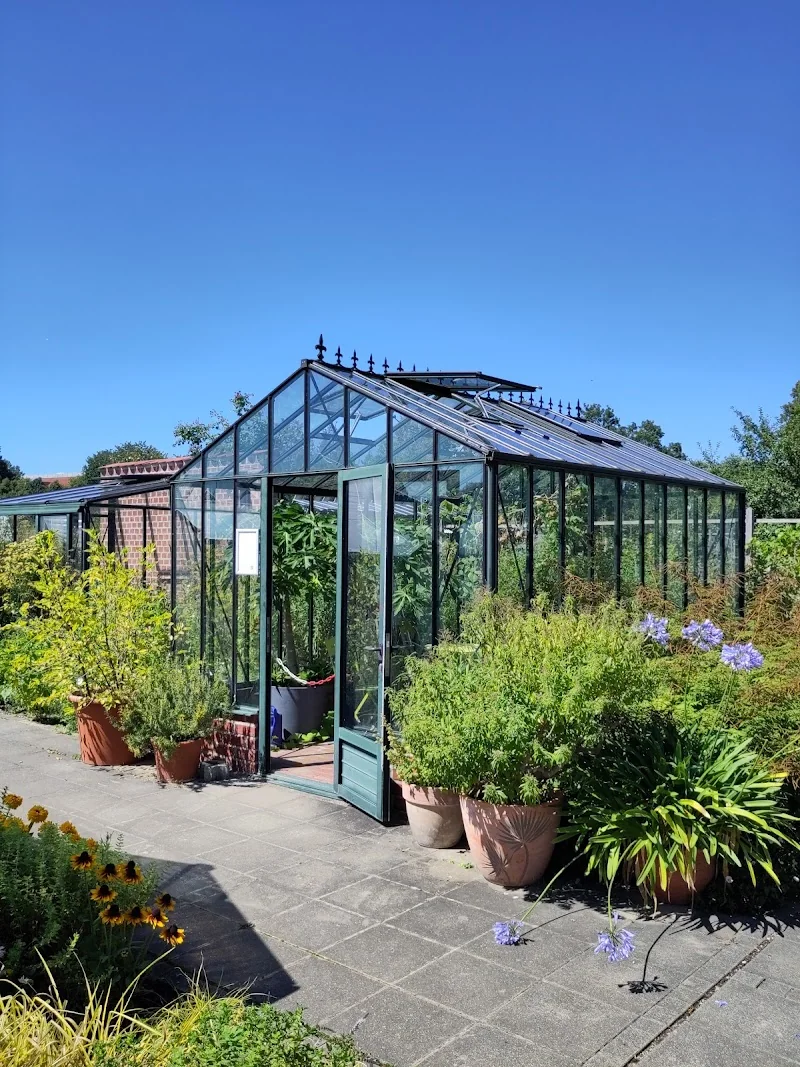
Am Staudengarten 7, Freising
Am Staudengarten 7, 85354 Freising, Germany
Allotment Garden | Allotment Garden Facility & Cultivation Tips
The allotment garden of the Weihenstephan Gardens in Freising is one of the most well-known demonstration gardens for home and leisure gardening in Bavaria. As part of the Weihenstephan-Triesdorf University, it imparts practical knowledge about vegetables, herbs, and fruits – from variety comparisons to crop rotation and automatic irrigation. Visitors experience how a productive, beautiful, and biodiverse vegetable garden can function on a small area. The garden area is located on Am Staudengarten street on the Weihenstephan hill; the administrative office of the Weihenstephan Gardens is at Am Staudengarten 7, while the garden entrance with a pavilion is often referred to as Am Staudengarten 8. Access is particularly easy thanks to the Freising city bus lines 638 and 639, and parking is available at the foot of the hill. The facility is open seasonally (April 1 to October 31) daily with free admission; public tours and group tours complement the offerings. Thus, the allotment garden becomes a lively learning place for hobby gardeners, school classes, and professionals alike – with immediate aha moments at every bed.
Allotment Garden Facility Weihenstephan: Overview for Allotment Gardeners and Visitors
Entering the gate of the allotment garden is like stepping into a walkable textbook for small-scale cultivation. The focus is on practical answers to the questions that allotment gardeners everywhere are concerned about: Which vegetable varieties yield reliably? How do I plan a crop rotation that conserves the soil? Which crops benefit from a protected location in a small greenhouse and which thrive better outdoors? The beds, greenhouse sections, and experimental setups provide illustrative answers to these questions. Raised and hill beds demonstrate how nutrient-rich, warm substrate layers can be used for early sowing and long harvest seasons. In addition, row beds show how careful variety selection influences yield, taste, resilience, and maintenance effort – from classic lettuce to carrots and beans to heat-loving species like tomatoes and peppers. Over 50 spices and medicinal herbs demonstrate how herb areas can bring versatility to the kitchen while also attracting insects. A fruit display area illustrates solutions for small gardens: Espalier fruit, columnar or bush fruit, and suitable rootstocks save space, facilitate maintenance, and fit well into design concepts with paths, perennials, and beneficial plants. Equally important is water supply: Automatic irrigation systems show how drip lines and controls can water precisely and reduce evaporation losses. Additionally, experiments on fertilization and soil health are conducted – compost, organic fertilizers, and mulch are compared in terms of effectiveness and effort. Because the allotment garden is part of the overall ensemble of the Weihenstephan Gardens, visitors also benefit from the scenic setting: The arboretum connects the higher garden areas with the display and allotment gardens along Am Staudengarten street. This allows for an ideal combination of a garden visit with a walk through the courtyard, parterre, and Oberdieck gardens. Admission is free for individual visitors; this underscores the educational mission and invites multiple visits throughout the year to observe the changes in the beds over spring, summer, and autumn.
Management, Allotment Garden Association, and Federation: Who Shapes the Demonstration Garden
The allotment garden is operated by the Weihenstephan-Triesdorf University. The Weihenstephan Gardens are teaching and experimental gardens of the university and thus an integral part of research, teaching, and knowledge transfer. The team conveys insights from experiments and practice directly to a broad audience – from novice gardeners to experienced allotment gardeners. This work is supported by the Friends of the Weihenstephan Gardens Association, which ideologically accompanies the gardens and contributes to events such as tours, lectures, or theme days. This management fundamentally distinguishes the allotment garden from traditional allotment associations: There are no leased plots, no association plots with individual management, and therefore no typical association formalities such as admission, lease contracts, or association work for tenants. Nevertheless, the allotment garden plays an important bridging role to organized allotment gardening in the region: Many contents – from intercropping and crop rotation to nature-friendly care – are directly applicable for allotment gardeners. Those interested in a leased garden can find contacts in local associations and the regional federation; in the state capital and surrounding area, this is, for example, the Munich Allotment Federation as the umbrella organization of many associations. The Weihenstephan allotment garden remains a showcase: Illustrative, research-oriented, and without threshold anxiety, it conveys how ecologically sensible and resource-conserving cultivation can succeed in everyday life. It also remains exciting for schools, university groups, and professional visitors – from plant use and soil science to water management and biodiversity. The close interconnection with the other garden areas (display garden, courtyard garden, parterre garden, Oberdieck garden, and arboretum) additionally provides insights into perennial use, shrub selection, and designed plant images. Visiting the garden thus also allows one to experience a part of the long Weihenstephan gardening tradition on the former monastery grounds – today a green teaching and research landscape with an international reputation.
Renting or Buying an Allotment Garden? Free Plots and Permanent Residency in Fact Check
The most common inquiries about allotment gardens revolve around free plots, renting, buying, and even permanent residency. For the Weihenstephan allotment garden, the answer is clear: It is a demonstration garden and not an allotment garden facility with leased individual plots. Therefore, no plots are allocated or sold; there is also no waiting list. Those specifically looking for a plot should contact local allotment associations and the responsible city or regional federations. In the Freising region and the greater Munich area, federations and associations advise on admission conditions, lease contracts, waiting times, and any additional fees. The Weihenstephan allotment garden serves a different purpose: It shows solutions that can be implemented immediately in one's own garden, regardless of lease questions – from compact varieties for pots and raised beds to space-saving training forms in fruit cultivation. Questions about permanent residency, which are often associated with the term allotment garden in search engines, are not relevant in Weihenstephan, as it is not about permanent living on a plot, but about knowledge transfer in the garden. Those planning a visit benefit from clear framework conditions: Individual visitors have free admission; groups can book tours. Seasonal public tours (for example, spring, summer, autumn in the allotment garden) make central themes accessible to all interested parties without registration. As a result, the demonstration garden does not serve the allocation of areas but the transfer of good practices – an advantage that helps many hobby gardeners make better cultivation decisions today, especially in times of long waiting lists, and to use the time until their own plot meaningfully.
Allotment Garden Law and Allotment Garden Insurance: What Applies at the Location
Legal and insurance-related questions often arise around allotment gardens. For the Weihenstephan allotment garden, the situation is clear: As a university demonstration and experimental facility without leased individual plots, the typical lease and usage regulations of the Federal Allotment Garden Law do not apply here. There are neither lease contracts nor building law questions regarding huts in the sense of an allotment garden colony – rather, the existing huts, pavilions, and small greenhouses are part of the didactic equipment of the demonstration garden. This creates clear, uncomplicated framework conditions for visitors: Admission is free during the season, and the garden paths are accessible during known opening hours. For booked group tours, the university's guidelines apply, such as maximum group size or procedures. A special allotment garden insurance is not required for the visit. From a good practice perspective, it is generally worthwhile to keep the usual insurance standards (for example, private liability of participants, if necessary) in mind for association activities or group trips; however, specific requirements arise from the university's regulations and not from the allotment garden law. Those coming with dogs should note that regulations vary depending on the garden area; dogs are allowed on a leash in the courtyard and parterre gardens, but not in other areas. For the allotment garden itself, the published visitor guidelines apply. Legally relevant topics such as leases, building regulations, or permanent residency do not concern the Weihenstephan allotment garden – here, the focus is on imparting gardening knowledge, not on managing individual plots.
Practical Tips from the Demonstration Garden: Raised Beds, Small Greenhouse, Variety Selection, and Irrigation
The special strength of the allotment garden lies in the connection between research-oriented experimental practice and practical implementation. Raised beds clearly demonstrate how layering, substrate selection, and microclimate affect growth, yield, and maintenance. In the spring season, they enable early sowing and protect young plants; in summer, they help bridge dry phases with good water supply and mulch cover. In the small greenhouse, strategies for heat-loving crops are illustrated – from tomatoes and peppers to cucumbers. Here, it is about variety-specific requirements, air circulation, pollination, and reducing diseases through roof protection and targeted irrigation. Outside in the open field, the beds exemplarily address the major levers of successful home gardens: crop rotation for soil health, intercropping to promote beneficial organisms and better land use, as well as variety selection with a focus on taste, robustness, and ripening time. Additionally, fertilization experiments provide comparative values between compost, organic fertilizers, and mineral applications. Particularly valuable is the herb area with over 50 spice and medicinal plants: It inspires for balcony boxes, pots, or herb spirals and illustrates how flowering areas attract insects and pollinators. A fruit display area shows space-saving training forms like espaliers or columnar fruit – a concrete added value for small gardens or plots where path layout, light incidence, and neighboring plantings must harmonize. The entire range of irrigation is visible: Drip systems for bed rows, controls with moisture sensors or timers, and strategies for water conservation through evaporation protection. All this is not intended as a rigid recipe but as an inspiring toolbox: Visitors take ideas with them that can be tested and adapted in their own gardens. Those visiting the facility at different times of the year also experience how cultivation planning and bed maintenance are orchestrated over the course of the season – from planting to care measures to harvest.
Directions and Visit: Address, Bus 638/639, Parking, as well as Tours and Opening Hours
The allotment garden is located on the Weihenstephan hill in Freising along Am Staudengarten street. For navigation purposes, Am Staudengarten 8 (entrance with pavilion) is often used; the administration of the Weihenstephan Gardens is located at Am Staudengarten 7. Those arriving by public transport can reach the area from Freising train station in a few minutes via city bus lines 638 and 639; nearby stops include Weihenstephaner Straße and Am Staudengarten, both within walking distance to the garden. For drivers, parking is available at the foot of the Weihenstephan hill, from where a short walk uphill leads to the garden entrance. Important for visit planning: The display garden, allotment garden, and Oberdieck garden are open seasonally from April 1 to October 31 daily from 9 am to 6 pm, and in the summer months of June to August until 7 pm. Admission is free. In addition to freely accessible visiting hours, there are public tours through the allotment garden (for example, with thematic focuses in spring, summer, and autumn). Group tours can be booked separately; the group size is limited, and demand is high, so early inquiries are recommended. For example, in the annual program 2025, tours in May and July were listed; seasonal dates will again be offered for 2026. For detailed questions about dates, meeting points, availability, and any costs, the published guidelines of the university are decisive. Tip for the visit: Plan more time and combine the allotment garden with a walk through the other Weihenstephan Gardens – this way, vegetable and herb beds can be ideally connected with perennial use, shrub questions, and designed plant images.
Sources:
- HSWT – The Weihenstephan Gardens (Official Site)
- Freising District – Weihenstephan Gardens: Allotment Garden (Portrait, Contact, Notes)
- City of Freising Tourism – The Gardens at Weihenstephan (Opening Hours, Overview)
- Bavarian State Institute for Viticulture and Horticulture – Weihenstephan Allotment Garden (Contents, Opening, Tours)
- HSWT Event Calendar – Tour: The Allotment Garden for Vegetables in Summer (Meeting Point Pavilion)
- Outdooractive – Arboretum Weihenstephan (Directions Public Transport 638/639, Parking at Weihenstephan Hill)
- Friends of the Weihenstephan Gardens – Annual Program 2025 (Example Dates for Allotment Garden Tours)
- TUM School of Life Sciences – Directions Weihenstephan (Stop Am Staudengarten, Bus 638)
Show moreShow less
Allotment Garden | Allotment Garden Facility & Cultivation Tips
The allotment garden of the Weihenstephan Gardens in Freising is one of the most well-known demonstration gardens for home and leisure gardening in Bavaria. As part of the Weihenstephan-Triesdorf University, it imparts practical knowledge about vegetables, herbs, and fruits – from variety comparisons to crop rotation and automatic irrigation. Visitors experience how a productive, beautiful, and biodiverse vegetable garden can function on a small area. The garden area is located on Am Staudengarten street on the Weihenstephan hill; the administrative office of the Weihenstephan Gardens is at Am Staudengarten 7, while the garden entrance with a pavilion is often referred to as Am Staudengarten 8. Access is particularly easy thanks to the Freising city bus lines 638 and 639, and parking is available at the foot of the hill. The facility is open seasonally (April 1 to October 31) daily with free admission; public tours and group tours complement the offerings. Thus, the allotment garden becomes a lively learning place for hobby gardeners, school classes, and professionals alike – with immediate aha moments at every bed.
Allotment Garden Facility Weihenstephan: Overview for Allotment Gardeners and Visitors
Entering the gate of the allotment garden is like stepping into a walkable textbook for small-scale cultivation. The focus is on practical answers to the questions that allotment gardeners everywhere are concerned about: Which vegetable varieties yield reliably? How do I plan a crop rotation that conserves the soil? Which crops benefit from a protected location in a small greenhouse and which thrive better outdoors? The beds, greenhouse sections, and experimental setups provide illustrative answers to these questions. Raised and hill beds demonstrate how nutrient-rich, warm substrate layers can be used for early sowing and long harvest seasons. In addition, row beds show how careful variety selection influences yield, taste, resilience, and maintenance effort – from classic lettuce to carrots and beans to heat-loving species like tomatoes and peppers. Over 50 spices and medicinal herbs demonstrate how herb areas can bring versatility to the kitchen while also attracting insects. A fruit display area illustrates solutions for small gardens: Espalier fruit, columnar or bush fruit, and suitable rootstocks save space, facilitate maintenance, and fit well into design concepts with paths, perennials, and beneficial plants. Equally important is water supply: Automatic irrigation systems show how drip lines and controls can water precisely and reduce evaporation losses. Additionally, experiments on fertilization and soil health are conducted – compost, organic fertilizers, and mulch are compared in terms of effectiveness and effort. Because the allotment garden is part of the overall ensemble of the Weihenstephan Gardens, visitors also benefit from the scenic setting: The arboretum connects the higher garden areas with the display and allotment gardens along Am Staudengarten street. This allows for an ideal combination of a garden visit with a walk through the courtyard, parterre, and Oberdieck gardens. Admission is free for individual visitors; this underscores the educational mission and invites multiple visits throughout the year to observe the changes in the beds over spring, summer, and autumn.
Management, Allotment Garden Association, and Federation: Who Shapes the Demonstration Garden
The allotment garden is operated by the Weihenstephan-Triesdorf University. The Weihenstephan Gardens are teaching and experimental gardens of the university and thus an integral part of research, teaching, and knowledge transfer. The team conveys insights from experiments and practice directly to a broad audience – from novice gardeners to experienced allotment gardeners. This work is supported by the Friends of the Weihenstephan Gardens Association, which ideologically accompanies the gardens and contributes to events such as tours, lectures, or theme days. This management fundamentally distinguishes the allotment garden from traditional allotment associations: There are no leased plots, no association plots with individual management, and therefore no typical association formalities such as admission, lease contracts, or association work for tenants. Nevertheless, the allotment garden plays an important bridging role to organized allotment gardening in the region: Many contents – from intercropping and crop rotation to nature-friendly care – are directly applicable for allotment gardeners. Those interested in a leased garden can find contacts in local associations and the regional federation; in the state capital and surrounding area, this is, for example, the Munich Allotment Federation as the umbrella organization of many associations. The Weihenstephan allotment garden remains a showcase: Illustrative, research-oriented, and without threshold anxiety, it conveys how ecologically sensible and resource-conserving cultivation can succeed in everyday life. It also remains exciting for schools, university groups, and professional visitors – from plant use and soil science to water management and biodiversity. The close interconnection with the other garden areas (display garden, courtyard garden, parterre garden, Oberdieck garden, and arboretum) additionally provides insights into perennial use, shrub selection, and designed plant images. Visiting the garden thus also allows one to experience a part of the long Weihenstephan gardening tradition on the former monastery grounds – today a green teaching and research landscape with an international reputation.
Renting or Buying an Allotment Garden? Free Plots and Permanent Residency in Fact Check
The most common inquiries about allotment gardens revolve around free plots, renting, buying, and even permanent residency. For the Weihenstephan allotment garden, the answer is clear: It is a demonstration garden and not an allotment garden facility with leased individual plots. Therefore, no plots are allocated or sold; there is also no waiting list. Those specifically looking for a plot should contact local allotment associations and the responsible city or regional federations. In the Freising region and the greater Munich area, federations and associations advise on admission conditions, lease contracts, waiting times, and any additional fees. The Weihenstephan allotment garden serves a different purpose: It shows solutions that can be implemented immediately in one's own garden, regardless of lease questions – from compact varieties for pots and raised beds to space-saving training forms in fruit cultivation. Questions about permanent residency, which are often associated with the term allotment garden in search engines, are not relevant in Weihenstephan, as it is not about permanent living on a plot, but about knowledge transfer in the garden. Those planning a visit benefit from clear framework conditions: Individual visitors have free admission; groups can book tours. Seasonal public tours (for example, spring, summer, autumn in the allotment garden) make central themes accessible to all interested parties without registration. As a result, the demonstration garden does not serve the allocation of areas but the transfer of good practices – an advantage that helps many hobby gardeners make better cultivation decisions today, especially in times of long waiting lists, and to use the time until their own plot meaningfully.
Allotment Garden Law and Allotment Garden Insurance: What Applies at the Location
Legal and insurance-related questions often arise around allotment gardens. For the Weihenstephan allotment garden, the situation is clear: As a university demonstration and experimental facility without leased individual plots, the typical lease and usage regulations of the Federal Allotment Garden Law do not apply here. There are neither lease contracts nor building law questions regarding huts in the sense of an allotment garden colony – rather, the existing huts, pavilions, and small greenhouses are part of the didactic equipment of the demonstration garden. This creates clear, uncomplicated framework conditions for visitors: Admission is free during the season, and the garden paths are accessible during known opening hours. For booked group tours, the university's guidelines apply, such as maximum group size or procedures. A special allotment garden insurance is not required for the visit. From a good practice perspective, it is generally worthwhile to keep the usual insurance standards (for example, private liability of participants, if necessary) in mind for association activities or group trips; however, specific requirements arise from the university's regulations and not from the allotment garden law. Those coming with dogs should note that regulations vary depending on the garden area; dogs are allowed on a leash in the courtyard and parterre gardens, but not in other areas. For the allotment garden itself, the published visitor guidelines apply. Legally relevant topics such as leases, building regulations, or permanent residency do not concern the Weihenstephan allotment garden – here, the focus is on imparting gardening knowledge, not on managing individual plots.
Practical Tips from the Demonstration Garden: Raised Beds, Small Greenhouse, Variety Selection, and Irrigation
The special strength of the allotment garden lies in the connection between research-oriented experimental practice and practical implementation. Raised beds clearly demonstrate how layering, substrate selection, and microclimate affect growth, yield, and maintenance. In the spring season, they enable early sowing and protect young plants; in summer, they help bridge dry phases with good water supply and mulch cover. In the small greenhouse, strategies for heat-loving crops are illustrated – from tomatoes and peppers to cucumbers. Here, it is about variety-specific requirements, air circulation, pollination, and reducing diseases through roof protection and targeted irrigation. Outside in the open field, the beds exemplarily address the major levers of successful home gardens: crop rotation for soil health, intercropping to promote beneficial organisms and better land use, as well as variety selection with a focus on taste, robustness, and ripening time. Additionally, fertilization experiments provide comparative values between compost, organic fertilizers, and mineral applications. Particularly valuable is the herb area with over 50 spice and medicinal plants: It inspires for balcony boxes, pots, or herb spirals and illustrates how flowering areas attract insects and pollinators. A fruit display area shows space-saving training forms like espaliers or columnar fruit – a concrete added value for small gardens or plots where path layout, light incidence, and neighboring plantings must harmonize. The entire range of irrigation is visible: Drip systems for bed rows, controls with moisture sensors or timers, and strategies for water conservation through evaporation protection. All this is not intended as a rigid recipe but as an inspiring toolbox: Visitors take ideas with them that can be tested and adapted in their own gardens. Those visiting the facility at different times of the year also experience how cultivation planning and bed maintenance are orchestrated over the course of the season – from planting to care measures to harvest.
Directions and Visit: Address, Bus 638/639, Parking, as well as Tours and Opening Hours
The allotment garden is located on the Weihenstephan hill in Freising along Am Staudengarten street. For navigation purposes, Am Staudengarten 8 (entrance with pavilion) is often used; the administration of the Weihenstephan Gardens is located at Am Staudengarten 7. Those arriving by public transport can reach the area from Freising train station in a few minutes via city bus lines 638 and 639; nearby stops include Weihenstephaner Straße and Am Staudengarten, both within walking distance to the garden. For drivers, parking is available at the foot of the Weihenstephan hill, from where a short walk uphill leads to the garden entrance. Important for visit planning: The display garden, allotment garden, and Oberdieck garden are open seasonally from April 1 to October 31 daily from 9 am to 6 pm, and in the summer months of June to August until 7 pm. Admission is free. In addition to freely accessible visiting hours, there are public tours through the allotment garden (for example, with thematic focuses in spring, summer, and autumn). Group tours can be booked separately; the group size is limited, and demand is high, so early inquiries are recommended. For example, in the annual program 2025, tours in May and July were listed; seasonal dates will again be offered for 2026. For detailed questions about dates, meeting points, availability, and any costs, the published guidelines of the university are decisive. Tip for the visit: Plan more time and combine the allotment garden with a walk through the other Weihenstephan Gardens – this way, vegetable and herb beds can be ideally connected with perennial use, shrub questions, and designed plant images.
Sources:
- HSWT – The Weihenstephan Gardens (Official Site)
- Freising District – Weihenstephan Gardens: Allotment Garden (Portrait, Contact, Notes)
- City of Freising Tourism – The Gardens at Weihenstephan (Opening Hours, Overview)
- Bavarian State Institute for Viticulture and Horticulture – Weihenstephan Allotment Garden (Contents, Opening, Tours)
- HSWT Event Calendar – Tour: The Allotment Garden for Vegetables in Summer (Meeting Point Pavilion)
- Outdooractive – Arboretum Weihenstephan (Directions Public Transport 638/639, Parking at Weihenstephan Hill)
- Friends of the Weihenstephan Gardens – Annual Program 2025 (Example Dates for Allotment Garden Tours)
- TUM School of Life Sciences – Directions Weihenstephan (Stop Am Staudengarten, Bus 638)
Allotment Garden | Allotment Garden Facility & Cultivation Tips
The allotment garden of the Weihenstephan Gardens in Freising is one of the most well-known demonstration gardens for home and leisure gardening in Bavaria. As part of the Weihenstephan-Triesdorf University, it imparts practical knowledge about vegetables, herbs, and fruits – from variety comparisons to crop rotation and automatic irrigation. Visitors experience how a productive, beautiful, and biodiverse vegetable garden can function on a small area. The garden area is located on Am Staudengarten street on the Weihenstephan hill; the administrative office of the Weihenstephan Gardens is at Am Staudengarten 7, while the garden entrance with a pavilion is often referred to as Am Staudengarten 8. Access is particularly easy thanks to the Freising city bus lines 638 and 639, and parking is available at the foot of the hill. The facility is open seasonally (April 1 to October 31) daily with free admission; public tours and group tours complement the offerings. Thus, the allotment garden becomes a lively learning place for hobby gardeners, school classes, and professionals alike – with immediate aha moments at every bed.
Allotment Garden Facility Weihenstephan: Overview for Allotment Gardeners and Visitors
Entering the gate of the allotment garden is like stepping into a walkable textbook for small-scale cultivation. The focus is on practical answers to the questions that allotment gardeners everywhere are concerned about: Which vegetable varieties yield reliably? How do I plan a crop rotation that conserves the soil? Which crops benefit from a protected location in a small greenhouse and which thrive better outdoors? The beds, greenhouse sections, and experimental setups provide illustrative answers to these questions. Raised and hill beds demonstrate how nutrient-rich, warm substrate layers can be used for early sowing and long harvest seasons. In addition, row beds show how careful variety selection influences yield, taste, resilience, and maintenance effort – from classic lettuce to carrots and beans to heat-loving species like tomatoes and peppers. Over 50 spices and medicinal herbs demonstrate how herb areas can bring versatility to the kitchen while also attracting insects. A fruit display area illustrates solutions for small gardens: Espalier fruit, columnar or bush fruit, and suitable rootstocks save space, facilitate maintenance, and fit well into design concepts with paths, perennials, and beneficial plants. Equally important is water supply: Automatic irrigation systems show how drip lines and controls can water precisely and reduce evaporation losses. Additionally, experiments on fertilization and soil health are conducted – compost, organic fertilizers, and mulch are compared in terms of effectiveness and effort. Because the allotment garden is part of the overall ensemble of the Weihenstephan Gardens, visitors also benefit from the scenic setting: The arboretum connects the higher garden areas with the display and allotment gardens along Am Staudengarten street. This allows for an ideal combination of a garden visit with a walk through the courtyard, parterre, and Oberdieck gardens. Admission is free for individual visitors; this underscores the educational mission and invites multiple visits throughout the year to observe the changes in the beds over spring, summer, and autumn.
Management, Allotment Garden Association, and Federation: Who Shapes the Demonstration Garden
The allotment garden is operated by the Weihenstephan-Triesdorf University. The Weihenstephan Gardens are teaching and experimental gardens of the university and thus an integral part of research, teaching, and knowledge transfer. The team conveys insights from experiments and practice directly to a broad audience – from novice gardeners to experienced allotment gardeners. This work is supported by the Friends of the Weihenstephan Gardens Association, which ideologically accompanies the gardens and contributes to events such as tours, lectures, or theme days. This management fundamentally distinguishes the allotment garden from traditional allotment associations: There are no leased plots, no association plots with individual management, and therefore no typical association formalities such as admission, lease contracts, or association work for tenants. Nevertheless, the allotment garden plays an important bridging role to organized allotment gardening in the region: Many contents – from intercropping and crop rotation to nature-friendly care – are directly applicable for allotment gardeners. Those interested in a leased garden can find contacts in local associations and the regional federation; in the state capital and surrounding area, this is, for example, the Munich Allotment Federation as the umbrella organization of many associations. The Weihenstephan allotment garden remains a showcase: Illustrative, research-oriented, and without threshold anxiety, it conveys how ecologically sensible and resource-conserving cultivation can succeed in everyday life. It also remains exciting for schools, university groups, and professional visitors – from plant use and soil science to water management and biodiversity. The close interconnection with the other garden areas (display garden, courtyard garden, parterre garden, Oberdieck garden, and arboretum) additionally provides insights into perennial use, shrub selection, and designed plant images. Visiting the garden thus also allows one to experience a part of the long Weihenstephan gardening tradition on the former monastery grounds – today a green teaching and research landscape with an international reputation.
Renting or Buying an Allotment Garden? Free Plots and Permanent Residency in Fact Check
The most common inquiries about allotment gardens revolve around free plots, renting, buying, and even permanent residency. For the Weihenstephan allotment garden, the answer is clear: It is a demonstration garden and not an allotment garden facility with leased individual plots. Therefore, no plots are allocated or sold; there is also no waiting list. Those specifically looking for a plot should contact local allotment associations and the responsible city or regional federations. In the Freising region and the greater Munich area, federations and associations advise on admission conditions, lease contracts, waiting times, and any additional fees. The Weihenstephan allotment garden serves a different purpose: It shows solutions that can be implemented immediately in one's own garden, regardless of lease questions – from compact varieties for pots and raised beds to space-saving training forms in fruit cultivation. Questions about permanent residency, which are often associated with the term allotment garden in search engines, are not relevant in Weihenstephan, as it is not about permanent living on a plot, but about knowledge transfer in the garden. Those planning a visit benefit from clear framework conditions: Individual visitors have free admission; groups can book tours. Seasonal public tours (for example, spring, summer, autumn in the allotment garden) make central themes accessible to all interested parties without registration. As a result, the demonstration garden does not serve the allocation of areas but the transfer of good practices – an advantage that helps many hobby gardeners make better cultivation decisions today, especially in times of long waiting lists, and to use the time until their own plot meaningfully.
Allotment Garden Law and Allotment Garden Insurance: What Applies at the Location
Legal and insurance-related questions often arise around allotment gardens. For the Weihenstephan allotment garden, the situation is clear: As a university demonstration and experimental facility without leased individual plots, the typical lease and usage regulations of the Federal Allotment Garden Law do not apply here. There are neither lease contracts nor building law questions regarding huts in the sense of an allotment garden colony – rather, the existing huts, pavilions, and small greenhouses are part of the didactic equipment of the demonstration garden. This creates clear, uncomplicated framework conditions for visitors: Admission is free during the season, and the garden paths are accessible during known opening hours. For booked group tours, the university's guidelines apply, such as maximum group size or procedures. A special allotment garden insurance is not required for the visit. From a good practice perspective, it is generally worthwhile to keep the usual insurance standards (for example, private liability of participants, if necessary) in mind for association activities or group trips; however, specific requirements arise from the university's regulations and not from the allotment garden law. Those coming with dogs should note that regulations vary depending on the garden area; dogs are allowed on a leash in the courtyard and parterre gardens, but not in other areas. For the allotment garden itself, the published visitor guidelines apply. Legally relevant topics such as leases, building regulations, or permanent residency do not concern the Weihenstephan allotment garden – here, the focus is on imparting gardening knowledge, not on managing individual plots.
Practical Tips from the Demonstration Garden: Raised Beds, Small Greenhouse, Variety Selection, and Irrigation
The special strength of the allotment garden lies in the connection between research-oriented experimental practice and practical implementation. Raised beds clearly demonstrate how layering, substrate selection, and microclimate affect growth, yield, and maintenance. In the spring season, they enable early sowing and protect young plants; in summer, they help bridge dry phases with good water supply and mulch cover. In the small greenhouse, strategies for heat-loving crops are illustrated – from tomatoes and peppers to cucumbers. Here, it is about variety-specific requirements, air circulation, pollination, and reducing diseases through roof protection and targeted irrigation. Outside in the open field, the beds exemplarily address the major levers of successful home gardens: crop rotation for soil health, intercropping to promote beneficial organisms and better land use, as well as variety selection with a focus on taste, robustness, and ripening time. Additionally, fertilization experiments provide comparative values between compost, organic fertilizers, and mineral applications. Particularly valuable is the herb area with over 50 spice and medicinal plants: It inspires for balcony boxes, pots, or herb spirals and illustrates how flowering areas attract insects and pollinators. A fruit display area shows space-saving training forms like espaliers or columnar fruit – a concrete added value for small gardens or plots where path layout, light incidence, and neighboring plantings must harmonize. The entire range of irrigation is visible: Drip systems for bed rows, controls with moisture sensors or timers, and strategies for water conservation through evaporation protection. All this is not intended as a rigid recipe but as an inspiring toolbox: Visitors take ideas with them that can be tested and adapted in their own gardens. Those visiting the facility at different times of the year also experience how cultivation planning and bed maintenance are orchestrated over the course of the season – from planting to care measures to harvest.
Directions and Visit: Address, Bus 638/639, Parking, as well as Tours and Opening Hours
The allotment garden is located on the Weihenstephan hill in Freising along Am Staudengarten street. For navigation purposes, Am Staudengarten 8 (entrance with pavilion) is often used; the administration of the Weihenstephan Gardens is located at Am Staudengarten 7. Those arriving by public transport can reach the area from Freising train station in a few minutes via city bus lines 638 and 639; nearby stops include Weihenstephaner Straße and Am Staudengarten, both within walking distance to the garden. For drivers, parking is available at the foot of the Weihenstephan hill, from where a short walk uphill leads to the garden entrance. Important for visit planning: The display garden, allotment garden, and Oberdieck garden are open seasonally from April 1 to October 31 daily from 9 am to 6 pm, and in the summer months of June to August until 7 pm. Admission is free. In addition to freely accessible visiting hours, there are public tours through the allotment garden (for example, with thematic focuses in spring, summer, and autumn). Group tours can be booked separately; the group size is limited, and demand is high, so early inquiries are recommended. For example, in the annual program 2025, tours in May and July were listed; seasonal dates will again be offered for 2026. For detailed questions about dates, meeting points, availability, and any costs, the published guidelines of the university are decisive. Tip for the visit: Plan more time and combine the allotment garden with a walk through the other Weihenstephan Gardens – this way, vegetable and herb beds can be ideally connected with perennial use, shrub questions, and designed plant images.
Sources:
- HSWT – The Weihenstephan Gardens (Official Site)
- Freising District – Weihenstephan Gardens: Allotment Garden (Portrait, Contact, Notes)
- City of Freising Tourism – The Gardens at Weihenstephan (Opening Hours, Overview)
- Bavarian State Institute for Viticulture and Horticulture – Weihenstephan Allotment Garden (Contents, Opening, Tours)
- HSWT Event Calendar – Tour: The Allotment Garden for Vegetables in Summer (Meeting Point Pavilion)
- Outdooractive – Arboretum Weihenstephan (Directions Public Transport 638/639, Parking at Weihenstephan Hill)
- Friends of the Weihenstephan Gardens – Annual Program 2025 (Example Dates for Allotment Garden Tours)
- TUM School of Life Sciences – Directions Weihenstephan (Stop Am Staudengarten, Bus 638)
Frequently Asked Questions
Reviews
Kristijan Kuš
20. April 2019
...Beautiful small botanical garden specialised for cultivating fruits and vegetables, decorated with flowers and many garden stuff, like benches, wooden houses etc. Real little paradise for eyes and nose...
Karlheinz Scholtz
28. September 2025
A must for every allotment gardener. Comprehensive information and practical tips for garden design. Information sheets and brochures on plant care, as well as other useful information, are available in the pavilion.
Sunlion
11. August 2024
Demonstration allotment garden for vegetables in Weihenstephan near Freising. A great allotment garden for testing various cultivation methods of fruits, berries, vegetables, and flowering plants. Growing in raised beds and cold frames is demonstrated alongside the cultivation of heat-loving vegetables in a clay greenhouse.
Olli
10. June 2022
A very beautiful garden with a variety of vegetables and fruits, lovingly landscaped. Unfortunately, there are some empty spaces in the fruit section that would be great if they were closed. Unfortunately, the number of plants has been reduced even further. We hope that new plants will be planted there soon. Overall, though, a source of inspiration for all lovers of kitchen gardens.
Patrice Kaiser
26. May 2019
A small garden with many different fruit trees, flowers, and vegetables. Good for allotment gardeners to find inspiration.