
Freising
Oberer Schlangenweg, 85354 Freising, Deutschland
Korbiniansbrünnlein | Photos & Directions
The Korbiniansbrünnlein is one of the most impressive memorial sites in Freising, as legend, landscape, and city history come together here. At the Weihenstephaner Berg, below the ruins of the former Korbinianskapelle, lies the spring that is closely associated with Saint Korbinian in tradition. Those who visit the site experience not a loud excursion destination, but a quiet, almost meditative place with historical depth. This mixture makes the spring interesting for locals, pilgrims, and guests alike: it is a destination for a short walk as well as for a conscious exploration of a Freising identity landscape. The city of Freising, the tourist information, and TUM all describe the site as an important part of the Korbinian heritage and as a station in the Weihenstephaner environment. ([freising.de](https://www.freising.de/rathaus/thema-des-monats/auf-korbinians-spuren-durch-freising))
It is particularly striking that the Korbiniansbrünnlein is not only a spring but also a cultural memorial space. The legend tells of a holy man who is said to have awakened the spring with his walking stick on the southern slope of the mountain. Later, structures were built over it, the remnants of which are still visible today and shape the site. This is why the spring does not appear as an isolated monument but as a chapter in the larger Freising Korbinian narrative: Domberg, Weihenstephaner Berg, cityscape, customs, and pilgrimage paths interconnect. Therefore, anyone searching for Korbiniansbrünnlein Freising, Korbinian spring, or Asamkapelle will repeatedly arrive at the same historical focus. This is important for SEO because the search queries, although formulated differently, target the same content core: a noteworthy, spiritually charged Freising spring with strong local ties. ([freising.de](https://www.freising.de/rathaus/thema-des-monats/auf-korbinians-spuren-durch-freising))
Korbiniansbrünnlein Freising: Legend, Location, and Significance
The most important theme surrounding the Korbiniansbrünnlein is the legend itself. According to Freising city and tourism information, Saint Korbinian is said to have thrust a walking stick into the ground on the southern slope of the Weihenstephaner Berg, causing water to spring forth and the spring later received his name. This narrative is not merely folkloric embellishment but the reason why the site has been perceived as healing and significant for centuries. The city of Freising explicitly describes the spring sanctuary as a place that has long been a popular pilgrimage destination. The perspective is thus doubly exciting: on the one hand, there is the tradition of the miracle, and on the other, the real historical use as a place of devotion and destination for pilgrims. This is exactly what makes the site so valuable for visitors seeking a quiet yet significant Freising attraction. ([freising.de](https://www.freising.de/rathaus/thema-des-monats/auf-korbinians-spuren-durch-freising))
The location also contributes significantly to the fascination. The Weihenstephaner Berg is a historically shaped landscape area where former monastery complexes, gardens, paths, and viewpoints overlap. The city of Freising presents the spring in its Korbinian tours as a station between the old town and Weihenstephan; the tour leads to the places associated with the work of the saint and incorporates the spring as a visible memorial site. This makes it understandable why search queries target not only the spring itself but also Freising, Weihenstephaner Berg, and Korbinian: the site is part of a whole network of history, religion, and urban development. For visitors, this means that a detour to the spring has the most impact when it is not seen as an isolated attraction but as part of a larger Freising narrative. ([freising.de](https://www.freising.de/rathaus/thema-des-monats/auf-korbinians-spuren-durch-freising))
Korbinianskapelle and Asamkapelle: History of the Spring Sanctuary
The historical depth of the site is particularly evident at the Korbinianskapelle, which stood above the spring. According to TUM, the spring is the former location of this chapel, which was designed by the Asam brothers in 1720 and is therefore also known as the Asamkapelle. Furthermore, the university points out that a previous chapel had already been erected at the same location in 1608. The city heritage preservation of Freising adds that the baroque round building was consecrated on July 14, 1720, and that the site had already been used as a pilgrimage destination for centuries. This creates a clear historical picture: first the older chapel, then the baroque new building, and finally the present ruin as a visible testament to past piety and architecture. ([ls.tum.de](https://www.ls.tum.de/ls/ueber-uns/geschichte/))
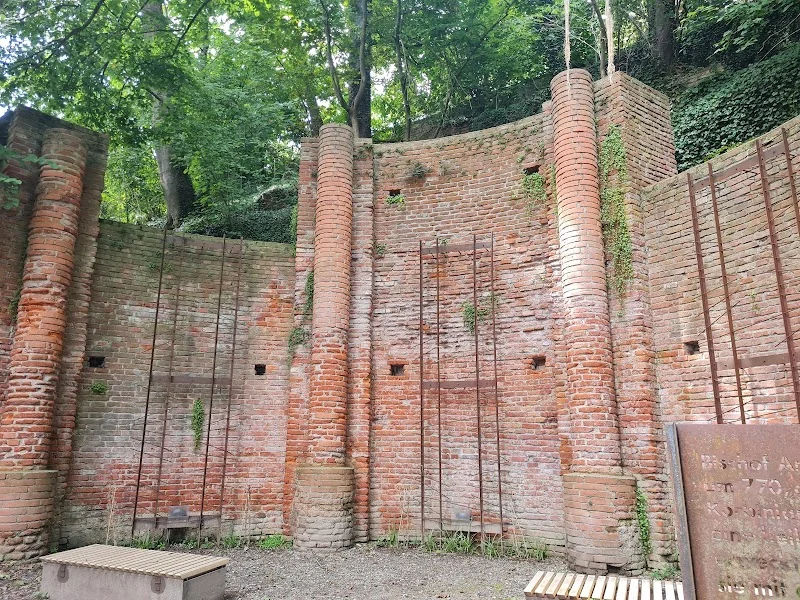
The secularization then brought the cut. Both TUM and the city heritage preservation explain that the chapel was demolished in 1803. However, it could not be completely removed because parts of the walls had to be preserved for structural reasons and still stand today as a ruin on the slope. This circumstance gives the site its special character: one does not only see a spring but also the trace of a lost building, the remnants of which keep history visible. The Freising tourist information also refers to the spring sanctuary as one of the oldest spring sanctuaries in Bavaria and particularly highlights the connection between spring, chapel, and place of devotion. Therefore, anyone searching for Asamkapelle Freising or Korbinianskapelle is actually looking for one of the most significant religious and cultural-historical sites on the Weihenstephaner Berg. ([freising.de](https://www.freising.de/rathaus/thema-des-monats/auf-korbinians-spuren-durch-freising))
For today's experience, it is important that the ruin is not just an old wall fragment but part of a consciously perceived memorial landscape. The historical site has been linked over generations with healing water, pilgrimage, and local veneration. The nature and city walking materials of the city of Freising explicitly lead visitors to the ruins of the Korbinianskapelle and to the spring, that is, to where history and terrain still interact today. This combination is particularly important for SEO and content: the search intent behind terms like Korbiniansbrünnlein photos, Korbinian spring, or Korbinianskapelle is not purely technical but visual and narrative. People want to see what the place looks like, understand why it came into being, and know why it is still significant for Freising today. ([freising.de](https://www.freising.de/rathaus/thema-des-monats/auf-korbinians-spuren-durch-freising))
Photos, Visits, and Opening Hours at Weihenstephaner Berg
Anyone wishing to visit the Korbiniansbrünnlein needs to plan their time correctly. The city of Freising states clear opening hours: from April 1 to December 31, the spring can be visited daily from sunrise to sunset. Outside this period, it is also open on Saturdays and Sundays from sunrise to sunset. This regulation makes it clear that the site is consciously maintained as a historical open space and does not function as a classic event destination. Therefore, a visit is particularly worthwhile in good light: the ruin, the slope, and the spring have a particularly atmospheric effect in the morning and evening. So, those looking for the best photo motif will not find a spectacular show here but a quiet, almost timeless backdrop. This is what makes the spring so appealing for photos. ([freising.de](https://www.freising.de/rathaus/thema-des-monats/auf-korbinians-spuren-durch-freising))
It is also interesting for image searches that public photo collections exist. Wikimedia Commons has an extensive category for St. Korbinian in Freising, where images of the ruin and its surroundings can also be found. This is especially helpful for users searching for Korbiniansbrünnlein photos who want to see in advance how the ruin, the path, and the slope appear. The tourism and city pages also use image material that stages the site as a calm, historically significant point. Content-wise, the photo perspective is important because it meets the search interest “Korbiniansbrünnlein photos”: people do not want an abstract dataset but a picture of the reality on site. Therefore, it is advisable in the content to connect practical opening hours with visual orientation. This creates a useful page for visitors who want not only to read but also to plan and compare concretely. ([commons.wikimedia.org](https://commons.wikimedia.org/wiki/Category%3ASt._Korbinian_%28Freising%29?utm_source=openai))
The seasonal access also contributes to the special perception. A place that is only open at certain times and is embedded in a historical hilly landscape is automatically experienced differently than a sculpture in the city that is accessible at all times. Visitors tend to take their time, consciously walk the path, and often combine the visit with a walk on the Weihenstephaner Berg or through the historical facilities. This also creates emotional added value: the spring is not consumed but discovered. This attitude fits the search terms surrounding photos, visits, and opening hours because they show that users rely on real preparation. The most important information remains simple but crucial: in the summer half-year, the site is open daily, in winter only on weekends, and the light of the Weihenstephaner Berg often provides the most beautiful shots. ([freising.de](https://www.freising.de/rathaus/thema-des-monats/auf-korbinians-spuren-durch-freising))
Directions and Parking for Korbiniansbrünnlein
The approach to the Korbiniansbrünnlein is uncomplicated when considering the Freising urban area as a whole. The Freising tourist information refers to an overview system with parking spaces for cars, buses, and people with limited mobility for the old town. For tour buses, the Korbiniansbrücke at the corner of Luitpoldstraße/Erdinger Straße and the Luitpoldanlage are specifically mentioned. This does not mean that parking is directly at the spring sanctuary, but it shows how the name Korbiniansbrücke is anchored in the urban traffic system. Therefore, those arriving by car should orient themselves to the downtown parking spaces and then combine the visit with a walk to the Weihenstephaner Berg. ([tourismus.freising.de](https://tourismus.freising.de/en/service/getting-here-parking))
The path itself is also part of the experience. The tourist signpost describes that one reaches the Korbiniansbrünnlein via the garden area and the viewpoint down to the stairs. This is helpful for visitors searching for directions Freising or parking Freising but actually needing a walking route with local orientation. Especially at a site like this, the pedestrian perspective is crucial: the approach via paths, stairs, and viewpoints sharpens the perception of the historical site. Moreover, the Weihenstephaner Berg is well accessible due to its integration into the city, making the visit attractive even without extensive planning. The officially described route supports the impression that the spring is not an isolated parking area but part of a cultivated walking and memorial space. ([tourismus.freising.de](https://tourismus.freising.de/tourismus/user_upload/images/Service/Broschueren/PDF_Broschueren/touristischer-wegweiser-freising-2025.pdf))
For day visitors from Munich or the surrounding area, Freising is also generally well connected. The tourism page mentions regional trains, the S1 and the RE 22, as well as the proximity to Munich Airport. This is not specific to the spring but important for travel planning if one combines the visit with a city walk or a Korbinian tour. Those specifically researching Korbiniansbrünnlein, Korbinian spring, or Korbiniansbrücke often seek a combination of orientation, attraction, and practical access. Therefore, a clear classification is sensible: arrive in Freising by train or car, then proceed towards the old town or Weihenstephaner Berg and follow the historical circular route. This way, a search query becomes a real visit. ([tourismus.freising.de](https://tourismus.freising.de/en/service/getting-here-parking))
Korbiniansbrücke, Korbinian Spring, and Other Freising Locations
The search query for Korbiniansbrücke often appears together with the spring because both places are connected through Saint Korbinian and play an important role in Freising. The city's tourist route names the old Korbiniansbrücke as the last highlight of the circular path. There, seven impressive bridge figures, including Saint Korbinian, provide a conclusion with a wide view over the Isar. At the same time, the Korbiniansbrücke appears in the traffic and parking context because buses can stop or park there. For SEO logic, this means: the user intent behind Korbiniansbrücke Freising is not identical to the search for the spring, but both topics are content-wise connected because they form the same historical name space. ([tourismus.freising.de](https://tourismus.freising.de/tourismus/user_upload/images/Service/Broschueren/PDF_Broschueren/touristischer-wegweiser-freising-2025.pdf))
The term Korbinian spring also leads to the same context, just with a different spelling or habit. The official texts refer to the Korbiniansbrünnlein, the Korbiniansquelle, or the spring sanctuary. Therefore, if someone enters the colloquial term Korbinian spring, they are most often looking for the same place on the Weihenstephaner Berg. Additionally, Freising is shaped by Korbinian in many places: the city patron plays a central role in the coat of arms, in tours, in festivals, and in the tourist narrative. The city and the tourism office mention him as a fundamental figure of Freising identity, and Saint Korbinian is also present in the Domberg context. This makes it clear that the spring is just one building block in a larger city history. ([tourismus.freising.de](https://tourismus.freising.de/sehenswert/domberg/korbinian-der-baer))
Particularly exciting is the connection with the Korbiniansfest and the city tours. The Freising tourism pages describe Korbinian as the patron saint and refer to pilgrimage and tour offerings that connect Domberg, old town, and Weihenstephaner Berg. This creates a thematic arc for visitors: from the city center through the holy bishop to the spring on the slope. Therefore, those searching for Freising attractions or the Korbinian legend receive not just a single photo motif but a whole network of places, rituals, and memory points. This networking is the SEO value of the page: it not only answers the direct question about the spring but also the indirect search intents surrounding bridge, spring, bear, and city patron. ([tourismus.freising.de](https://tourismus.freising.de/sehenswert/domberg/korbinian-der-baer))
Frequently Asked Questions about Korbiniansbrünnlein and Korbinian Spring
Where can I find the Korbiniansbrünnlein the fastest? The easiest way to reach the site is via the Weihenstephaner Berg. The city of Freising describes the access through the garden area and the stairs down to the spring sanctuary. If you are in the city center, you can easily combine the visit with a walk through the Korbinian circular path. ([tourismus.freising.de](https://tourismus.freising.de/tourismus/user_upload/images/Service/Broschueren/PDF_Broschueren/touristischer-wegweiser-freising-2025.pdf))
Is the spring just a fountain or a historical site? It is much more than a simple fountain. The official representation speaks of a spring sanctuary that is connected to the Korbinian legend, the former Korbinianskapelle, and a long history of pilgrimage. Therefore, the site is equally exciting for culture and religion enthusiasts. ([freising.de](https://www.freising.de/rathaus/thema-des-monats/auf-korbinians-spuren-durch-freising))
Can I easily combine the Korbiniansbrünnlein with other Freising destinations? Yes. Particularly obvious are the Weihenstephaner Berg, the ruins of the Korbinianskapelle, the city tours about Saint Korbinian, and the Korbiniansbrücke. The Freising route suggestions show that the spring is part of a larger walk through the Korbinian sites of the city. ([tourismus.freising.de](https://tourismus.freising.de/tourismus/user_upload/images/Service/Broschueren/PDF_Broschueren/touristischer-wegweiser-freising-2025.pdf))
Why is the site so popular for photos? Because the combination of slope location, ruins, spring, and historical context is very atmospheric. The mix of nature, wall remnants, and sacred memory provides images that appear calm and yet historically significant. Public image collections like Wikimedia Commons additionally make this perspective accessible. ([commons.wikimedia.org](https://commons.wikimedia.org/wiki/Category%3ASt._Korbinian_%28Freising%29?utm_source=openai))
What should I consider when planning? Mainly the opening hours and the path. The spring is seasonally accessible, and the best visits usually occur in daylight. Those wishing to park should pay attention to the downtown and bus parking information from the tourist information and view the path to the Weihenstephaner Berg as part of the experience. ([freising.de](https://www.freising.de/rathaus/thema-des-monats/auf-korbinians-spuren-durch-freising))
Sources:
- City of Freising – Following in Korbinian's Footsteps through Freising
- Tourism Freising – Getting Here & Parking
- TUM School of Life Sciences – History of Weihenstephan
- City Heritage Preservation Freising – 300 Years of Korbinianskapelle
- Wikimedia Commons – St. Korbinian (Freising)
- Tourism Freising – Tourist Guide Freising 2025
Show moreShow less
Korbiniansbrünnlein | Photos & Directions
The Korbiniansbrünnlein is one of the most impressive memorial sites in Freising, as legend, landscape, and city history come together here. At the Weihenstephaner Berg, below the ruins of the former Korbinianskapelle, lies the spring that is closely associated with Saint Korbinian in tradition. Those who visit the site experience not a loud excursion destination, but a quiet, almost meditative place with historical depth. This mixture makes the spring interesting for locals, pilgrims, and guests alike: it is a destination for a short walk as well as for a conscious exploration of a Freising identity landscape. The city of Freising, the tourist information, and TUM all describe the site as an important part of the Korbinian heritage and as a station in the Weihenstephaner environment. ([freising.de](https://www.freising.de/rathaus/thema-des-monats/auf-korbinians-spuren-durch-freising))
It is particularly striking that the Korbiniansbrünnlein is not only a spring but also a cultural memorial space. The legend tells of a holy man who is said to have awakened the spring with his walking stick on the southern slope of the mountain. Later, structures were built over it, the remnants of which are still visible today and shape the site. This is why the spring does not appear as an isolated monument but as a chapter in the larger Freising Korbinian narrative: Domberg, Weihenstephaner Berg, cityscape, customs, and pilgrimage paths interconnect. Therefore, anyone searching for Korbiniansbrünnlein Freising, Korbinian spring, or Asamkapelle will repeatedly arrive at the same historical focus. This is important for SEO because the search queries, although formulated differently, target the same content core: a noteworthy, spiritually charged Freising spring with strong local ties. ([freising.de](https://www.freising.de/rathaus/thema-des-monats/auf-korbinians-spuren-durch-freising))
Korbiniansbrünnlein Freising: Legend, Location, and Significance
The most important theme surrounding the Korbiniansbrünnlein is the legend itself. According to Freising city and tourism information, Saint Korbinian is said to have thrust a walking stick into the ground on the southern slope of the Weihenstephaner Berg, causing water to spring forth and the spring later received his name. This narrative is not merely folkloric embellishment but the reason why the site has been perceived as healing and significant for centuries. The city of Freising explicitly describes the spring sanctuary as a place that has long been a popular pilgrimage destination. The perspective is thus doubly exciting: on the one hand, there is the tradition of the miracle, and on the other, the real historical use as a place of devotion and destination for pilgrims. This is exactly what makes the site so valuable for visitors seeking a quiet yet significant Freising attraction. ([freising.de](https://www.freising.de/rathaus/thema-des-monats/auf-korbinians-spuren-durch-freising))
The location also contributes significantly to the fascination. The Weihenstephaner Berg is a historically shaped landscape area where former monastery complexes, gardens, paths, and viewpoints overlap. The city of Freising presents the spring in its Korbinian tours as a station between the old town and Weihenstephan; the tour leads to the places associated with the work of the saint and incorporates the spring as a visible memorial site. This makes it understandable why search queries target not only the spring itself but also Freising, Weihenstephaner Berg, and Korbinian: the site is part of a whole network of history, religion, and urban development. For visitors, this means that a detour to the spring has the most impact when it is not seen as an isolated attraction but as part of a larger Freising narrative. ([freising.de](https://www.freising.de/rathaus/thema-des-monats/auf-korbinians-spuren-durch-freising))
Korbinianskapelle and Asamkapelle: History of the Spring Sanctuary
The historical depth of the site is particularly evident at the Korbinianskapelle, which stood above the spring. According to TUM, the spring is the former location of this chapel, which was designed by the Asam brothers in 1720 and is therefore also known as the Asamkapelle. Furthermore, the university points out that a previous chapel had already been erected at the same location in 1608. The city heritage preservation of Freising adds that the baroque round building was consecrated on July 14, 1720, and that the site had already been used as a pilgrimage destination for centuries. This creates a clear historical picture: first the older chapel, then the baroque new building, and finally the present ruin as a visible testament to past piety and architecture. ([ls.tum.de](https://www.ls.tum.de/ls/ueber-uns/geschichte/))
The secularization then brought the cut. Both TUM and the city heritage preservation explain that the chapel was demolished in 1803. However, it could not be completely removed because parts of the walls had to be preserved for structural reasons and still stand today as a ruin on the slope. This circumstance gives the site its special character: one does not only see a spring but also the trace of a lost building, the remnants of which keep history visible. The Freising tourist information also refers to the spring sanctuary as one of the oldest spring sanctuaries in Bavaria and particularly highlights the connection between spring, chapel, and place of devotion. Therefore, anyone searching for Asamkapelle Freising or Korbinianskapelle is actually looking for one of the most significant religious and cultural-historical sites on the Weihenstephaner Berg. ([freising.de](https://www.freising.de/rathaus/thema-des-monats/auf-korbinians-spuren-durch-freising))
For today's experience, it is important that the ruin is not just an old wall fragment but part of a consciously perceived memorial landscape. The historical site has been linked over generations with healing water, pilgrimage, and local veneration. The nature and city walking materials of the city of Freising explicitly lead visitors to the ruins of the Korbinianskapelle and to the spring, that is, to where history and terrain still interact today. This combination is particularly important for SEO and content: the search intent behind terms like Korbiniansbrünnlein photos, Korbinian spring, or Korbinianskapelle is not purely technical but visual and narrative. People want to see what the place looks like, understand why it came into being, and know why it is still significant for Freising today. ([freising.de](https://www.freising.de/rathaus/thema-des-monats/auf-korbinians-spuren-durch-freising))
Photos, Visits, and Opening Hours at Weihenstephaner Berg
Anyone wishing to visit the Korbiniansbrünnlein needs to plan their time correctly. The city of Freising states clear opening hours: from April 1 to December 31, the spring can be visited daily from sunrise to sunset. Outside this period, it is also open on Saturdays and Sundays from sunrise to sunset. This regulation makes it clear that the site is consciously maintained as a historical open space and does not function as a classic event destination. Therefore, a visit is particularly worthwhile in good light: the ruin, the slope, and the spring have a particularly atmospheric effect in the morning and evening. So, those looking for the best photo motif will not find a spectacular show here but a quiet, almost timeless backdrop. This is what makes the spring so appealing for photos. ([freising.de](https://www.freising.de/rathaus/thema-des-monats/auf-korbinians-spuren-durch-freising))
It is also interesting for image searches that public photo collections exist. Wikimedia Commons has an extensive category for St. Korbinian in Freising, where images of the ruin and its surroundings can also be found. This is especially helpful for users searching for Korbiniansbrünnlein photos who want to see in advance how the ruin, the path, and the slope appear. The tourism and city pages also use image material that stages the site as a calm, historically significant point. Content-wise, the photo perspective is important because it meets the search interest “Korbiniansbrünnlein photos”: people do not want an abstract dataset but a picture of the reality on site. Therefore, it is advisable in the content to connect practical opening hours with visual orientation. This creates a useful page for visitors who want not only to read but also to plan and compare concretely. ([commons.wikimedia.org](https://commons.wikimedia.org/wiki/Category%3ASt._Korbinian_%28Freising%29?utm_source=openai))
The seasonal access also contributes to the special perception. A place that is only open at certain times and is embedded in a historical hilly landscape is automatically experienced differently than a sculpture in the city that is accessible at all times. Visitors tend to take their time, consciously walk the path, and often combine the visit with a walk on the Weihenstephaner Berg or through the historical facilities. This also creates emotional added value: the spring is not consumed but discovered. This attitude fits the search terms surrounding photos, visits, and opening hours because they show that users rely on real preparation. The most important information remains simple but crucial: in the summer half-year, the site is open daily, in winter only on weekends, and the light of the Weihenstephaner Berg often provides the most beautiful shots. ([freising.de](https://www.freising.de/rathaus/thema-des-monats/auf-korbinians-spuren-durch-freising))
Directions and Parking for Korbiniansbrünnlein
The approach to the Korbiniansbrünnlein is uncomplicated when considering the Freising urban area as a whole. The Freising tourist information refers to an overview system with parking spaces for cars, buses, and people with limited mobility for the old town. For tour buses, the Korbiniansbrücke at the corner of Luitpoldstraße/Erdinger Straße and the Luitpoldanlage are specifically mentioned. This does not mean that parking is directly at the spring sanctuary, but it shows how the name Korbiniansbrücke is anchored in the urban traffic system. Therefore, those arriving by car should orient themselves to the downtown parking spaces and then combine the visit with a walk to the Weihenstephaner Berg. ([tourismus.freising.de](https://tourismus.freising.de/en/service/getting-here-parking))
The path itself is also part of the experience. The tourist signpost describes that one reaches the Korbiniansbrünnlein via the garden area and the viewpoint down to the stairs. This is helpful for visitors searching for directions Freising or parking Freising but actually needing a walking route with local orientation. Especially at a site like this, the pedestrian perspective is crucial: the approach via paths, stairs, and viewpoints sharpens the perception of the historical site. Moreover, the Weihenstephaner Berg is well accessible due to its integration into the city, making the visit attractive even without extensive planning. The officially described route supports the impression that the spring is not an isolated parking area but part of a cultivated walking and memorial space. ([tourismus.freising.de](https://tourismus.freising.de/tourismus/user_upload/images/Service/Broschueren/PDF_Broschueren/touristischer-wegweiser-freising-2025.pdf))
For day visitors from Munich or the surrounding area, Freising is also generally well connected. The tourism page mentions regional trains, the S1 and the RE 22, as well as the proximity to Munich Airport. This is not specific to the spring but important for travel planning if one combines the visit with a city walk or a Korbinian tour. Those specifically researching Korbiniansbrünnlein, Korbinian spring, or Korbiniansbrücke often seek a combination of orientation, attraction, and practical access. Therefore, a clear classification is sensible: arrive in Freising by train or car, then proceed towards the old town or Weihenstephaner Berg and follow the historical circular route. This way, a search query becomes a real visit. ([tourismus.freising.de](https://tourismus.freising.de/en/service/getting-here-parking))
Korbiniansbrücke, Korbinian Spring, and Other Freising Locations
The search query for Korbiniansbrücke often appears together with the spring because both places are connected through Saint Korbinian and play an important role in Freising. The city's tourist route names the old Korbiniansbrücke as the last highlight of the circular path. There, seven impressive bridge figures, including Saint Korbinian, provide a conclusion with a wide view over the Isar. At the same time, the Korbiniansbrücke appears in the traffic and parking context because buses can stop or park there. For SEO logic, this means: the user intent behind Korbiniansbrücke Freising is not identical to the search for the spring, but both topics are content-wise connected because they form the same historical name space. ([tourismus.freising.de](https://tourismus.freising.de/tourismus/user_upload/images/Service/Broschueren/PDF_Broschueren/touristischer-wegweiser-freising-2025.pdf))
The term Korbinian spring also leads to the same context, just with a different spelling or habit. The official texts refer to the Korbiniansbrünnlein, the Korbiniansquelle, or the spring sanctuary. Therefore, if someone enters the colloquial term Korbinian spring, they are most often looking for the same place on the Weihenstephaner Berg. Additionally, Freising is shaped by Korbinian in many places: the city patron plays a central role in the coat of arms, in tours, in festivals, and in the tourist narrative. The city and the tourism office mention him as a fundamental figure of Freising identity, and Saint Korbinian is also present in the Domberg context. This makes it clear that the spring is just one building block in a larger city history. ([tourismus.freising.de](https://tourismus.freising.de/sehenswert/domberg/korbinian-der-baer))
Particularly exciting is the connection with the Korbiniansfest and the city tours. The Freising tourism pages describe Korbinian as the patron saint and refer to pilgrimage and tour offerings that connect Domberg, old town, and Weihenstephaner Berg. This creates a thematic arc for visitors: from the city center through the holy bishop to the spring on the slope. Therefore, those searching for Freising attractions or the Korbinian legend receive not just a single photo motif but a whole network of places, rituals, and memory points. This networking is the SEO value of the page: it not only answers the direct question about the spring but also the indirect search intents surrounding bridge, spring, bear, and city patron. ([tourismus.freising.de](https://tourismus.freising.de/sehenswert/domberg/korbinian-der-baer))
Frequently Asked Questions about Korbiniansbrünnlein and Korbinian Spring
Where can I find the Korbiniansbrünnlein the fastest? The easiest way to reach the site is via the Weihenstephaner Berg. The city of Freising describes the access through the garden area and the stairs down to the spring sanctuary. If you are in the city center, you can easily combine the visit with a walk through the Korbinian circular path. ([tourismus.freising.de](https://tourismus.freising.de/tourismus/user_upload/images/Service/Broschueren/PDF_Broschueren/touristischer-wegweiser-freising-2025.pdf))
Is the spring just a fountain or a historical site? It is much more than a simple fountain. The official representation speaks of a spring sanctuary that is connected to the Korbinian legend, the former Korbinianskapelle, and a long history of pilgrimage. Therefore, the site is equally exciting for culture and religion enthusiasts. ([freising.de](https://www.freising.de/rathaus/thema-des-monats/auf-korbinians-spuren-durch-freising))
Can I easily combine the Korbiniansbrünnlein with other Freising destinations? Yes. Particularly obvious are the Weihenstephaner Berg, the ruins of the Korbinianskapelle, the city tours about Saint Korbinian, and the Korbiniansbrücke. The Freising route suggestions show that the spring is part of a larger walk through the Korbinian sites of the city. ([tourismus.freising.de](https://tourismus.freising.de/tourismus/user_upload/images/Service/Broschueren/PDF_Broschueren/touristischer-wegweiser-freising-2025.pdf))
Why is the site so popular for photos? Because the combination of slope location, ruins, spring, and historical context is very atmospheric. The mix of nature, wall remnants, and sacred memory provides images that appear calm and yet historically significant. Public image collections like Wikimedia Commons additionally make this perspective accessible. ([commons.wikimedia.org](https://commons.wikimedia.org/wiki/Category%3ASt._Korbinian_%28Freising%29?utm_source=openai))
What should I consider when planning? Mainly the opening hours and the path. The spring is seasonally accessible, and the best visits usually occur in daylight. Those wishing to park should pay attention to the downtown and bus parking information from the tourist information and view the path to the Weihenstephaner Berg as part of the experience. ([freising.de](https://www.freising.de/rathaus/thema-des-monats/auf-korbinians-spuren-durch-freising))
Sources:
- City of Freising – Following in Korbinian's Footsteps through Freising
- Tourism Freising – Getting Here & Parking
- TUM School of Life Sciences – History of Weihenstephan
- City Heritage Preservation Freising – 300 Years of Korbinianskapelle
- Wikimedia Commons – St. Korbinian (Freising)
- Tourism Freising – Tourist Guide Freising 2025
Korbiniansbrünnlein | Photos & Directions
The Korbiniansbrünnlein is one of the most impressive memorial sites in Freising, as legend, landscape, and city history come together here. At the Weihenstephaner Berg, below the ruins of the former Korbinianskapelle, lies the spring that is closely associated with Saint Korbinian in tradition. Those who visit the site experience not a loud excursion destination, but a quiet, almost meditative place with historical depth. This mixture makes the spring interesting for locals, pilgrims, and guests alike: it is a destination for a short walk as well as for a conscious exploration of a Freising identity landscape. The city of Freising, the tourist information, and TUM all describe the site as an important part of the Korbinian heritage and as a station in the Weihenstephaner environment. ([freising.de](https://www.freising.de/rathaus/thema-des-monats/auf-korbinians-spuren-durch-freising))
It is particularly striking that the Korbiniansbrünnlein is not only a spring but also a cultural memorial space. The legend tells of a holy man who is said to have awakened the spring with his walking stick on the southern slope of the mountain. Later, structures were built over it, the remnants of which are still visible today and shape the site. This is why the spring does not appear as an isolated monument but as a chapter in the larger Freising Korbinian narrative: Domberg, Weihenstephaner Berg, cityscape, customs, and pilgrimage paths interconnect. Therefore, anyone searching for Korbiniansbrünnlein Freising, Korbinian spring, or Asamkapelle will repeatedly arrive at the same historical focus. This is important for SEO because the search queries, although formulated differently, target the same content core: a noteworthy, spiritually charged Freising spring with strong local ties. ([freising.de](https://www.freising.de/rathaus/thema-des-monats/auf-korbinians-spuren-durch-freising))
Korbiniansbrünnlein Freising: Legend, Location, and Significance
The most important theme surrounding the Korbiniansbrünnlein is the legend itself. According to Freising city and tourism information, Saint Korbinian is said to have thrust a walking stick into the ground on the southern slope of the Weihenstephaner Berg, causing water to spring forth and the spring later received his name. This narrative is not merely folkloric embellishment but the reason why the site has been perceived as healing and significant for centuries. The city of Freising explicitly describes the spring sanctuary as a place that has long been a popular pilgrimage destination. The perspective is thus doubly exciting: on the one hand, there is the tradition of the miracle, and on the other, the real historical use as a place of devotion and destination for pilgrims. This is exactly what makes the site so valuable for visitors seeking a quiet yet significant Freising attraction. ([freising.de](https://www.freising.de/rathaus/thema-des-monats/auf-korbinians-spuren-durch-freising))
The location also contributes significantly to the fascination. The Weihenstephaner Berg is a historically shaped landscape area where former monastery complexes, gardens, paths, and viewpoints overlap. The city of Freising presents the spring in its Korbinian tours as a station between the old town and Weihenstephan; the tour leads to the places associated with the work of the saint and incorporates the spring as a visible memorial site. This makes it understandable why search queries target not only the spring itself but also Freising, Weihenstephaner Berg, and Korbinian: the site is part of a whole network of history, religion, and urban development. For visitors, this means that a detour to the spring has the most impact when it is not seen as an isolated attraction but as part of a larger Freising narrative. ([freising.de](https://www.freising.de/rathaus/thema-des-monats/auf-korbinians-spuren-durch-freising))
Korbinianskapelle and Asamkapelle: History of the Spring Sanctuary
The historical depth of the site is particularly evident at the Korbinianskapelle, which stood above the spring. According to TUM, the spring is the former location of this chapel, which was designed by the Asam brothers in 1720 and is therefore also known as the Asamkapelle. Furthermore, the university points out that a previous chapel had already been erected at the same location in 1608. The city heritage preservation of Freising adds that the baroque round building was consecrated on July 14, 1720, and that the site had already been used as a pilgrimage destination for centuries. This creates a clear historical picture: first the older chapel, then the baroque new building, and finally the present ruin as a visible testament to past piety and architecture. ([ls.tum.de](https://www.ls.tum.de/ls/ueber-uns/geschichte/))
The secularization then brought the cut. Both TUM and the city heritage preservation explain that the chapel was demolished in 1803. However, it could not be completely removed because parts of the walls had to be preserved for structural reasons and still stand today as a ruin on the slope. This circumstance gives the site its special character: one does not only see a spring but also the trace of a lost building, the remnants of which keep history visible. The Freising tourist information also refers to the spring sanctuary as one of the oldest spring sanctuaries in Bavaria and particularly highlights the connection between spring, chapel, and place of devotion. Therefore, anyone searching for Asamkapelle Freising or Korbinianskapelle is actually looking for one of the most significant religious and cultural-historical sites on the Weihenstephaner Berg. ([freising.de](https://www.freising.de/rathaus/thema-des-monats/auf-korbinians-spuren-durch-freising))
For today's experience, it is important that the ruin is not just an old wall fragment but part of a consciously perceived memorial landscape. The historical site has been linked over generations with healing water, pilgrimage, and local veneration. The nature and city walking materials of the city of Freising explicitly lead visitors to the ruins of the Korbinianskapelle and to the spring, that is, to where history and terrain still interact today. This combination is particularly important for SEO and content: the search intent behind terms like Korbiniansbrünnlein photos, Korbinian spring, or Korbinianskapelle is not purely technical but visual and narrative. People want to see what the place looks like, understand why it came into being, and know why it is still significant for Freising today. ([freising.de](https://www.freising.de/rathaus/thema-des-monats/auf-korbinians-spuren-durch-freising))
Photos, Visits, and Opening Hours at Weihenstephaner Berg
Anyone wishing to visit the Korbiniansbrünnlein needs to plan their time correctly. The city of Freising states clear opening hours: from April 1 to December 31, the spring can be visited daily from sunrise to sunset. Outside this period, it is also open on Saturdays and Sundays from sunrise to sunset. This regulation makes it clear that the site is consciously maintained as a historical open space and does not function as a classic event destination. Therefore, a visit is particularly worthwhile in good light: the ruin, the slope, and the spring have a particularly atmospheric effect in the morning and evening. So, those looking for the best photo motif will not find a spectacular show here but a quiet, almost timeless backdrop. This is what makes the spring so appealing for photos. ([freising.de](https://www.freising.de/rathaus/thema-des-monats/auf-korbinians-spuren-durch-freising))
It is also interesting for image searches that public photo collections exist. Wikimedia Commons has an extensive category for St. Korbinian in Freising, where images of the ruin and its surroundings can also be found. This is especially helpful for users searching for Korbiniansbrünnlein photos who want to see in advance how the ruin, the path, and the slope appear. The tourism and city pages also use image material that stages the site as a calm, historically significant point. Content-wise, the photo perspective is important because it meets the search interest “Korbiniansbrünnlein photos”: people do not want an abstract dataset but a picture of the reality on site. Therefore, it is advisable in the content to connect practical opening hours with visual orientation. This creates a useful page for visitors who want not only to read but also to plan and compare concretely. ([commons.wikimedia.org](https://commons.wikimedia.org/wiki/Category%3ASt._Korbinian_%28Freising%29?utm_source=openai))
The seasonal access also contributes to the special perception. A place that is only open at certain times and is embedded in a historical hilly landscape is automatically experienced differently than a sculpture in the city that is accessible at all times. Visitors tend to take their time, consciously walk the path, and often combine the visit with a walk on the Weihenstephaner Berg or through the historical facilities. This also creates emotional added value: the spring is not consumed but discovered. This attitude fits the search terms surrounding photos, visits, and opening hours because they show that users rely on real preparation. The most important information remains simple but crucial: in the summer half-year, the site is open daily, in winter only on weekends, and the light of the Weihenstephaner Berg often provides the most beautiful shots. ([freising.de](https://www.freising.de/rathaus/thema-des-monats/auf-korbinians-spuren-durch-freising))
Directions and Parking for Korbiniansbrünnlein
The approach to the Korbiniansbrünnlein is uncomplicated when considering the Freising urban area as a whole. The Freising tourist information refers to an overview system with parking spaces for cars, buses, and people with limited mobility for the old town. For tour buses, the Korbiniansbrücke at the corner of Luitpoldstraße/Erdinger Straße and the Luitpoldanlage are specifically mentioned. This does not mean that parking is directly at the spring sanctuary, but it shows how the name Korbiniansbrücke is anchored in the urban traffic system. Therefore, those arriving by car should orient themselves to the downtown parking spaces and then combine the visit with a walk to the Weihenstephaner Berg. ([tourismus.freising.de](https://tourismus.freising.de/en/service/getting-here-parking))
The path itself is also part of the experience. The tourist signpost describes that one reaches the Korbiniansbrünnlein via the garden area and the viewpoint down to the stairs. This is helpful for visitors searching for directions Freising or parking Freising but actually needing a walking route with local orientation. Especially at a site like this, the pedestrian perspective is crucial: the approach via paths, stairs, and viewpoints sharpens the perception of the historical site. Moreover, the Weihenstephaner Berg is well accessible due to its integration into the city, making the visit attractive even without extensive planning. The officially described route supports the impression that the spring is not an isolated parking area but part of a cultivated walking and memorial space. ([tourismus.freising.de](https://tourismus.freising.de/tourismus/user_upload/images/Service/Broschueren/PDF_Broschueren/touristischer-wegweiser-freising-2025.pdf))
For day visitors from Munich or the surrounding area, Freising is also generally well connected. The tourism page mentions regional trains, the S1 and the RE 22, as well as the proximity to Munich Airport. This is not specific to the spring but important for travel planning if one combines the visit with a city walk or a Korbinian tour. Those specifically researching Korbiniansbrünnlein, Korbinian spring, or Korbiniansbrücke often seek a combination of orientation, attraction, and practical access. Therefore, a clear classification is sensible: arrive in Freising by train or car, then proceed towards the old town or Weihenstephaner Berg and follow the historical circular route. This way, a search query becomes a real visit. ([tourismus.freising.de](https://tourismus.freising.de/en/service/getting-here-parking))
Korbiniansbrücke, Korbinian Spring, and Other Freising Locations
The search query for Korbiniansbrücke often appears together with the spring because both places are connected through Saint Korbinian and play an important role in Freising. The city's tourist route names the old Korbiniansbrücke as the last highlight of the circular path. There, seven impressive bridge figures, including Saint Korbinian, provide a conclusion with a wide view over the Isar. At the same time, the Korbiniansbrücke appears in the traffic and parking context because buses can stop or park there. For SEO logic, this means: the user intent behind Korbiniansbrücke Freising is not identical to the search for the spring, but both topics are content-wise connected because they form the same historical name space. ([tourismus.freising.de](https://tourismus.freising.de/tourismus/user_upload/images/Service/Broschueren/PDF_Broschueren/touristischer-wegweiser-freising-2025.pdf))
The term Korbinian spring also leads to the same context, just with a different spelling or habit. The official texts refer to the Korbiniansbrünnlein, the Korbiniansquelle, or the spring sanctuary. Therefore, if someone enters the colloquial term Korbinian spring, they are most often looking for the same place on the Weihenstephaner Berg. Additionally, Freising is shaped by Korbinian in many places: the city patron plays a central role in the coat of arms, in tours, in festivals, and in the tourist narrative. The city and the tourism office mention him as a fundamental figure of Freising identity, and Saint Korbinian is also present in the Domberg context. This makes it clear that the spring is just one building block in a larger city history. ([tourismus.freising.de](https://tourismus.freising.de/sehenswert/domberg/korbinian-der-baer))
Particularly exciting is the connection with the Korbiniansfest and the city tours. The Freising tourism pages describe Korbinian as the patron saint and refer to pilgrimage and tour offerings that connect Domberg, old town, and Weihenstephaner Berg. This creates a thematic arc for visitors: from the city center through the holy bishop to the spring on the slope. Therefore, those searching for Freising attractions or the Korbinian legend receive not just a single photo motif but a whole network of places, rituals, and memory points. This networking is the SEO value of the page: it not only answers the direct question about the spring but also the indirect search intents surrounding bridge, spring, bear, and city patron. ([tourismus.freising.de](https://tourismus.freising.de/sehenswert/domberg/korbinian-der-baer))
Frequently Asked Questions about Korbiniansbrünnlein and Korbinian Spring
Where can I find the Korbiniansbrünnlein the fastest? The easiest way to reach the site is via the Weihenstephaner Berg. The city of Freising describes the access through the garden area and the stairs down to the spring sanctuary. If you are in the city center, you can easily combine the visit with a walk through the Korbinian circular path. ([tourismus.freising.de](https://tourismus.freising.de/tourismus/user_upload/images/Service/Broschueren/PDF_Broschueren/touristischer-wegweiser-freising-2025.pdf))
Is the spring just a fountain or a historical site? It is much more than a simple fountain. The official representation speaks of a spring sanctuary that is connected to the Korbinian legend, the former Korbinianskapelle, and a long history of pilgrimage. Therefore, the site is equally exciting for culture and religion enthusiasts. ([freising.de](https://www.freising.de/rathaus/thema-des-monats/auf-korbinians-spuren-durch-freising))
Can I easily combine the Korbiniansbrünnlein with other Freising destinations? Yes. Particularly obvious are the Weihenstephaner Berg, the ruins of the Korbinianskapelle, the city tours about Saint Korbinian, and the Korbiniansbrücke. The Freising route suggestions show that the spring is part of a larger walk through the Korbinian sites of the city. ([tourismus.freising.de](https://tourismus.freising.de/tourismus/user_upload/images/Service/Broschueren/PDF_Broschueren/touristischer-wegweiser-freising-2025.pdf))
Why is the site so popular for photos? Because the combination of slope location, ruins, spring, and historical context is very atmospheric. The mix of nature, wall remnants, and sacred memory provides images that appear calm and yet historically significant. Public image collections like Wikimedia Commons additionally make this perspective accessible. ([commons.wikimedia.org](https://commons.wikimedia.org/wiki/Category%3ASt._Korbinian_%28Freising%29?utm_source=openai))
What should I consider when planning? Mainly the opening hours and the path. The spring is seasonally accessible, and the best visits usually occur in daylight. Those wishing to park should pay attention to the downtown and bus parking information from the tourist information and view the path to the Weihenstephaner Berg as part of the experience. ([freising.de](https://www.freising.de/rathaus/thema-des-monats/auf-korbinians-spuren-durch-freising))
Sources:
- City of Freising – Following in Korbinian's Footsteps through Freising
- Tourism Freising – Getting Here & Parking
- TUM School of Life Sciences – History of Weihenstephan
- City Heritage Preservation Freising – 300 Years of Korbinianskapelle
- Wikimedia Commons – St. Korbinian (Freising)
- Tourism Freising – Tourist Guide Freising 2025
Upcoming Events
No events found
Frequently Asked Questions
Reviews
Marco Rausch
5. August 2022
I was really looking forward to this. However, I couldn't make anything of the Brünnlein on-site. I understand that this is a historically significant place regarding the ruin and the secularization. However, there's hardly anything to notice or see on-site. I couldn't even find the spring, and it probably would have been locked anyway. To make matters worse, there were empty beer bottles lying around, which further spoiled the impression. I would have better spent my time admiring the beautiful gardens above. From here, a new staircase leads to the Brünnlein, unfortunately without a channel to make it easier to push bikes. So for me, it feels like there's just a stone, round wall on the slope.
Dirk Schröder
31. July 2020
Unassuming but with a long history, the Korbiniansbrünnlein is located on the southeast side of Weihenstephan. The staircase is newly renovated, and everything is clean and well-maintained. Anyone who enjoyed the view of the airport, the mountains, and Munich from above should definitely take the few meters to the Korbiniansbrünnlein.
W. W.
30. April 2018
A short stay, shady... newly renovated. Very nice.
Karlheinz Scholtz
5. August 2024
Remains of the St. Korbinan Chapel, also known as the Asam Chapel, on the southern slope of the Weihenstephaner Berg.
Roswitha Dworsky
29. March 2019
Always a great walk up to the Hofgarten 🌞