
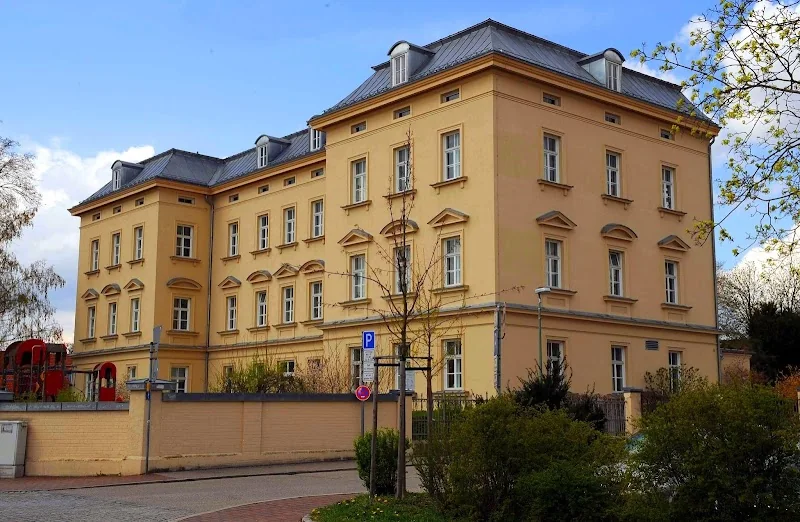
Freising
Kammergasse 16, 85354 Freising, Deutschland
Kreisbildungswerk Freising | Program & Parent School
The Catholic Kreisbildungswerk Freising e.V. is a life-oriented educational institution that supports people in the Freising district with courses, lectures, counseling, and guidance. The institution operates on the basis of a Christian view of humanity and the world, but explicitly describes itself as open to people of all ages, backgrounds, and lifestyles. This mix of attitude, practical relevance, and regional anchoring makes the KBW an important address for families, parents, adults, and volunteers. Those looking for programs, parent schools, further education, or family support will find an offer here that goes far beyond classic lectures and addresses everyday life in many phases of life. The website describes this with the guiding principle that education is for everyone and that knowledge should not remain abstract but should reach everyday life. Impressive numbers also come into play: On average, around 8,500 hours of educational work, about 1,400 events, and approximately 25,000 participants are generated each year. This shows that the KBW Freising is not just a single location but a versatile network of institutions, topics, and encounters in Freising. ([bildungswerk-freising.de](https://bildungswerk-freising.de/))
Program, Topics, and Events at the Kreisbildungswerk Freising
The program page is the heart of the institution for those specifically looking for courses, workshops, or lectures. There, the KBW presents its offerings under the motto that life-oriented education creates joy in learning and enables growth through knowledge. Users can search the program by keyword, location, and category, making the page particularly practical for recurring themes such as family courses, health, questions of faith, or further education. This structure is particularly important for an educational institution with many different target groups, as it facilitates entry and immediately shows how broad the offerings are. Visitors receive not only individual dates but also an overview of ongoing educational work and can filter offers by interests. The newsletter also plays a role: It informs monthly via email about events and plans, thus keeping track of the growing program. For the search intent program Freising, this is a decisive advantage because the KBW does not work with a static calendar but with a lively overview that is regularly updated. This creates a clear impression of an institution that is present throughout the year and organizes its content in such a way that families, adults, and interested parties can quickly find what is suitable. ([bildungswerk-freising.de](https://bildungswerk-freising.de/programm/))
In terms of content, the program shows a wide thematic range. The website features areas such as children, family & pregnancy, health & fitness, and questions of faith & knowledge of faith, along with additional categories like personality & further education, as well as cultural and social offerings. This mix makes the KBW particularly interesting for people with very different search intentions, as everyday questions meet health courses, family education meets spiritual topics, and practical help meets personal development. This is particularly visible in specific offerings such as Babyccino, baby massage, postpartum recovery, open meetings for families, or movement and relaxation offerings that regularly appear on the program page. Cultural formats such as game afternoons, dance evenings, or exchange formats are also part of the spectrum. The program page thus does not appear as a simple collection of dates but as a lively reflection of regional educational everyday life. Therefore, those searching for Kreisbildungswerk Freising program will find not only dates but a real thematic landscape with many access points for parents, grandparents, seekers, learners, and volunteers. ([bildungswerk-freising.de](https://bildungswerk-freising.de/programm/gesundheit-und-fitness/?utm_source=openai))
Family Center and Parent School in Freising
The Family Center is one of the most important building blocks of the KBW Freising and is explicitly described on the website as a parent school. Its task is to support and promote families in all their facets. The goal is to accompany parents and children on their shared journey and to provide them with tools so that education and relationships can be experienced as a valuable process of personal maturation. This attitude is not theoretical but palpable in the language of the institution: People should be empowered without overwhelming themselves or their children, and families should understand education and relationships as a continuous learning journey. Openness is also particularly important: All people are welcome, regardless of denomination, lifestyle, or origin. In this way, the KBW sends a consciously inclusive signal at a time when families have very different life realities. Additionally, there is a social fund that aims to enable people in financial distress to attend courses. The center is also a member of the LAG Bavarian Family Education Centers. For the search for parent school Freising or family center Freising, this is a clear orientation: It is not just about information but about concrete support in family everyday life. ([bildungswerk-freising.de](https://bildungswerk-freising.de/ueber-das-kbw-freising/zentrum-der-familie/?utm_source=openai))
The offerings of the Family Center are diverse and life-oriented. The website features, for example, baby massage courses, Babyccino as an open meeting for parents with babies, postpartum recovery courses in the evening, and open meetings for families. The parent-child program (EKP) is described on several pages as one of the highlights of the center and symbolizes the pedagogical claim of the institution. Additionally, counseling and conversation offerings are available, which, to a limited extent, also allow for personal support, such as psychosocial counseling and legal advice in family law matters. This combination of education, support, and concrete help makes the Family Center more than just a classic course location. It is a place where questions about pregnancy, childbirth, education, relationships, family organization, and personal relief can be addressed. Therefore, those searching for family education Freising or counseling and conversation offerings Freising will encounter a very differentiated offer that ranges from group formats to individual conversations. The special value lies in the combination of presence, reliability, and proximity to the everyday lives of the people who seek advice or exchange there. ([bildungswerk-freising.de](https://bildungswerk-freising.de/?utm_source=openai))
Daycare Center and Child Daycare
Another important part of the overall offering is the Daycare Center Freising. Its history dates back to 1993 when it was established as a project of the Bavarian State Ministry for Labor, Family, and Social Affairs. Since January 1, 1996, it has been a permanent institution in the city of Freising under the sponsorship of the Catholic Kreisbildungswerk. Since 2013, the Daycare Center has been an independent and non-profit GmbH as a subsidiary of the Kreisbildungswerk. The website also states that currently more than 30 daycare mothers work for the center and care for around 125 daycare children. These facts show how strongly the KBW is also anchored in the area of early childhood care. This is an important building block for families who want to reconcile work and family, as child daycare is not only an organizational solution but a pedagogically shaped care model with a family atmosphere. The institution makes it clear that good childcare is in high demand and that reliable, qualified offerings are needed. ([bildungswerk-freising.de](https://bildungswerk-freising.de/ueber-das-kbw-freising/tageselternzentrum/))
The Daycare Center has a dual task: It supports families while simultaneously qualifying professionals for child daycare. According to the website, parents are offered qualified, child-friendly, and family-oriented care, parents and daycare providers are advised before and during care, and new professionals are prepared for their responsible work through training and further education courses. For this purpose, there is a qualification course comprising 170 teaching units with practical relevance. The training covers pedagogical topics such as development, education, learning, and communication, while also conveying what is important in the work as a self-employed daycare mother. The next start date has been announced for spring 2027. The collaboration with the specialist service for child daycare at the Freising district office is also explicitly mentioned. For the search terms daycare center Freising or child daycare Freising, it is clear that this is not just about placement but about professional qualification, counseling, and a lasting strengthening of child daycare as an equal care offering. This makes the center an important partner for families and caregivers in the region. ([bildungswerk-freising.de](https://bildungswerk-freising.de/ueber-das-kbw-freising/tageselternzentrum/))
Special Educational Worlds, Photos, and Digital Insights
The Kreisbildungswerk Freising thrives not only on its core program but also on the so-called special educational worlds. On this page, the institution shows that it accompanies people on their journey with hundreds of events each year and creates learning opportunities, encounters, and moments full of joy and humor. These include offerings with a unique signature, particularly popular formats for years, and projects that are rarely found in Freising in such diversity. Visible examples include the parent-child program (EKP), senior studies, pilgrimages, thinking places, the think tank, courage spaces, speaking and listening, and parent talks. The spectrum is complemented by creative or life-oriented formats such as wild growth with wild plants throughout the year and Actionbound as a digital scavenger hunt through downtown Freising. This diversity is important for keyword research because it shows that search queries related to program, photos, or special offerings do not only refer to individual dates but often provide an impression of how colorful and lively the institution is overall. Therefore, the KBW Freising offers not only education but also surprising formats that go beyond classic course logic. ([bildungswerk-freising.de](https://bildungswerk-freising.de/besondere-bildungswelten/))
The visual appearance also fits this. The website uses image motifs on many pages that atmospherically capture offerings, people, and topics. In the footer of the contact pages, Facebook and Instagram are additionally linked, allowing interested parties to gain further impressions outside the main page. For the search intent Kreisbildungswerk Freising photos, this is particularly relevant because there is no need for an isolated image area to get a first impression: The homepage, program pages, and special educational worlds already provide many visual hints about how the institution operates. On the program and detail pages, locations are often connected with map hints and image areas, making it easy to grasp content and location quickly. This not only facilitates orientation but also conveys a certain closeness and openness that fits well with the institution's self-understanding. Therefore, those who want to inform themselves before a visit will find a good first look behind the scenes both on the website and through social channels. Thus, dry dates become lively insights into a house that makes education visible and tangible. ([bildungswerk-freising.de](https://bildungswerk-freising.de/kontakt/))
History, Mission, and Quality of the KBW Freising
The Kreisbildungswerk Freising sees itself as a grown regional institution with a clear structure. The website describes it as founded in 1971, as well as a non-profit, state-recognized institution according to the law for the promotion of adult education and as a member of the working group Catholic Adult Education in the Archdiocese of Munich and Freising, as well as the Catholic State Working Group for Adult Education in Bavaria. Additionally, specific organizational figures are provided: 64 member organizations, 55 volunteer educational representatives, 17 permanent employees, and 8 board members. This structure shows that the KBW is not only supported by a small team but by a broad community of full-time and volunteer members. This is one of its strengths: Education is not understood as a single project but as a communal task that is anchored in the region. This is also relevant for search terms like Catholic Kreisbildungswerk Freising e.V. or Kreisbildungswerk Freising, as the institutional identity is closely tied to the public educational mission. ([bildungswerk-freising.de](https://bildungswerk-freising.de/ueber-das-kbw-freising/))
For quality assurance, the website also refers to verifiable standards and shows corresponding logos such as CERTQUA and KEB. This fits a house that not only offers its work but also organizes it professionally. The guiding principle remains constant: The KBW aims to convey knowledge and competencies, support parents in education, promote self-determination, and strengthen families. At the same time, it is emphasized that education is for all people and that diversity is lived not only in the offerings but also in the attitude. The numbers of 8,500 hours of educational work, 1,400 events, and 25,000 participants per year underline this ambition. They show that the KBW Freising is a place with a significant impact in the everyday life of the region, from family education to further education to counseling and special formats. Therefore, those looking for a serious, established, and simultaneously open educational address in Freising will find here a house with history, mission, and a very clear personal signature. ([bildungswerk-freising.de](https://bildungswerk-freising.de/))
Contact, Location, and Directions to Kammergasse 16
The central address of the KBW Freising is Kammergasse 16, 2nd floor, 85354 Freising. There are the office, the family center, and the Daycare Center Freising. Additionally, the contact page lists other facilities such as the parent house at Kammergasse 9, the support point Kinderstube, and Elmo - Mobile Parent Support, also at Kammergasse 9. This is helpful for practical planning, as interested parties can quickly recognize which offer is available at which location. The office hours of the KBW office are Monday to Friday from 08:00 to 12:00 and Monday to Thursday from 13:00 to 16:00. The family center is accessible Monday to Friday from 09:00 to 11:30 and Tuesday and Thursday from 12:30 to 16:30. The Daycare Center has its own consultation hours, and the parent house as well as the other facilities have telephone and email contacts clearly listed on the website. This makes the contact structure very transparent and suitable for direct inquiries. ([bildungswerk-freising.de](https://bildungswerk-freising.de/kontakt/))
For those who want to visually orient themselves in advance, the imagery of the website and the social media channels are helpful. The homepage and program pages use image motifs that convey the character of the house, and the footer links to Facebook and Instagram provide additional insights into the everyday life of the institution. The program pages also feature map hints, making it easier to place the location in Freising. For the search intent photos or first impressions, this is important because the KBW does not only provide factual information but also atmospheric insights into programs and people. Those planning a visit should primarily use the respective facility page and contact details, as the most current times and points of contact are listed there. Thus, Kammergasse 16 becomes a well-accessible starting point for family education, counseling, encounters, and further education in Freising. ([bildungswerk-freising.de](https://bildungswerk-freising.de/kontakt/))
Sources:
Show moreShow less
Kreisbildungswerk Freising | Program & Parent School
The Catholic Kreisbildungswerk Freising e.V. is a life-oriented educational institution that supports people in the Freising district with courses, lectures, counseling, and guidance. The institution operates on the basis of a Christian view of humanity and the world, but explicitly describes itself as open to people of all ages, backgrounds, and lifestyles. This mix of attitude, practical relevance, and regional anchoring makes the KBW an important address for families, parents, adults, and volunteers. Those looking for programs, parent schools, further education, or family support will find an offer here that goes far beyond classic lectures and addresses everyday life in many phases of life. The website describes this with the guiding principle that education is for everyone and that knowledge should not remain abstract but should reach everyday life. Impressive numbers also come into play: On average, around 8,500 hours of educational work, about 1,400 events, and approximately 25,000 participants are generated each year. This shows that the KBW Freising is not just a single location but a versatile network of institutions, topics, and encounters in Freising. ([bildungswerk-freising.de](https://bildungswerk-freising.de/))
Program, Topics, and Events at the Kreisbildungswerk Freising
The program page is the heart of the institution for those specifically looking for courses, workshops, or lectures. There, the KBW presents its offerings under the motto that life-oriented education creates joy in learning and enables growth through knowledge. Users can search the program by keyword, location, and category, making the page particularly practical for recurring themes such as family courses, health, questions of faith, or further education. This structure is particularly important for an educational institution with many different target groups, as it facilitates entry and immediately shows how broad the offerings are. Visitors receive not only individual dates but also an overview of ongoing educational work and can filter offers by interests. The newsletter also plays a role: It informs monthly via email about events and plans, thus keeping track of the growing program. For the search intent program Freising, this is a decisive advantage because the KBW does not work with a static calendar but with a lively overview that is regularly updated. This creates a clear impression of an institution that is present throughout the year and organizes its content in such a way that families, adults, and interested parties can quickly find what is suitable. ([bildungswerk-freising.de](https://bildungswerk-freising.de/programm/))
In terms of content, the program shows a wide thematic range. The website features areas such as children, family & pregnancy, health & fitness, and questions of faith & knowledge of faith, along with additional categories like personality & further education, as well as cultural and social offerings. This mix makes the KBW particularly interesting for people with very different search intentions, as everyday questions meet health courses, family education meets spiritual topics, and practical help meets personal development. This is particularly visible in specific offerings such as Babyccino, baby massage, postpartum recovery, open meetings for families, or movement and relaxation offerings that regularly appear on the program page. Cultural formats such as game afternoons, dance evenings, or exchange formats are also part of the spectrum. The program page thus does not appear as a simple collection of dates but as a lively reflection of regional educational everyday life. Therefore, those searching for Kreisbildungswerk Freising program will find not only dates but a real thematic landscape with many access points for parents, grandparents, seekers, learners, and volunteers. ([bildungswerk-freising.de](https://bildungswerk-freising.de/programm/gesundheit-und-fitness/?utm_source=openai))
Family Center and Parent School in Freising
The Family Center is one of the most important building blocks of the KBW Freising and is explicitly described on the website as a parent school. Its task is to support and promote families in all their facets. The goal is to accompany parents and children on their shared journey and to provide them with tools so that education and relationships can be experienced as a valuable process of personal maturation. This attitude is not theoretical but palpable in the language of the institution: People should be empowered without overwhelming themselves or their children, and families should understand education and relationships as a continuous learning journey. Openness is also particularly important: All people are welcome, regardless of denomination, lifestyle, or origin. In this way, the KBW sends a consciously inclusive signal at a time when families have very different life realities. Additionally, there is a social fund that aims to enable people in financial distress to attend courses. The center is also a member of the LAG Bavarian Family Education Centers. For the search for parent school Freising or family center Freising, this is a clear orientation: It is not just about information but about concrete support in family everyday life. ([bildungswerk-freising.de](https://bildungswerk-freising.de/ueber-das-kbw-freising/zentrum-der-familie/?utm_source=openai))
The offerings of the Family Center are diverse and life-oriented. The website features, for example, baby massage courses, Babyccino as an open meeting for parents with babies, postpartum recovery courses in the evening, and open meetings for families. The parent-child program (EKP) is described on several pages as one of the highlights of the center and symbolizes the pedagogical claim of the institution. Additionally, counseling and conversation offerings are available, which, to a limited extent, also allow for personal support, such as psychosocial counseling and legal advice in family law matters. This combination of education, support, and concrete help makes the Family Center more than just a classic course location. It is a place where questions about pregnancy, childbirth, education, relationships, family organization, and personal relief can be addressed. Therefore, those searching for family education Freising or counseling and conversation offerings Freising will encounter a very differentiated offer that ranges from group formats to individual conversations. The special value lies in the combination of presence, reliability, and proximity to the everyday lives of the people who seek advice or exchange there. ([bildungswerk-freising.de](https://bildungswerk-freising.de/?utm_source=openai))
Daycare Center and Child Daycare
Another important part of the overall offering is the Daycare Center Freising. Its history dates back to 1993 when it was established as a project of the Bavarian State Ministry for Labor, Family, and Social Affairs. Since January 1, 1996, it has been a permanent institution in the city of Freising under the sponsorship of the Catholic Kreisbildungswerk. Since 2013, the Daycare Center has been an independent and non-profit GmbH as a subsidiary of the Kreisbildungswerk. The website also states that currently more than 30 daycare mothers work for the center and care for around 125 daycare children. These facts show how strongly the KBW is also anchored in the area of early childhood care. This is an important building block for families who want to reconcile work and family, as child daycare is not only an organizational solution but a pedagogically shaped care model with a family atmosphere. The institution makes it clear that good childcare is in high demand and that reliable, qualified offerings are needed. ([bildungswerk-freising.de](https://bildungswerk-freising.de/ueber-das-kbw-freising/tageselternzentrum/))
The Daycare Center has a dual task: It supports families while simultaneously qualifying professionals for child daycare. According to the website, parents are offered qualified, child-friendly, and family-oriented care, parents and daycare providers are advised before and during care, and new professionals are prepared for their responsible work through training and further education courses. For this purpose, there is a qualification course comprising 170 teaching units with practical relevance. The training covers pedagogical topics such as development, education, learning, and communication, while also conveying what is important in the work as a self-employed daycare mother. The next start date has been announced for spring 2027. The collaboration with the specialist service for child daycare at the Freising district office is also explicitly mentioned. For the search terms daycare center Freising or child daycare Freising, it is clear that this is not just about placement but about professional qualification, counseling, and a lasting strengthening of child daycare as an equal care offering. This makes the center an important partner for families and caregivers in the region. ([bildungswerk-freising.de](https://bildungswerk-freising.de/ueber-das-kbw-freising/tageselternzentrum/))
Special Educational Worlds, Photos, and Digital Insights
The Kreisbildungswerk Freising thrives not only on its core program but also on the so-called special educational worlds. On this page, the institution shows that it accompanies people on their journey with hundreds of events each year and creates learning opportunities, encounters, and moments full of joy and humor. These include offerings with a unique signature, particularly popular formats for years, and projects that are rarely found in Freising in such diversity. Visible examples include the parent-child program (EKP), senior studies, pilgrimages, thinking places, the think tank, courage spaces, speaking and listening, and parent talks. The spectrum is complemented by creative or life-oriented formats such as wild growth with wild plants throughout the year and Actionbound as a digital scavenger hunt through downtown Freising. This diversity is important for keyword research because it shows that search queries related to program, photos, or special offerings do not only refer to individual dates but often provide an impression of how colorful and lively the institution is overall. Therefore, the KBW Freising offers not only education but also surprising formats that go beyond classic course logic. ([bildungswerk-freising.de](https://bildungswerk-freising.de/besondere-bildungswelten/))
The visual appearance also fits this. The website uses image motifs on many pages that atmospherically capture offerings, people, and topics. In the footer of the contact pages, Facebook and Instagram are additionally linked, allowing interested parties to gain further impressions outside the main page. For the search intent Kreisbildungswerk Freising photos, this is particularly relevant because there is no need for an isolated image area to get a first impression: The homepage, program pages, and special educational worlds already provide many visual hints about how the institution operates. On the program and detail pages, locations are often connected with map hints and image areas, making it easy to grasp content and location quickly. This not only facilitates orientation but also conveys a certain closeness and openness that fits well with the institution's self-understanding. Therefore, those who want to inform themselves before a visit will find a good first look behind the scenes both on the website and through social channels. Thus, dry dates become lively insights into a house that makes education visible and tangible. ([bildungswerk-freising.de](https://bildungswerk-freising.de/kontakt/))
History, Mission, and Quality of the KBW Freising
The Kreisbildungswerk Freising sees itself as a grown regional institution with a clear structure. The website describes it as founded in 1971, as well as a non-profit, state-recognized institution according to the law for the promotion of adult education and as a member of the working group Catholic Adult Education in the Archdiocese of Munich and Freising, as well as the Catholic State Working Group for Adult Education in Bavaria. Additionally, specific organizational figures are provided: 64 member organizations, 55 volunteer educational representatives, 17 permanent employees, and 8 board members. This structure shows that the KBW is not only supported by a small team but by a broad community of full-time and volunteer members. This is one of its strengths: Education is not understood as a single project but as a communal task that is anchored in the region. This is also relevant for search terms like Catholic Kreisbildungswerk Freising e.V. or Kreisbildungswerk Freising, as the institutional identity is closely tied to the public educational mission. ([bildungswerk-freising.de](https://bildungswerk-freising.de/ueber-das-kbw-freising/))
For quality assurance, the website also refers to verifiable standards and shows corresponding logos such as CERTQUA and KEB. This fits a house that not only offers its work but also organizes it professionally. The guiding principle remains constant: The KBW aims to convey knowledge and competencies, support parents in education, promote self-determination, and strengthen families. At the same time, it is emphasized that education is for all people and that diversity is lived not only in the offerings but also in the attitude. The numbers of 8,500 hours of educational work, 1,400 events, and 25,000 participants per year underline this ambition. They show that the KBW Freising is a place with a significant impact in the everyday life of the region, from family education to further education to counseling and special formats. Therefore, those looking for a serious, established, and simultaneously open educational address in Freising will find here a house with history, mission, and a very clear personal signature. ([bildungswerk-freising.de](https://bildungswerk-freising.de/))
Contact, Location, and Directions to Kammergasse 16
The central address of the KBW Freising is Kammergasse 16, 2nd floor, 85354 Freising. There are the office, the family center, and the Daycare Center Freising. Additionally, the contact page lists other facilities such as the parent house at Kammergasse 9, the support point Kinderstube, and Elmo - Mobile Parent Support, also at Kammergasse 9. This is helpful for practical planning, as interested parties can quickly recognize which offer is available at which location. The office hours of the KBW office are Monday to Friday from 08:00 to 12:00 and Monday to Thursday from 13:00 to 16:00. The family center is accessible Monday to Friday from 09:00 to 11:30 and Tuesday and Thursday from 12:30 to 16:30. The Daycare Center has its own consultation hours, and the parent house as well as the other facilities have telephone and email contacts clearly listed on the website. This makes the contact structure very transparent and suitable for direct inquiries. ([bildungswerk-freising.de](https://bildungswerk-freising.de/kontakt/))
For those who want to visually orient themselves in advance, the imagery of the website and the social media channels are helpful. The homepage and program pages use image motifs that convey the character of the house, and the footer links to Facebook and Instagram provide additional insights into the everyday life of the institution. The program pages also feature map hints, making it easier to place the location in Freising. For the search intent photos or first impressions, this is important because the KBW does not only provide factual information but also atmospheric insights into programs and people. Those planning a visit should primarily use the respective facility page and contact details, as the most current times and points of contact are listed there. Thus, Kammergasse 16 becomes a well-accessible starting point for family education, counseling, encounters, and further education in Freising. ([bildungswerk-freising.de](https://bildungswerk-freising.de/kontakt/))
Sources:
Kreisbildungswerk Freising | Program & Parent School
The Catholic Kreisbildungswerk Freising e.V. is a life-oriented educational institution that supports people in the Freising district with courses, lectures, counseling, and guidance. The institution operates on the basis of a Christian view of humanity and the world, but explicitly describes itself as open to people of all ages, backgrounds, and lifestyles. This mix of attitude, practical relevance, and regional anchoring makes the KBW an important address for families, parents, adults, and volunteers. Those looking for programs, parent schools, further education, or family support will find an offer here that goes far beyond classic lectures and addresses everyday life in many phases of life. The website describes this with the guiding principle that education is for everyone and that knowledge should not remain abstract but should reach everyday life. Impressive numbers also come into play: On average, around 8,500 hours of educational work, about 1,400 events, and approximately 25,000 participants are generated each year. This shows that the KBW Freising is not just a single location but a versatile network of institutions, topics, and encounters in Freising. ([bildungswerk-freising.de](https://bildungswerk-freising.de/))
Program, Topics, and Events at the Kreisbildungswerk Freising
The program page is the heart of the institution for those specifically looking for courses, workshops, or lectures. There, the KBW presents its offerings under the motto that life-oriented education creates joy in learning and enables growth through knowledge. Users can search the program by keyword, location, and category, making the page particularly practical for recurring themes such as family courses, health, questions of faith, or further education. This structure is particularly important for an educational institution with many different target groups, as it facilitates entry and immediately shows how broad the offerings are. Visitors receive not only individual dates but also an overview of ongoing educational work and can filter offers by interests. The newsletter also plays a role: It informs monthly via email about events and plans, thus keeping track of the growing program. For the search intent program Freising, this is a decisive advantage because the KBW does not work with a static calendar but with a lively overview that is regularly updated. This creates a clear impression of an institution that is present throughout the year and organizes its content in such a way that families, adults, and interested parties can quickly find what is suitable. ([bildungswerk-freising.de](https://bildungswerk-freising.de/programm/))
In terms of content, the program shows a wide thematic range. The website features areas such as children, family & pregnancy, health & fitness, and questions of faith & knowledge of faith, along with additional categories like personality & further education, as well as cultural and social offerings. This mix makes the KBW particularly interesting for people with very different search intentions, as everyday questions meet health courses, family education meets spiritual topics, and practical help meets personal development. This is particularly visible in specific offerings such as Babyccino, baby massage, postpartum recovery, open meetings for families, or movement and relaxation offerings that regularly appear on the program page. Cultural formats such as game afternoons, dance evenings, or exchange formats are also part of the spectrum. The program page thus does not appear as a simple collection of dates but as a lively reflection of regional educational everyday life. Therefore, those searching for Kreisbildungswerk Freising program will find not only dates but a real thematic landscape with many access points for parents, grandparents, seekers, learners, and volunteers. ([bildungswerk-freising.de](https://bildungswerk-freising.de/programm/gesundheit-und-fitness/?utm_source=openai))
Family Center and Parent School in Freising
The Family Center is one of the most important building blocks of the KBW Freising and is explicitly described on the website as a parent school. Its task is to support and promote families in all their facets. The goal is to accompany parents and children on their shared journey and to provide them with tools so that education and relationships can be experienced as a valuable process of personal maturation. This attitude is not theoretical but palpable in the language of the institution: People should be empowered without overwhelming themselves or their children, and families should understand education and relationships as a continuous learning journey. Openness is also particularly important: All people are welcome, regardless of denomination, lifestyle, or origin. In this way, the KBW sends a consciously inclusive signal at a time when families have very different life realities. Additionally, there is a social fund that aims to enable people in financial distress to attend courses. The center is also a member of the LAG Bavarian Family Education Centers. For the search for parent school Freising or family center Freising, this is a clear orientation: It is not just about information but about concrete support in family everyday life. ([bildungswerk-freising.de](https://bildungswerk-freising.de/ueber-das-kbw-freising/zentrum-der-familie/?utm_source=openai))
The offerings of the Family Center are diverse and life-oriented. The website features, for example, baby massage courses, Babyccino as an open meeting for parents with babies, postpartum recovery courses in the evening, and open meetings for families. The parent-child program (EKP) is described on several pages as one of the highlights of the center and symbolizes the pedagogical claim of the institution. Additionally, counseling and conversation offerings are available, which, to a limited extent, also allow for personal support, such as psychosocial counseling and legal advice in family law matters. This combination of education, support, and concrete help makes the Family Center more than just a classic course location. It is a place where questions about pregnancy, childbirth, education, relationships, family organization, and personal relief can be addressed. Therefore, those searching for family education Freising or counseling and conversation offerings Freising will encounter a very differentiated offer that ranges from group formats to individual conversations. The special value lies in the combination of presence, reliability, and proximity to the everyday lives of the people who seek advice or exchange there. ([bildungswerk-freising.de](https://bildungswerk-freising.de/?utm_source=openai))
Daycare Center and Child Daycare
Another important part of the overall offering is the Daycare Center Freising. Its history dates back to 1993 when it was established as a project of the Bavarian State Ministry for Labor, Family, and Social Affairs. Since January 1, 1996, it has been a permanent institution in the city of Freising under the sponsorship of the Catholic Kreisbildungswerk. Since 2013, the Daycare Center has been an independent and non-profit GmbH as a subsidiary of the Kreisbildungswerk. The website also states that currently more than 30 daycare mothers work for the center and care for around 125 daycare children. These facts show how strongly the KBW is also anchored in the area of early childhood care. This is an important building block for families who want to reconcile work and family, as child daycare is not only an organizational solution but a pedagogically shaped care model with a family atmosphere. The institution makes it clear that good childcare is in high demand and that reliable, qualified offerings are needed. ([bildungswerk-freising.de](https://bildungswerk-freising.de/ueber-das-kbw-freising/tageselternzentrum/))
The Daycare Center has a dual task: It supports families while simultaneously qualifying professionals for child daycare. According to the website, parents are offered qualified, child-friendly, and family-oriented care, parents and daycare providers are advised before and during care, and new professionals are prepared for their responsible work through training and further education courses. For this purpose, there is a qualification course comprising 170 teaching units with practical relevance. The training covers pedagogical topics such as development, education, learning, and communication, while also conveying what is important in the work as a self-employed daycare mother. The next start date has been announced for spring 2027. The collaboration with the specialist service for child daycare at the Freising district office is also explicitly mentioned. For the search terms daycare center Freising or child daycare Freising, it is clear that this is not just about placement but about professional qualification, counseling, and a lasting strengthening of child daycare as an equal care offering. This makes the center an important partner for families and caregivers in the region. ([bildungswerk-freising.de](https://bildungswerk-freising.de/ueber-das-kbw-freising/tageselternzentrum/))
Special Educational Worlds, Photos, and Digital Insights
The Kreisbildungswerk Freising thrives not only on its core program but also on the so-called special educational worlds. On this page, the institution shows that it accompanies people on their journey with hundreds of events each year and creates learning opportunities, encounters, and moments full of joy and humor. These include offerings with a unique signature, particularly popular formats for years, and projects that are rarely found in Freising in such diversity. Visible examples include the parent-child program (EKP), senior studies, pilgrimages, thinking places, the think tank, courage spaces, speaking and listening, and parent talks. The spectrum is complemented by creative or life-oriented formats such as wild growth with wild plants throughout the year and Actionbound as a digital scavenger hunt through downtown Freising. This diversity is important for keyword research because it shows that search queries related to program, photos, or special offerings do not only refer to individual dates but often provide an impression of how colorful and lively the institution is overall. Therefore, the KBW Freising offers not only education but also surprising formats that go beyond classic course logic. ([bildungswerk-freising.de](https://bildungswerk-freising.de/besondere-bildungswelten/))
The visual appearance also fits this. The website uses image motifs on many pages that atmospherically capture offerings, people, and topics. In the footer of the contact pages, Facebook and Instagram are additionally linked, allowing interested parties to gain further impressions outside the main page. For the search intent Kreisbildungswerk Freising photos, this is particularly relevant because there is no need for an isolated image area to get a first impression: The homepage, program pages, and special educational worlds already provide many visual hints about how the institution operates. On the program and detail pages, locations are often connected with map hints and image areas, making it easy to grasp content and location quickly. This not only facilitates orientation but also conveys a certain closeness and openness that fits well with the institution's self-understanding. Therefore, those who want to inform themselves before a visit will find a good first look behind the scenes both on the website and through social channels. Thus, dry dates become lively insights into a house that makes education visible and tangible. ([bildungswerk-freising.de](https://bildungswerk-freising.de/kontakt/))
History, Mission, and Quality of the KBW Freising
The Kreisbildungswerk Freising sees itself as a grown regional institution with a clear structure. The website describes it as founded in 1971, as well as a non-profit, state-recognized institution according to the law for the promotion of adult education and as a member of the working group Catholic Adult Education in the Archdiocese of Munich and Freising, as well as the Catholic State Working Group for Adult Education in Bavaria. Additionally, specific organizational figures are provided: 64 member organizations, 55 volunteer educational representatives, 17 permanent employees, and 8 board members. This structure shows that the KBW is not only supported by a small team but by a broad community of full-time and volunteer members. This is one of its strengths: Education is not understood as a single project but as a communal task that is anchored in the region. This is also relevant for search terms like Catholic Kreisbildungswerk Freising e.V. or Kreisbildungswerk Freising, as the institutional identity is closely tied to the public educational mission. ([bildungswerk-freising.de](https://bildungswerk-freising.de/ueber-das-kbw-freising/))
For quality assurance, the website also refers to verifiable standards and shows corresponding logos such as CERTQUA and KEB. This fits a house that not only offers its work but also organizes it professionally. The guiding principle remains constant: The KBW aims to convey knowledge and competencies, support parents in education, promote self-determination, and strengthen families. At the same time, it is emphasized that education is for all people and that diversity is lived not only in the offerings but also in the attitude. The numbers of 8,500 hours of educational work, 1,400 events, and 25,000 participants per year underline this ambition. They show that the KBW Freising is a place with a significant impact in the everyday life of the region, from family education to further education to counseling and special formats. Therefore, those looking for a serious, established, and simultaneously open educational address in Freising will find here a house with history, mission, and a very clear personal signature. ([bildungswerk-freising.de](https://bildungswerk-freising.de/))
Contact, Location, and Directions to Kammergasse 16
The central address of the KBW Freising is Kammergasse 16, 2nd floor, 85354 Freising. There are the office, the family center, and the Daycare Center Freising. Additionally, the contact page lists other facilities such as the parent house at Kammergasse 9, the support point Kinderstube, and Elmo - Mobile Parent Support, also at Kammergasse 9. This is helpful for practical planning, as interested parties can quickly recognize which offer is available at which location. The office hours of the KBW office are Monday to Friday from 08:00 to 12:00 and Monday to Thursday from 13:00 to 16:00. The family center is accessible Monday to Friday from 09:00 to 11:30 and Tuesday and Thursday from 12:30 to 16:30. The Daycare Center has its own consultation hours, and the parent house as well as the other facilities have telephone and email contacts clearly listed on the website. This makes the contact structure very transparent and suitable for direct inquiries. ([bildungswerk-freising.de](https://bildungswerk-freising.de/kontakt/))
For those who want to visually orient themselves in advance, the imagery of the website and the social media channels are helpful. The homepage and program pages use image motifs that convey the character of the house, and the footer links to Facebook and Instagram provide additional insights into the everyday life of the institution. The program pages also feature map hints, making it easier to place the location in Freising. For the search intent photos or first impressions, this is important because the KBW does not only provide factual information but also atmospheric insights into programs and people. Those planning a visit should primarily use the respective facility page and contact details, as the most current times and points of contact are listed there. Thus, Kammergasse 16 becomes a well-accessible starting point for family education, counseling, encounters, and further education in Freising. ([bildungswerk-freising.de](https://bildungswerk-freising.de/kontakt/))
Sources:
Frequently Asked Questions
Reviews
No reviews found