
Freising
Marienpl., 85354 Freising, Germany
Marienplatz Freising | Glockenspiel & Christmas Market
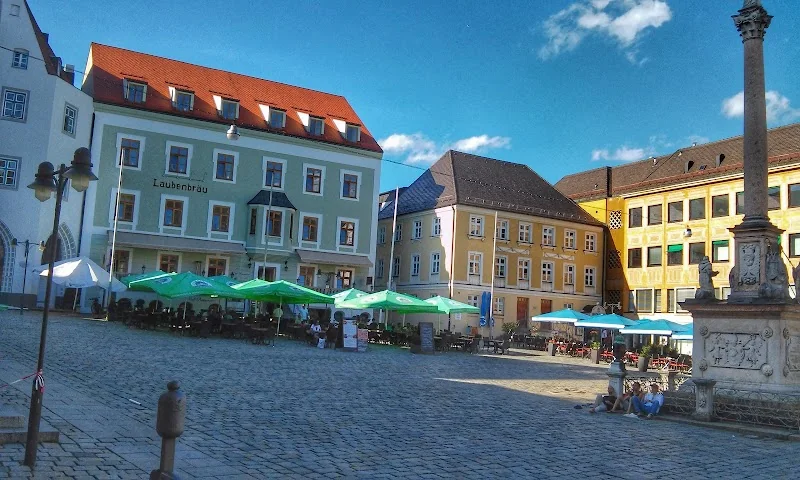
The Marienplatz is the vibrant heart of Freising's old town – a historic square that connects history, everyday life, and culture in a compact space. In its center stands the Mariensäule, which is not only a prominent landmark but also the official city center and a surveying point. Many things begin and end here: markets, encounters, city tours, breaks in cafes, and the view up to the town hall tower. Upon arrival, one immediately senses the ensemble of the town hall from 1904/05, the nearby parish church of St. George, the Asam building, and the facades of the Upper and Lower Hauptstraße. At the same time, the square is excellently accessible: from the train station by city bus, via short paths in the pedestrian zone, or with guidance from the city's parking guidance system. Daily, the town hall carillon provides a distinctive soundscape at noon and late afternoon – a ritualized moment that attracts both locals and visitors alike, acoustically binding the character of the square between shopping, weekly markets, and old town flair.
Directions, Maps, and Route to Marienplatz Freising
Freising is located north of Munich and is well connected via the S-Bahn line S1, regional trains from Deutsche Bahn, and its proximity to Munich Airport. From Freising station, the path to the old town can be reached in a pleasant walk depending on one's pace; those who prefer a more comfortable ride can use the city bus lines. Line 631 connects the old town center via Johannisstraße and Upper Hauptstraße, while line 632 serves the lower old town area with Marienplatz – however, it is suspended due to construction work until April 24, 2026. This temporary adjustment has been transparently communicated by the city in the service area for visitors; at the same time, the routing of the other buses ensures that access to the old town remains secure. Those arriving by plane can use city bus line 635, which connects Freising station with the airport. The city center itself has recently been redesigned to be particularly pedestrian-friendly: In the city center, including Marienplatz, an attractive pedestrian zone has been created, allowing for leisurely strolling, safe crossing, and longer stays. Those planning their route by car should follow the signs of the parking guidance system and head to one of the designated old town parking lots or a parking garage; an interactive map with parking options is available through the city service. Access from all four cardinal directions is via the A9 and A92 highways or state and federal roads with exits towards Freising-Mitte. On-site, city signposts and location plans help quickly find the most important destinations around Marienplatz – from the town hall to the Asam building. For those who want to consciously experience the historic ambiance, it is advisable to plan the arrival so that a few minutes remain for lingering: A quick glance at the Mariensäule, the acoustic greeting of the carillon at full melody time, or a detour to the Green Market makes the journey part of the experience.
Parking at Marienplatz: Parking Garage Tips and Short-Term Spaces
Guests arriving by car to the old town benefit from a well-structured parking offer. Three central parking garages are located within a few minutes' walk from Marienplatz: The Altstadt-Parkhaus at Alois-Steinecker-Straße 20 offers a very high number of parking spaces (around 800 spaces) and is ideal for those coming from the west or south. Also nearby is the parking garage Am Wörth/Domberg at Bahnhofstraße 16 – particularly convenient for access via the station corridor. Those coming from the east can use the parking garage Untere Altstadt at Dr.-von-Daller-Straße 9. Additionally, there are large parking areas such as the Luitpoldanlage or the P+R area at the station; these may be temporarily closed during major events (e.g., in the Luitpoldanlage). The city's parking guidance system directs incoming traffic like a parking ring around the old town and dynamically indicates available capacities – thus keeping the search for parking short, and the walking distance to the square well-planned. In the municipal parking garages, modern payment options (debit/credit card) are standard, and in many places, parking tickets can now also be obtained via an app. For electric vehicles, charging options are available in the parking garages; furthermore, the municipal utilities operate several public charging points in the city center. For tour buses, there is a designated drop-off point directly at the Altstadt-Parkhaus and marked bus parking spaces, making group visits to the old town easier. Quick tips for practice: Those visiting the Green Weekly Market should park early in the Altstadt-Parkhaus to have short distances with baskets or bags. For an evening stroll through the old town, the Untere Altstadt parking garage is worthwhile, as the return route along the Untere Hauptstraße is atmospheric and lively. And if the carillon is to be heard, it is advisable to purchase the parking ticket with a little reserve – the daily playing times just before noon and in the late afternoon attract many listeners, the square fills up pleasantly, and one tends to stay a few minutes longer.
Carillon at Freising Town Hall: Times, Sounds, Special Features
The town hall carillon is an acoustic business card of the city. Since December 2012, it has rung daily at 11:55 AM and 4:55 PM over Marienplatz. In the tower of the town hall, 19 bronze, chromatically tuned bells are installed, which are played via a precise magnetic hammer control. The melody is a Freising original composition: The composer and music educator Philipp Weigl created a two-part, dance-like G major melody of about 1:44 minutes in length, into which he integrated a musical quote from the Baroque composer Rupert Ignatz Mayr. Those who listen closely can recognize the characteristic tone that carries across the square – under favorable wind conditions over several hundred meters. The carillon also has a strong identity-forming character: It was created at the initiative of the city's cultural department and was partly made possible by donations, serving as an audible trademark for the historic city center. During the Korbinianswoche in November, the Korbinianslied traditionally sounds; this incorporates the patron saint of Freising into the atmosphere of the square. Visitors can easily integrate the carillon into their city stroll: At noon, many locals associate the sound with a short break on Marienplatz, an espresso under the arcades, or a glance at the Mariensäule. Those wishing to take photographs should position themselves so that the town hall facade, the column, and the audience's reaction come into the frame together. By the way, the Freising carillon is independent and should not be confused with the much larger Munich carillon – it fits perfectly in scale and sound language with the Freising ensemble and emphasizes the more intimate character of the square.
Weekly Market and Seasonal Highlights: Christkindlmarkt at Marienplatz
Marienplatz is not only a historic space but also a marketplace in the literal sense. On Wednesdays and Saturdays between 7:00 AM and 1:00 PM, the Green Weekly Market enlivens the square: Fruits and vegetables from the region, baked goods, cheese, meat and sausage products, flowers, and delicacies create a dense atmosphere that many Freisingers have appreciated for decades. Historically, this fits well: Already at the end of the first millennium, Freising received market, mint, and customs rights; for centuries, the square was known as Schrannen- or Hauptplatz before it became Marienplatz. During the Advent season, the city organizes the charitable Christkindlmarkt at Marienplatz: Associations, schools, social institutions, and initiatives offer homemade goods, culinary delights, and gift ideas; the proceeds benefit good causes. Unlike the large, multi-week Munich market, the Freising variant is deliberately more compact and focuses on a weekend – thus maintaining the family character. From the scent of mulled wine to choral music, from the glow of lights to ceramics: The square transforms atmospherically without losing its historical contours. In parallel, the old town retail around Upper and Lower Hauptstraße invites for strolling, many shops extend their opening hours or decorate particularly elaborately. Those looking for a cultural framework program should stop by the ticket service at Asamgebäude at Marienplatz 7: There, tickets for numerous events in Freising and the surrounding area can be obtained – a good starting point to combine market strolls, culture, and gastronomy. Practical additional benefit: In the old town, there are plenty of bicycle parking facilities, making an evening visit easily possible for locals by bike.
Dining and Staying: Restaurants and Cafés around the Square
Around Marienplatz, there are gastronomic addresses for every taste – from traditional inns to espresso bars to patisseries. The location between Upper and Lower Hauptstraße ensures short distances; many terrace seats face the square or small side courtyards, making the stay particularly pleasant. Those who want to catch the carillon moment at noon should take a few minutes before 11:55 AM and choose a café with a view of the town hall tower. After visiting the market on Saturday, a late breakfast or light lunch in the old town alleys is worthwhile; the range extends from Bavarian cuisine to international options. In the evening, the square, along with the surrounding streets, forms a natural meeting point: One can extend the round via Brennergasse towards Domberg, seek a view of the city parish church of St. George, or make a detour to the Asam building on the way back. Those interested in local specialties should inquire about seasonal offerings from the Hallertau region or beers from the Freising area. For families, establishments with high chairs and quiet corners are suitable; for couples, small wine shops, wine bars, or dessert spots are a good choice. Good to know: In the side streets, there are numerous bakeries and delicatessens that open early – ideal for a market morning. And for those who want to head directly to the S-Bahn after eating, they should head towards Bahnhofstraße; there, the path and a digestive walk can be combined. The gastronomy benefits from the pedestrian zone: Less through traffic means more quality of stay, even on warmer days when the square transforms into a stage of conversations, snippets of music, and children's laughter.
Frequent Confusion with Munich: What is Different in Freising
Those searching online for Marienplatz often end up with results for Munich's main square – including a webcam of the New Town Hall, a large carillon, and the regionally known Christkindlmarkt. Freising's Marienplatz is an independent place with its own history, sound, and market culture. While in Munich, the monumental carillon of the New Town Hall dominates a large pedestrian zone, in Freising, a finer, more intimate carillon fits into the old town structure. The daily playing times in Freising are 11:55 AM and 4:55 PM; this does not correspond to the usual Munich performances and helps with planning. There are also differences in the Christmas markets: The Munich Christkindlmarkt lasts several weeks, while the Freising charitable market is deliberately only over one weekend – but with a local focus and strong civic character. For orientation, the view of the street names helps: In Freising, Upper and Lower Hauptstraße divide the square like two feelers, while in Munich, Rindermarkt, Kaufingerstraße, or Tal form the axes. Those searching for a “Marienplatz webcam” will find the large panoramic camera in Munich; in Freising, there are municipal webcam offers and third-party streams documenting the old town area. For access: From Munich, the S-Bahn S1 leads towards Freising; within Freising, city buses take over the fine connection, currently with the construction-related suspension of line 632 until April 24, 2026. When it comes to parking, Freising is particularly comfortable: The Altstadt-Parkhaus offers a very high capacity close to the center, supplemented by other garages and parking areas – short distances are almost guaranteed. These differences are not a disadvantage but rather the charm: Freising offers old town flair in concentrated form, with high quality of stay and a grounded, community-oriented atmosphere.
Historical Contours and Today's Square Life
The Marienplatz is embedded in a historical context that dates back to the year 996, when Freising received market, mint, and customs rights. The square was long known as Schrannen- or Hauptplatz before it received its current name. A special feature is the role of the Nierenbach, which used to flow through the Hauptstraße and thus also over the square before it disappeared or was built over in the 19th century. Today, when one looks at the square, one sees the developed layering: Civic urban development around an ensemble of town hall, residential houses, ecclesiastical buildings, and the Asam building, which serves as a cultural venue with Asamsaal and city museum, adding additional magnet points. The Mariensäule not only marks the center but also structures space and view. After the redesign of the city center, the square is even more focused on staying: Barrier-free surfaces, clearly defined pathways, and zones for sitting make Marienplatz a place where one can linger between errands. At the same time, the everyday utility remains high: The Green Weekly Market, small events, information stands, openings, or thematic old town nights fill the year with recurring occasions. The town hall carillon sets an acoustic highlight twice a day and has thus become a timekeeper for many. In this interplay of history and present lies the special value of the square: It does not serve as an open-air museum but as an urban living space with high identification potential. Those discovering Freising anew should start here sensibly – for from Marienplatz, it is only a few steps to Domberg, to the Moosach, to the alleys of Upper and Lower Hauptstraße, and to the gastronomic offerings of the city.
Sources:
- Tourism Freising – Getting Here & Parking
- City of Freising – Parking Offer
- Wikipedia – Marienplatz (Freising)
- Wikipedia – Carillon in Freising Town Hall
- City Center Freising – Parking & Access
- City Center Freising – Weekly Market
- Tourism Freising – Historical Old Town
- City of Freising – Markets in Freising
Show moreShow less
Marienplatz Freising | Glockenspiel & Christmas Market
The Marienplatz is the vibrant heart of Freising's old town – a historic square that connects history, everyday life, and culture in a compact space. In its center stands the Mariensäule, which is not only a prominent landmark but also the official city center and a surveying point. Many things begin and end here: markets, encounters, city tours, breaks in cafes, and the view up to the town hall tower. Upon arrival, one immediately senses the ensemble of the town hall from 1904/05, the nearby parish church of St. George, the Asam building, and the facades of the Upper and Lower Hauptstraße. At the same time, the square is excellently accessible: from the train station by city bus, via short paths in the pedestrian zone, or with guidance from the city's parking guidance system. Daily, the town hall carillon provides a distinctive soundscape at noon and late afternoon – a ritualized moment that attracts both locals and visitors alike, acoustically binding the character of the square between shopping, weekly markets, and old town flair.
Directions, Maps, and Route to Marienplatz Freising
Freising is located north of Munich and is well connected via the S-Bahn line S1, regional trains from Deutsche Bahn, and its proximity to Munich Airport. From Freising station, the path to the old town can be reached in a pleasant walk depending on one's pace; those who prefer a more comfortable ride can use the city bus lines. Line 631 connects the old town center via Johannisstraße and Upper Hauptstraße, while line 632 serves the lower old town area with Marienplatz – however, it is suspended due to construction work until April 24, 2026. This temporary adjustment has been transparently communicated by the city in the service area for visitors; at the same time, the routing of the other buses ensures that access to the old town remains secure. Those arriving by plane can use city bus line 635, which connects Freising station with the airport. The city center itself has recently been redesigned to be particularly pedestrian-friendly: In the city center, including Marienplatz, an attractive pedestrian zone has been created, allowing for leisurely strolling, safe crossing, and longer stays. Those planning their route by car should follow the signs of the parking guidance system and head to one of the designated old town parking lots or a parking garage; an interactive map with parking options is available through the city service. Access from all four cardinal directions is via the A9 and A92 highways or state and federal roads with exits towards Freising-Mitte. On-site, city signposts and location plans help quickly find the most important destinations around Marienplatz – from the town hall to the Asam building. For those who want to consciously experience the historic ambiance, it is advisable to plan the arrival so that a few minutes remain for lingering: A quick glance at the Mariensäule, the acoustic greeting of the carillon at full melody time, or a detour to the Green Market makes the journey part of the experience.
Parking at Marienplatz: Parking Garage Tips and Short-Term Spaces
Guests arriving by car to the old town benefit from a well-structured parking offer. Three central parking garages are located within a few minutes' walk from Marienplatz: The Altstadt-Parkhaus at Alois-Steinecker-Straße 20 offers a very high number of parking spaces (around 800 spaces) and is ideal for those coming from the west or south. Also nearby is the parking garage Am Wörth/Domberg at Bahnhofstraße 16 – particularly convenient for access via the station corridor. Those coming from the east can use the parking garage Untere Altstadt at Dr.-von-Daller-Straße 9. Additionally, there are large parking areas such as the Luitpoldanlage or the P+R area at the station; these may be temporarily closed during major events (e.g., in the Luitpoldanlage). The city's parking guidance system directs incoming traffic like a parking ring around the old town and dynamically indicates available capacities – thus keeping the search for parking short, and the walking distance to the square well-planned. In the municipal parking garages, modern payment options (debit/credit card) are standard, and in many places, parking tickets can now also be obtained via an app. For electric vehicles, charging options are available in the parking garages; furthermore, the municipal utilities operate several public charging points in the city center. For tour buses, there is a designated drop-off point directly at the Altstadt-Parkhaus and marked bus parking spaces, making group visits to the old town easier. Quick tips for practice: Those visiting the Green Weekly Market should park early in the Altstadt-Parkhaus to have short distances with baskets or bags. For an evening stroll through the old town, the Untere Altstadt parking garage is worthwhile, as the return route along the Untere Hauptstraße is atmospheric and lively. And if the carillon is to be heard, it is advisable to purchase the parking ticket with a little reserve – the daily playing times just before noon and in the late afternoon attract many listeners, the square fills up pleasantly, and one tends to stay a few minutes longer.
Carillon at Freising Town Hall: Times, Sounds, Special Features
The town hall carillon is an acoustic business card of the city. Since December 2012, it has rung daily at 11:55 AM and 4:55 PM over Marienplatz. In the tower of the town hall, 19 bronze, chromatically tuned bells are installed, which are played via a precise magnetic hammer control. The melody is a Freising original composition: The composer and music educator Philipp Weigl created a two-part, dance-like G major melody of about 1:44 minutes in length, into which he integrated a musical quote from the Baroque composer Rupert Ignatz Mayr. Those who listen closely can recognize the characteristic tone that carries across the square – under favorable wind conditions over several hundred meters. The carillon also has a strong identity-forming character: It was created at the initiative of the city's cultural department and was partly made possible by donations, serving as an audible trademark for the historic city center. During the Korbinianswoche in November, the Korbinianslied traditionally sounds; this incorporates the patron saint of Freising into the atmosphere of the square. Visitors can easily integrate the carillon into their city stroll: At noon, many locals associate the sound with a short break on Marienplatz, an espresso under the arcades, or a glance at the Mariensäule. Those wishing to take photographs should position themselves so that the town hall facade, the column, and the audience's reaction come into the frame together. By the way, the Freising carillon is independent and should not be confused with the much larger Munich carillon – it fits perfectly in scale and sound language with the Freising ensemble and emphasizes the more intimate character of the square.
Weekly Market and Seasonal Highlights: Christkindlmarkt at Marienplatz
Marienplatz is not only a historic space but also a marketplace in the literal sense. On Wednesdays and Saturdays between 7:00 AM and 1:00 PM, the Green Weekly Market enlivens the square: Fruits and vegetables from the region, baked goods, cheese, meat and sausage products, flowers, and delicacies create a dense atmosphere that many Freisingers have appreciated for decades. Historically, this fits well: Already at the end of the first millennium, Freising received market, mint, and customs rights; for centuries, the square was known as Schrannen- or Hauptplatz before it became Marienplatz. During the Advent season, the city organizes the charitable Christkindlmarkt at Marienplatz: Associations, schools, social institutions, and initiatives offer homemade goods, culinary delights, and gift ideas; the proceeds benefit good causes. Unlike the large, multi-week Munich market, the Freising variant is deliberately more compact and focuses on a weekend – thus maintaining the family character. From the scent of mulled wine to choral music, from the glow of lights to ceramics: The square transforms atmospherically without losing its historical contours. In parallel, the old town retail around Upper and Lower Hauptstraße invites for strolling, many shops extend their opening hours or decorate particularly elaborately. Those looking for a cultural framework program should stop by the ticket service at Asamgebäude at Marienplatz 7: There, tickets for numerous events in Freising and the surrounding area can be obtained – a good starting point to combine market strolls, culture, and gastronomy. Practical additional benefit: In the old town, there are plenty of bicycle parking facilities, making an evening visit easily possible for locals by bike.
Dining and Staying: Restaurants and Cafés around the Square
Around Marienplatz, there are gastronomic addresses for every taste – from traditional inns to espresso bars to patisseries. The location between Upper and Lower Hauptstraße ensures short distances; many terrace seats face the square or small side courtyards, making the stay particularly pleasant. Those who want to catch the carillon moment at noon should take a few minutes before 11:55 AM and choose a café with a view of the town hall tower. After visiting the market on Saturday, a late breakfast or light lunch in the old town alleys is worthwhile; the range extends from Bavarian cuisine to international options. In the evening, the square, along with the surrounding streets, forms a natural meeting point: One can extend the round via Brennergasse towards Domberg, seek a view of the city parish church of St. George, or make a detour to the Asam building on the way back. Those interested in local specialties should inquire about seasonal offerings from the Hallertau region or beers from the Freising area. For families, establishments with high chairs and quiet corners are suitable; for couples, small wine shops, wine bars, or dessert spots are a good choice. Good to know: In the side streets, there are numerous bakeries and delicatessens that open early – ideal for a market morning. And for those who want to head directly to the S-Bahn after eating, they should head towards Bahnhofstraße; there, the path and a digestive walk can be combined. The gastronomy benefits from the pedestrian zone: Less through traffic means more quality of stay, even on warmer days when the square transforms into a stage of conversations, snippets of music, and children's laughter.
Frequent Confusion with Munich: What is Different in Freising
Those searching online for Marienplatz often end up with results for Munich's main square – including a webcam of the New Town Hall, a large carillon, and the regionally known Christkindlmarkt. Freising's Marienplatz is an independent place with its own history, sound, and market culture. While in Munich, the monumental carillon of the New Town Hall dominates a large pedestrian zone, in Freising, a finer, more intimate carillon fits into the old town structure. The daily playing times in Freising are 11:55 AM and 4:55 PM; this does not correspond to the usual Munich performances and helps with planning. There are also differences in the Christmas markets: The Munich Christkindlmarkt lasts several weeks, while the Freising charitable market is deliberately only over one weekend – but with a local focus and strong civic character. For orientation, the view of the street names helps: In Freising, Upper and Lower Hauptstraße divide the square like two feelers, while in Munich, Rindermarkt, Kaufingerstraße, or Tal form the axes. Those searching for a “Marienplatz webcam” will find the large panoramic camera in Munich; in Freising, there are municipal webcam offers and third-party streams documenting the old town area. For access: From Munich, the S-Bahn S1 leads towards Freising; within Freising, city buses take over the fine connection, currently with the construction-related suspension of line 632 until April 24, 2026. When it comes to parking, Freising is particularly comfortable: The Altstadt-Parkhaus offers a very high capacity close to the center, supplemented by other garages and parking areas – short distances are almost guaranteed. These differences are not a disadvantage but rather the charm: Freising offers old town flair in concentrated form, with high quality of stay and a grounded, community-oriented atmosphere.
Historical Contours and Today's Square Life
The Marienplatz is embedded in a historical context that dates back to the year 996, when Freising received market, mint, and customs rights. The square was long known as Schrannen- or Hauptplatz before it received its current name. A special feature is the role of the Nierenbach, which used to flow through the Hauptstraße and thus also over the square before it disappeared or was built over in the 19th century. Today, when one looks at the square, one sees the developed layering: Civic urban development around an ensemble of town hall, residential houses, ecclesiastical buildings, and the Asam building, which serves as a cultural venue with Asamsaal and city museum, adding additional magnet points. The Mariensäule not only marks the center but also structures space and view. After the redesign of the city center, the square is even more focused on staying: Barrier-free surfaces, clearly defined pathways, and zones for sitting make Marienplatz a place where one can linger between errands. At the same time, the everyday utility remains high: The Green Weekly Market, small events, information stands, openings, or thematic old town nights fill the year with recurring occasions. The town hall carillon sets an acoustic highlight twice a day and has thus become a timekeeper for many. In this interplay of history and present lies the special value of the square: It does not serve as an open-air museum but as an urban living space with high identification potential. Those discovering Freising anew should start here sensibly – for from Marienplatz, it is only a few steps to Domberg, to the Moosach, to the alleys of Upper and Lower Hauptstraße, and to the gastronomic offerings of the city.
Sources:
- Tourism Freising – Getting Here & Parking
- City of Freising – Parking Offer
- Wikipedia – Marienplatz (Freising)
- Wikipedia – Carillon in Freising Town Hall
- City Center Freising – Parking & Access
- City Center Freising – Weekly Market
- Tourism Freising – Historical Old Town
- City of Freising – Markets in Freising
Marienplatz Freising | Glockenspiel & Christmas Market
The Marienplatz is the vibrant heart of Freising's old town – a historic square that connects history, everyday life, and culture in a compact space. In its center stands the Mariensäule, which is not only a prominent landmark but also the official city center and a surveying point. Many things begin and end here: markets, encounters, city tours, breaks in cafes, and the view up to the town hall tower. Upon arrival, one immediately senses the ensemble of the town hall from 1904/05, the nearby parish church of St. George, the Asam building, and the facades of the Upper and Lower Hauptstraße. At the same time, the square is excellently accessible: from the train station by city bus, via short paths in the pedestrian zone, or with guidance from the city's parking guidance system. Daily, the town hall carillon provides a distinctive soundscape at noon and late afternoon – a ritualized moment that attracts both locals and visitors alike, acoustically binding the character of the square between shopping, weekly markets, and old town flair.
Directions, Maps, and Route to Marienplatz Freising
Freising is located north of Munich and is well connected via the S-Bahn line S1, regional trains from Deutsche Bahn, and its proximity to Munich Airport. From Freising station, the path to the old town can be reached in a pleasant walk depending on one's pace; those who prefer a more comfortable ride can use the city bus lines. Line 631 connects the old town center via Johannisstraße and Upper Hauptstraße, while line 632 serves the lower old town area with Marienplatz – however, it is suspended due to construction work until April 24, 2026. This temporary adjustment has been transparently communicated by the city in the service area for visitors; at the same time, the routing of the other buses ensures that access to the old town remains secure. Those arriving by plane can use city bus line 635, which connects Freising station with the airport. The city center itself has recently been redesigned to be particularly pedestrian-friendly: In the city center, including Marienplatz, an attractive pedestrian zone has been created, allowing for leisurely strolling, safe crossing, and longer stays. Those planning their route by car should follow the signs of the parking guidance system and head to one of the designated old town parking lots or a parking garage; an interactive map with parking options is available through the city service. Access from all four cardinal directions is via the A9 and A92 highways or state and federal roads with exits towards Freising-Mitte. On-site, city signposts and location plans help quickly find the most important destinations around Marienplatz – from the town hall to the Asam building. For those who want to consciously experience the historic ambiance, it is advisable to plan the arrival so that a few minutes remain for lingering: A quick glance at the Mariensäule, the acoustic greeting of the carillon at full melody time, or a detour to the Green Market makes the journey part of the experience.
Parking at Marienplatz: Parking Garage Tips and Short-Term Spaces
Guests arriving by car to the old town benefit from a well-structured parking offer. Three central parking garages are located within a few minutes' walk from Marienplatz: The Altstadt-Parkhaus at Alois-Steinecker-Straße 20 offers a very high number of parking spaces (around 800 spaces) and is ideal for those coming from the west or south. Also nearby is the parking garage Am Wörth/Domberg at Bahnhofstraße 16 – particularly convenient for access via the station corridor. Those coming from the east can use the parking garage Untere Altstadt at Dr.-von-Daller-Straße 9. Additionally, there are large parking areas such as the Luitpoldanlage or the P+R area at the station; these may be temporarily closed during major events (e.g., in the Luitpoldanlage). The city's parking guidance system directs incoming traffic like a parking ring around the old town and dynamically indicates available capacities – thus keeping the search for parking short, and the walking distance to the square well-planned. In the municipal parking garages, modern payment options (debit/credit card) are standard, and in many places, parking tickets can now also be obtained via an app. For electric vehicles, charging options are available in the parking garages; furthermore, the municipal utilities operate several public charging points in the city center. For tour buses, there is a designated drop-off point directly at the Altstadt-Parkhaus and marked bus parking spaces, making group visits to the old town easier. Quick tips for practice: Those visiting the Green Weekly Market should park early in the Altstadt-Parkhaus to have short distances with baskets or bags. For an evening stroll through the old town, the Untere Altstadt parking garage is worthwhile, as the return route along the Untere Hauptstraße is atmospheric and lively. And if the carillon is to be heard, it is advisable to purchase the parking ticket with a little reserve – the daily playing times just before noon and in the late afternoon attract many listeners, the square fills up pleasantly, and one tends to stay a few minutes longer.
Carillon at Freising Town Hall: Times, Sounds, Special Features
The town hall carillon is an acoustic business card of the city. Since December 2012, it has rung daily at 11:55 AM and 4:55 PM over Marienplatz. In the tower of the town hall, 19 bronze, chromatically tuned bells are installed, which are played via a precise magnetic hammer control. The melody is a Freising original composition: The composer and music educator Philipp Weigl created a two-part, dance-like G major melody of about 1:44 minutes in length, into which he integrated a musical quote from the Baroque composer Rupert Ignatz Mayr. Those who listen closely can recognize the characteristic tone that carries across the square – under favorable wind conditions over several hundred meters. The carillon also has a strong identity-forming character: It was created at the initiative of the city's cultural department and was partly made possible by donations, serving as an audible trademark for the historic city center. During the Korbinianswoche in November, the Korbinianslied traditionally sounds; this incorporates the patron saint of Freising into the atmosphere of the square. Visitors can easily integrate the carillon into their city stroll: At noon, many locals associate the sound with a short break on Marienplatz, an espresso under the arcades, or a glance at the Mariensäule. Those wishing to take photographs should position themselves so that the town hall facade, the column, and the audience's reaction come into the frame together. By the way, the Freising carillon is independent and should not be confused with the much larger Munich carillon – it fits perfectly in scale and sound language with the Freising ensemble and emphasizes the more intimate character of the square.
Weekly Market and Seasonal Highlights: Christkindlmarkt at Marienplatz
Marienplatz is not only a historic space but also a marketplace in the literal sense. On Wednesdays and Saturdays between 7:00 AM and 1:00 PM, the Green Weekly Market enlivens the square: Fruits and vegetables from the region, baked goods, cheese, meat and sausage products, flowers, and delicacies create a dense atmosphere that many Freisingers have appreciated for decades. Historically, this fits well: Already at the end of the first millennium, Freising received market, mint, and customs rights; for centuries, the square was known as Schrannen- or Hauptplatz before it became Marienplatz. During the Advent season, the city organizes the charitable Christkindlmarkt at Marienplatz: Associations, schools, social institutions, and initiatives offer homemade goods, culinary delights, and gift ideas; the proceeds benefit good causes. Unlike the large, multi-week Munich market, the Freising variant is deliberately more compact and focuses on a weekend – thus maintaining the family character. From the scent of mulled wine to choral music, from the glow of lights to ceramics: The square transforms atmospherically without losing its historical contours. In parallel, the old town retail around Upper and Lower Hauptstraße invites for strolling, many shops extend their opening hours or decorate particularly elaborately. Those looking for a cultural framework program should stop by the ticket service at Asamgebäude at Marienplatz 7: There, tickets for numerous events in Freising and the surrounding area can be obtained – a good starting point to combine market strolls, culture, and gastronomy. Practical additional benefit: In the old town, there are plenty of bicycle parking facilities, making an evening visit easily possible for locals by bike.
Dining and Staying: Restaurants and Cafés around the Square
Around Marienplatz, there are gastronomic addresses for every taste – from traditional inns to espresso bars to patisseries. The location between Upper and Lower Hauptstraße ensures short distances; many terrace seats face the square or small side courtyards, making the stay particularly pleasant. Those who want to catch the carillon moment at noon should take a few minutes before 11:55 AM and choose a café with a view of the town hall tower. After visiting the market on Saturday, a late breakfast or light lunch in the old town alleys is worthwhile; the range extends from Bavarian cuisine to international options. In the evening, the square, along with the surrounding streets, forms a natural meeting point: One can extend the round via Brennergasse towards Domberg, seek a view of the city parish church of St. George, or make a detour to the Asam building on the way back. Those interested in local specialties should inquire about seasonal offerings from the Hallertau region or beers from the Freising area. For families, establishments with high chairs and quiet corners are suitable; for couples, small wine shops, wine bars, or dessert spots are a good choice. Good to know: In the side streets, there are numerous bakeries and delicatessens that open early – ideal for a market morning. And for those who want to head directly to the S-Bahn after eating, they should head towards Bahnhofstraße; there, the path and a digestive walk can be combined. The gastronomy benefits from the pedestrian zone: Less through traffic means more quality of stay, even on warmer days when the square transforms into a stage of conversations, snippets of music, and children's laughter.
Frequent Confusion with Munich: What is Different in Freising
Those searching online for Marienplatz often end up with results for Munich's main square – including a webcam of the New Town Hall, a large carillon, and the regionally known Christkindlmarkt. Freising's Marienplatz is an independent place with its own history, sound, and market culture. While in Munich, the monumental carillon of the New Town Hall dominates a large pedestrian zone, in Freising, a finer, more intimate carillon fits into the old town structure. The daily playing times in Freising are 11:55 AM and 4:55 PM; this does not correspond to the usual Munich performances and helps with planning. There are also differences in the Christmas markets: The Munich Christkindlmarkt lasts several weeks, while the Freising charitable market is deliberately only over one weekend – but with a local focus and strong civic character. For orientation, the view of the street names helps: In Freising, Upper and Lower Hauptstraße divide the square like two feelers, while in Munich, Rindermarkt, Kaufingerstraße, or Tal form the axes. Those searching for a “Marienplatz webcam” will find the large panoramic camera in Munich; in Freising, there are municipal webcam offers and third-party streams documenting the old town area. For access: From Munich, the S-Bahn S1 leads towards Freising; within Freising, city buses take over the fine connection, currently with the construction-related suspension of line 632 until April 24, 2026. When it comes to parking, Freising is particularly comfortable: The Altstadt-Parkhaus offers a very high capacity close to the center, supplemented by other garages and parking areas – short distances are almost guaranteed. These differences are not a disadvantage but rather the charm: Freising offers old town flair in concentrated form, with high quality of stay and a grounded, community-oriented atmosphere.
Historical Contours and Today's Square Life
The Marienplatz is embedded in a historical context that dates back to the year 996, when Freising received market, mint, and customs rights. The square was long known as Schrannen- or Hauptplatz before it received its current name. A special feature is the role of the Nierenbach, which used to flow through the Hauptstraße and thus also over the square before it disappeared or was built over in the 19th century. Today, when one looks at the square, one sees the developed layering: Civic urban development around an ensemble of town hall, residential houses, ecclesiastical buildings, and the Asam building, which serves as a cultural venue with Asamsaal and city museum, adding additional magnet points. The Mariensäule not only marks the center but also structures space and view. After the redesign of the city center, the square is even more focused on staying: Barrier-free surfaces, clearly defined pathways, and zones for sitting make Marienplatz a place where one can linger between errands. At the same time, the everyday utility remains high: The Green Weekly Market, small events, information stands, openings, or thematic old town nights fill the year with recurring occasions. The town hall carillon sets an acoustic highlight twice a day and has thus become a timekeeper for many. In this interplay of history and present lies the special value of the square: It does not serve as an open-air museum but as an urban living space with high identification potential. Those discovering Freising anew should start here sensibly – for from Marienplatz, it is only a few steps to Domberg, to the Moosach, to the alleys of Upper and Lower Hauptstraße, and to the gastronomic offerings of the city.
Sources:
- Tourism Freising – Getting Here & Parking
- City of Freising – Parking Offer
- Wikipedia – Marienplatz (Freising)
- Wikipedia – Carillon in Freising Town Hall
- City Center Freising – Parking & Access
- City Center Freising – Weekly Market
- Tourism Freising – Historical Old Town
- City of Freising – Markets in Freising
Upcoming Events
Romeo & Julia
Open-air theater with heart and tension: Romeo & Julia in Freising moves with summer stage, tragedy, and live magic. 16.06.–28.06.2026, free admission. Secure your seats now. #Theater

Vocal Ensemble Cantabile Freising: Works of the Italian Baroque
Baroque sound splendor in Freising: Cantabile invites to the Asam Theater for Vivaldi, choir and orchestra. On 27.06.2026 at 19:30. #Freising #Concert
COBARIO - Strings on Fire
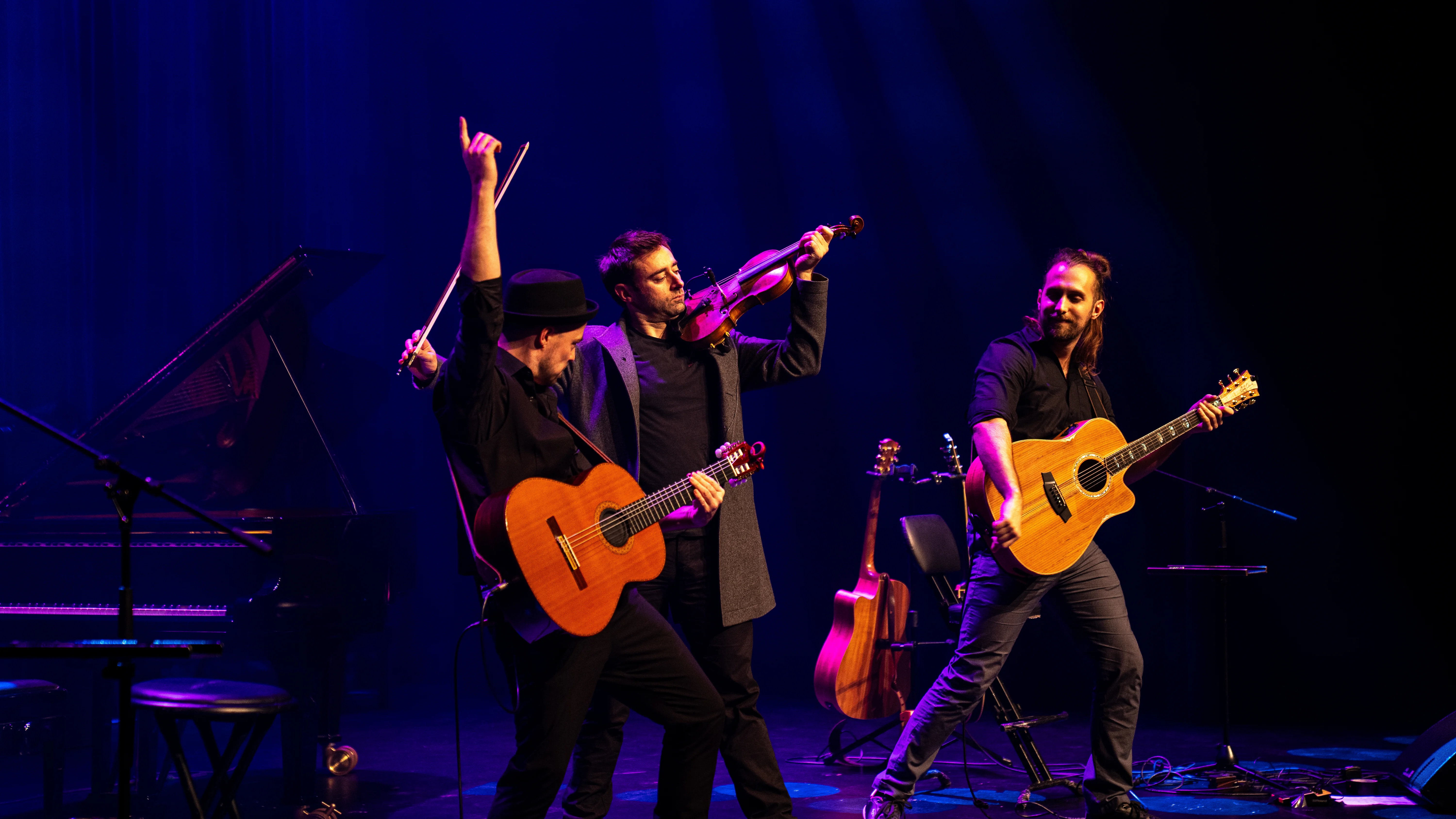
A summer evening full of tonal embers in Freising: Cobario plays Strings on Fire open air at ASAM. Admission free, donations welcome. #LiveMusic #Freising

Altstadtfest Open Air 2026
Two summer nights full of music and Freising old town flair: The Altstadtfest Open Air 2026 brings festival atmosphere, encounters, and free entry. #Freising #OpenAir
Freising Markets with Enjoyment
Immerse yourself in the culinary diversity of Freising and discover local specialties on our guided tour.
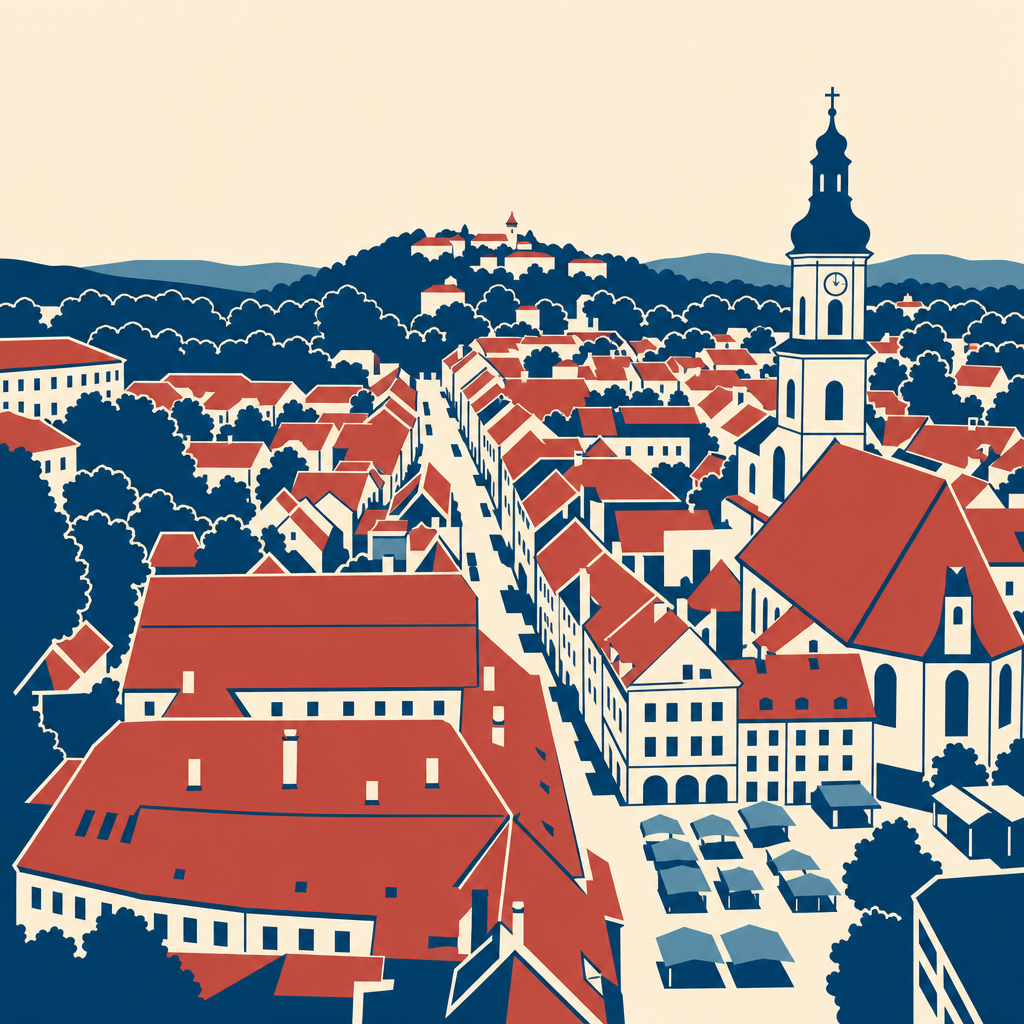
Old Town Festival 2026
A summer evening full of old town flair awaits in Freising: Music, enjoyment, and community right at Marienplatz. July 18, 2026, free admission. #Freising #OldTownFestival
Presentation of the 46th Collection Sheet of the Historical Association Freising: 100 Insights into the Freising City Museum, Volume II
Discover Freising's museum and city history anew in the Asam Building: The 46th collection sheet brings together 100 insights, knowledge, and atmosphere. #Freising #Literature
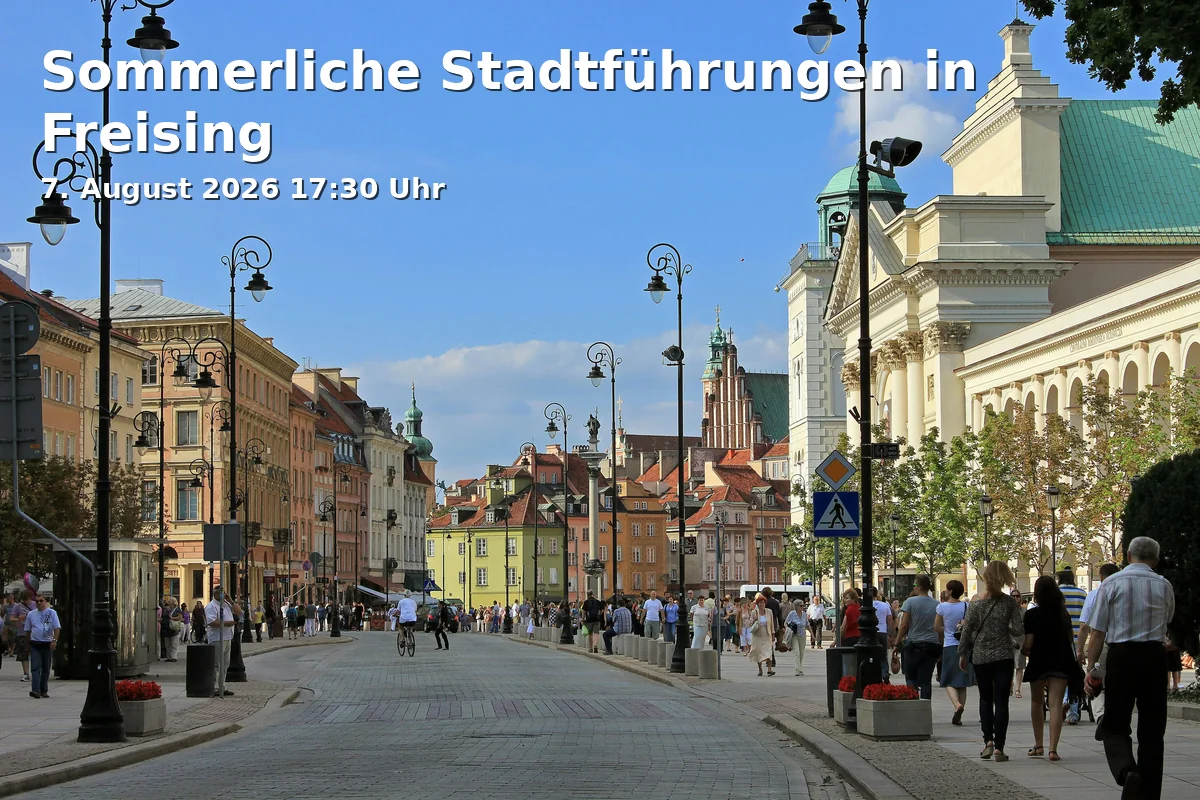
Summer City Tours in Freising
Summer evening in Freising, historic alleys, and strong stories: The Summer City Tours bring cathedral city flair and cultural enjoyment to the point. 07.08.2026, 17:30 Uhr. Discover now! #Freising

Festbierprobe Freising 2026
Freising joyfully starts the folk festival season: Festbierprobe at Marienplatz, free entry, genuine brewing culture and pure anticipation. #Freising #Volksfest
Frequently Asked Questions
Reviews
No reviews found