
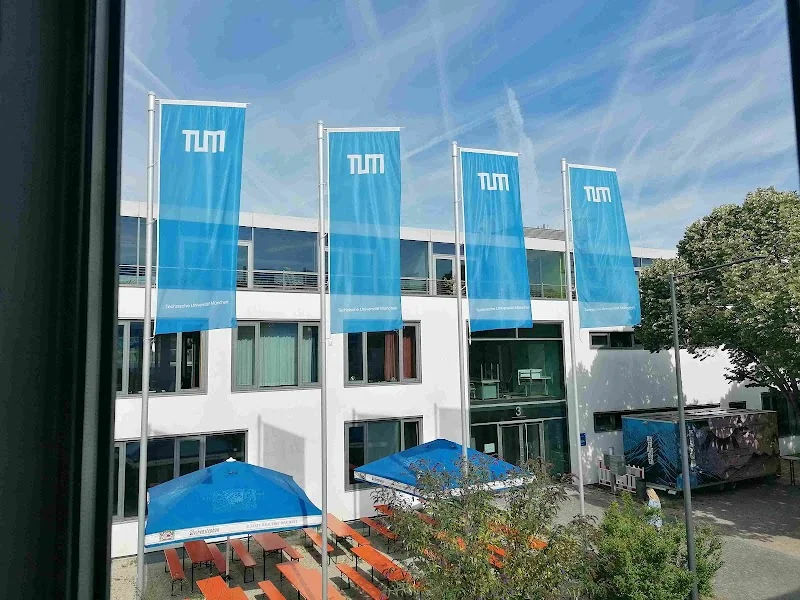
Maximus-von-Imhof-Forum 3, Freising-Vötting
Maximus-von-Imhof-Forum 3, 85354 Freising, Germany
TU Munich LSIT - Weihenstephan | Address & Library
The search for TU Munich LSIT - Weihenstephan leads many users directly to the organizational heart of the Weihenstephan campus. This does not refer to a classic event location, but rather to a university service and administrative site of the TUM School of Life Sciences, where IT support, technical infrastructure, and important campus services converge. For students, staff, and guests, this address is particularly relevant when it comes to orientation, contacts, digital workplaces, and proximity to the library. The Weihenstephan campus itself is organized as a vibrant science and research location, with its center around the Central Lecture Hall Building, the cafeteria, and the university library. The School Office and administrative offices are also located on Weihenstephan Hill, just a few minutes' walk away. This mix of administration, science, learning, and everyday life makes the location highly sought after and crucial for daily campus use. ([ls.tum.de](https://www.ls.tum.de/ls/campus/?utm_source=openai))
Address, Contact, and Administration at Maximus-von-Imhof-Forum 3
The Life Sciences IT, abbreviated as LSIT, can be found at Maximus-von-Imhof-Forum 3 in 85354 Freising and is clearly assigned to the Weihenstephan campus. According to TUM, LSIT is the central point of contact for all IT questions on the Weihenstephan campus. So, if you are looking for administration, contacts, or technical support, you have come to the right place. The helpdesk is located in room DGL 01 on the second floor; the contact page also lists the phone number +49 8161 71-3245 and the email address it-support@ls.tum.de. For administrative inquiries, TUM also provides the secretariat number +49 8161 71-3300 and the address sekretariat.it@ls.tum.de. The helpdesk hours are clearly indicated: Monday to Thursday from 10:30 AM to 12:00 PM and from 1:00 PM to 2:30 PM, and on Friday from 10:00 AM to 12:00 PM. Thus, the location is not just an address but a reliable service point for the entire campus life. It is also particularly important that the TUM School of Life Sciences designates LSIT as the central IT point of contact and categorizes it within the campus organization. Anyone needing information on TUM-PC, Koinon portal, administration, or helpdesk services will find the same address on the LSIT page as the control center for technical processes and support. This makes the search query for administration and address completely understandable. ([ls.tum.de](https://www.ls.tum.de/en/it/contact/))
The context of the TUM School of Life Sciences is also important for the classification of the location. The Weihenstephan campus is not an isolated office location but a connected scientific space with students, researchers, and partner institutions. The School Office organization is located on Weihenstephan Hill, and LSIT complements this structure as a technical service unit. In practice, this means that those studying, working, or organizing events in Weihenstephan often encounter LSIT indirectly through IT rooms, software management, login questions, campus accounts, or support issues. The location search thus connects administration and service, not just a physical address. For SEO, this combination is relevant because users often ask very specific questions: Where is the administration? Where can I get help? Where is IT located? Which rooms are responsible? The official TUM pages answer all these questions with a clear focus on the address Maximus-von-Imhof-Forum 3 and its function as a campus hub for digital infrastructure. ([ls.tum.de](https://www.ls.tum.de/en/it/contact/))
Library Weihenstephan: Location, Opening Hours, and Learning Environment
Another central search term related to the location is the library. The Weihenstephan branch library of the TUM University Library is located at Maximus-von-Imhof-Forum 1 in 85354 Freising. According to the official description, it is situated in a free-standing round building on the Weihenstephan campus, spanning three floors. For many students, this place is an important part of campus life, as the library is not only a lending location but also a learning space with good accessibility and infrastructural proximity to the cafeteria, lecture hall building, and other TUM facilities. TUM also mentions ramps and a wheelchair-accessible elevator, making the building usable with minimal barriers. Additionally, a designated workspace is available upon request. This underscores the functional character of the location: learning, research, and quiet work are the focus here. Those searching for the library also benefit from good orientation on campus, as TUM's directions refer to the Weihenstephan stop and the library in the round building on Vöttinger Straße. ([ub.tum.de](https://www.ub.tum.de/branch-library-weihenstephan))
The opening hours are also attractive and campus-friendly. The branch library is open from Monday to Friday from 8:00 AM to 12:00 AM; on Saturdays, Sundays, and holidays from 10:00 AM to 8:00 PM. This is particularly advantageous during exam periods, group work, and focused studying. The library, together with the Central Lecture Hall Building and the cafeteria, forms the functional center of the Weihenstephan campus, where students, staff from TUM institutes, members of the Weihenstephan-Triesdorf University, and other campus partners meet. Therefore, for seekers, not only the address is important, but also the spatial embedding: the library is part of a larger learning and working ecosystem. For this reason, it is often searched for together with LSIT, administration, and study programs. Those looking for orientation, workstations, printing options, or quiet study at the Weihenstephan location will find one of the most important anchor points of the campus here. ([ub.tum.de](https://www.ub.tum.de/oeffnungszeiten/Weihenstephan?utm_source=openai))
Degree Programs at the Weihenstephan Campus and the Role of the TUM School of Life Sciences
The keyword combination around Weihenstephan and degree programs points to one of the strongest content focuses of the location. The TUM School of Life Sciences consolidates its expertise on the Weihenstephan campus in Freising and offers a wide range of bachelor's and master's programs. On the official overview page, TUM lists, among others, Agricultural Sciences and Horticultural Sciences, Brewing and Beverage Technology, Forest Science and Resource Management, Landscape Architecture and Landscape Planning, Food Technology, Life Sciences Biology, Life Sciences Nutrition, Molecular Biotechnology, and Pharmaceutical Bioprocess Engineering. In the master's area, additional programs are added, such as Sustainable Resource Management, Biology, Nutrition and Biomedicine, Agricultural Biosciences, and Sustainable Food. This is important for seekers because the inquiry about TU Munich Weihenstephan degree programs is often associated with study choice, campus orientation, and university identity. The location thus stands not only for administration but also for research, teaching, and a very specific profile in the field of life sciences. TUM describes the location as a Life Science Campus, where topics such as sustainability, nature, and the environment are connected with innovative technologies. ([ls.tum.de](https://www.ls.tum.de/en/ls/studies/courses-and-programs/?utm_source=openai))
For campus life, study management is also relevant. TUM refers to TUMonline as a universal tool for applications, study organization, course and exam registration, address changes, contacts, and grade overviews. At the beginning of the semester, there are regularly welcome week offers, campus tours, library visits, and information events on the Weihenstephan campus. This shows that Weihenstephan is not just a location for lectures, but a fully organized university site with a service culture and orientation assistance for first-year and international students. The search intention behind the keywords for degree programs is therefore clear: users want to know which programs are anchored here, where the campus is located, and which facilities facilitate the entry. The official TUM pages provide a very good answer to this because they connect the study offerings with Freising, Weihenstephan campus, and the organizational tools of the campus. ([ls.tum.de](https://www.ls.tum.de/en/ls/studies/during-studies/tumonline/?utm_source=openai))
Getting to the Weihenstephan Campus by Bus, Train, and Car
Those searching for the Weihenstephan address, library, or administration often also want to know how to get there. For public transport, TUM lists several clear options. Bus lines 637, 638, and 639 operate between the Weihenstephan campus and Freising train station. Additionally, the express bus line X660 connects Weihenstephan Hill with Garching and stops at stations including Weihenstephan, Weihenstephaner Straße, Freising train station, and Schlüterstraße. TUM describes the journey from Weihenstephan Hill to Garching with few stops and an approximate travel time of around 30 minutes. This is particularly relevant for the daily life of students and staff, as the campus is thus well connected to Freising train station and the broader university network. The line 635 to the airport or to Freising is also mentioned, making the location additionally accessible. For those seeking directions, bus, and campus, this is a central argument, as the location is somewhat elevated and campus-like but well served by bus connections. ([ls.tum.de](https://www.ls.tum.de/ls/campus/busverbindungen/))
The Weihenstephan library provides a precise direction for train and car. By train or S-Bahn S1, you go to Freising station, from there take bus 638 to the campus of the Weihenstephan science center and get off at the Weihenstephan stop. By car, the route leads via the A92 to Freising Mitte, then via Ismaninger Straße and Münchner Straße, before switching to Saarstraße and then Vöttinger Straße in the urban area. After about one kilometer at the junction to Weihenstephan Hill, the round library building is on the right. This description is also helpful for LSIT as it depicts the entire campus context. For users, this means: the campus address is officially very specific, but the best orientation on site occurs via the well-known points Central Lecture Hall Building, cafeteria, library, and Maximus-von-Imhof-Forum. TUM also emphasizes that the campus is located far in the western urban area of Freising and is connected to the train station by several bus lines. Thus, the location is easily accessible for students and staff, even though it is not in the immediate city center. ([ub.tum.de](https://www.ub.tum.de/branch-library-weihenstephan))
History of Weihenstephan and Why the Location is So Special
Weihenstephan is not just a modern university location, but a site with extraordinarily deep historical roots. The TUM School of Life Sciences describes the history of the hill as far back as the early 8th century, when a St. Stephen's Church stood on Weihenstephan Hill. When St. Corbinian arrived in Freising in 724, he set up a cell there, and the hill became the starting point of his work. The name Weihenstephan first appears in a document from the year 1003. In 1021, St. Stephen was converted into a Benedictine monastery, which existed until the secularization in 1803. In the 19th century, scientific education in Freising began anew: in 1803, the School of Agriculture was founded, and in 1852 it was moved to Weihenstephan. Later milestones were added, such as the incorporation into the Technical University of Munich between 1928 and 1930, the relocation of the TUM biology department in 1998, the entry of forestry science in 1999, and the transformation into the TUM School of Life Sciences in 2020. This is very significant for the positioning of the location, as tradition and modern research overlap directly here. ([ls.tum.de](https://www.ls.tum.de/en/ls/about-us/history/?utm_source=openai))
TUM emphasizes that Weihenstephan is now understood as a modern life science campus, where hundreds of researchers work interdisciplinarily and thousands of students are prepared for future careers. The school is divided into three research departments: Life Science Engineering, Life Sciences Systems, and Molecular Life Sciences. At the same time, historical places such as the Asamsaal or the old structures of the monastery hill remain part of the campus image. It is precisely this mixture that makes Weihenstephan emotionally charged and interesting for seekers: those searching for address or administration inevitably encounter a university with centuries-old history, which remains visible today in research, teaching, and campus architecture. For SEO logic, this is particularly valuable, as historical identity, campus character, and academic excellence together create a clear location profile. The TUM School of Life Sciences thus shows that Weihenstephan is not just a postal address, but a place with cultural-historical depth and scientific presence. ([ls.tum.de](https://www.ls.tum.de/ls/ueber-uns/geschichte/?utm_source=openai))
IT Rooms, Helpdesk, and Campus Services for Everyday Life
For many users, LSIT is particularly relevant when it comes to practical services. According to TUM, LSIT actively contributes to campus life with numerous services. Approximately 150 computer workstations are available in five IT rooms at the location, and all these IT rooms can be used around the clock every day. TUM also emphasizes that the rooms are supervised and checked by LSIT, including regular rounds, room planning, as well as installation and maintenance of standard and specialized software. Thus, LSIT is much more than just an office: the unit is an operational component of campus operations. For students seeking study spaces or for staff relying on stable IT infrastructure, this is a significant location advantage. Additionally, LSIT supports applications for scientific workspaces and coordinates the computer investment program. So, if you are looking for administration in a broader sense, you often mean exactly this organizational and technical support. ([ls.tum.de](https://www.ls.tum.de/en/it/home/))
The topic of IT organization is also clearly regulated on the Weihenstephan campus. TUM explicitly names LSIT on the School Office page as the central point of contact for all IT questions on the Weihenstephan campus. Furthermore, services such as TUM-PC, Koinon portal, helpdesk, and administration are listed on the LSIT page. This shows that the location is central not only spatially but also functionally. In practice, this means: anyone studying or working at the TUM School of Life Sciences will likely come into contact with LSIT when setting up the campus PC, accessing software, inquiring about printing quotas, facing login problems, or using the IT rooms. The combination of a clear address, fixed service hours, and a broad infrastructure makes the location particularly relevant for Google searches. This is precisely why the keywords for administration, address, library, and degree programs are so meaningful: they reflect the actual use of the campus. Weihenstephan is a place where digital infrastructure, scientific work, and learning environments are very closely intertwined. ([ls.tum.de](https://www.ls.tum.de/en/ls/about-us/school-office/))
Sources:
- TUM School of Life Sciences - Life Sciences IT - Contact
- TUM School of Life Sciences - Life Sciences IT - Home
- TUM School of Life Sciences - Campus Weihenstephan
- TUM University Library - Branch Library Weihenstephan
- TUM School of Life Sciences - History of Weihenstephan
- TUM School of Life Sciences - Courses and Programs
- TUM School of Life Sciences - Bus Connections
Show moreShow less
TU Munich LSIT - Weihenstephan | Address & Library
The search for TU Munich LSIT - Weihenstephan leads many users directly to the organizational heart of the Weihenstephan campus. This does not refer to a classic event location, but rather to a university service and administrative site of the TUM School of Life Sciences, where IT support, technical infrastructure, and important campus services converge. For students, staff, and guests, this address is particularly relevant when it comes to orientation, contacts, digital workplaces, and proximity to the library. The Weihenstephan campus itself is organized as a vibrant science and research location, with its center around the Central Lecture Hall Building, the cafeteria, and the university library. The School Office and administrative offices are also located on Weihenstephan Hill, just a few minutes' walk away. This mix of administration, science, learning, and everyday life makes the location highly sought after and crucial for daily campus use. ([ls.tum.de](https://www.ls.tum.de/ls/campus/?utm_source=openai))
Address, Contact, and Administration at Maximus-von-Imhof-Forum 3
The Life Sciences IT, abbreviated as LSIT, can be found at Maximus-von-Imhof-Forum 3 in 85354 Freising and is clearly assigned to the Weihenstephan campus. According to TUM, LSIT is the central point of contact for all IT questions on the Weihenstephan campus. So, if you are looking for administration, contacts, or technical support, you have come to the right place. The helpdesk is located in room DGL 01 on the second floor; the contact page also lists the phone number +49 8161 71-3245 and the email address it-support@ls.tum.de. For administrative inquiries, TUM also provides the secretariat number +49 8161 71-3300 and the address sekretariat.it@ls.tum.de. The helpdesk hours are clearly indicated: Monday to Thursday from 10:30 AM to 12:00 PM and from 1:00 PM to 2:30 PM, and on Friday from 10:00 AM to 12:00 PM. Thus, the location is not just an address but a reliable service point for the entire campus life. It is also particularly important that the TUM School of Life Sciences designates LSIT as the central IT point of contact and categorizes it within the campus organization. Anyone needing information on TUM-PC, Koinon portal, administration, or helpdesk services will find the same address on the LSIT page as the control center for technical processes and support. This makes the search query for administration and address completely understandable. ([ls.tum.de](https://www.ls.tum.de/en/it/contact/))
The context of the TUM School of Life Sciences is also important for the classification of the location. The Weihenstephan campus is not an isolated office location but a connected scientific space with students, researchers, and partner institutions. The School Office organization is located on Weihenstephan Hill, and LSIT complements this structure as a technical service unit. In practice, this means that those studying, working, or organizing events in Weihenstephan often encounter LSIT indirectly through IT rooms, software management, login questions, campus accounts, or support issues. The location search thus connects administration and service, not just a physical address. For SEO, this combination is relevant because users often ask very specific questions: Where is the administration? Where can I get help? Where is IT located? Which rooms are responsible? The official TUM pages answer all these questions with a clear focus on the address Maximus-von-Imhof-Forum 3 and its function as a campus hub for digital infrastructure. ([ls.tum.de](https://www.ls.tum.de/en/it/contact/))
Library Weihenstephan: Location, Opening Hours, and Learning Environment
Another central search term related to the location is the library. The Weihenstephan branch library of the TUM University Library is located at Maximus-von-Imhof-Forum 1 in 85354 Freising. According to the official description, it is situated in a free-standing round building on the Weihenstephan campus, spanning three floors. For many students, this place is an important part of campus life, as the library is not only a lending location but also a learning space with good accessibility and infrastructural proximity to the cafeteria, lecture hall building, and other TUM facilities. TUM also mentions ramps and a wheelchair-accessible elevator, making the building usable with minimal barriers. Additionally, a designated workspace is available upon request. This underscores the functional character of the location: learning, research, and quiet work are the focus here. Those searching for the library also benefit from good orientation on campus, as TUM's directions refer to the Weihenstephan stop and the library in the round building on Vöttinger Straße. ([ub.tum.de](https://www.ub.tum.de/branch-library-weihenstephan))
The opening hours are also attractive and campus-friendly. The branch library is open from Monday to Friday from 8:00 AM to 12:00 AM; on Saturdays, Sundays, and holidays from 10:00 AM to 8:00 PM. This is particularly advantageous during exam periods, group work, and focused studying. The library, together with the Central Lecture Hall Building and the cafeteria, forms the functional center of the Weihenstephan campus, where students, staff from TUM institutes, members of the Weihenstephan-Triesdorf University, and other campus partners meet. Therefore, for seekers, not only the address is important, but also the spatial embedding: the library is part of a larger learning and working ecosystem. For this reason, it is often searched for together with LSIT, administration, and study programs. Those looking for orientation, workstations, printing options, or quiet study at the Weihenstephan location will find one of the most important anchor points of the campus here. ([ub.tum.de](https://www.ub.tum.de/oeffnungszeiten/Weihenstephan?utm_source=openai))
Degree Programs at the Weihenstephan Campus and the Role of the TUM School of Life Sciences
The keyword combination around Weihenstephan and degree programs points to one of the strongest content focuses of the location. The TUM School of Life Sciences consolidates its expertise on the Weihenstephan campus in Freising and offers a wide range of bachelor's and master's programs. On the official overview page, TUM lists, among others, Agricultural Sciences and Horticultural Sciences, Brewing and Beverage Technology, Forest Science and Resource Management, Landscape Architecture and Landscape Planning, Food Technology, Life Sciences Biology, Life Sciences Nutrition, Molecular Biotechnology, and Pharmaceutical Bioprocess Engineering. In the master's area, additional programs are added, such as Sustainable Resource Management, Biology, Nutrition and Biomedicine, Agricultural Biosciences, and Sustainable Food. This is important for seekers because the inquiry about TU Munich Weihenstephan degree programs is often associated with study choice, campus orientation, and university identity. The location thus stands not only for administration but also for research, teaching, and a very specific profile in the field of life sciences. TUM describes the location as a Life Science Campus, where topics such as sustainability, nature, and the environment are connected with innovative technologies. ([ls.tum.de](https://www.ls.tum.de/en/ls/studies/courses-and-programs/?utm_source=openai))
For campus life, study management is also relevant. TUM refers to TUMonline as a universal tool for applications, study organization, course and exam registration, address changes, contacts, and grade overviews. At the beginning of the semester, there are regularly welcome week offers, campus tours, library visits, and information events on the Weihenstephan campus. This shows that Weihenstephan is not just a location for lectures, but a fully organized university site with a service culture and orientation assistance for first-year and international students. The search intention behind the keywords for degree programs is therefore clear: users want to know which programs are anchored here, where the campus is located, and which facilities facilitate the entry. The official TUM pages provide a very good answer to this because they connect the study offerings with Freising, Weihenstephan campus, and the organizational tools of the campus. ([ls.tum.de](https://www.ls.tum.de/en/ls/studies/during-studies/tumonline/?utm_source=openai))
Getting to the Weihenstephan Campus by Bus, Train, and Car
Those searching for the Weihenstephan address, library, or administration often also want to know how to get there. For public transport, TUM lists several clear options. Bus lines 637, 638, and 639 operate between the Weihenstephan campus and Freising train station. Additionally, the express bus line X660 connects Weihenstephan Hill with Garching and stops at stations including Weihenstephan, Weihenstephaner Straße, Freising train station, and Schlüterstraße. TUM describes the journey from Weihenstephan Hill to Garching with few stops and an approximate travel time of around 30 minutes. This is particularly relevant for the daily life of students and staff, as the campus is thus well connected to Freising train station and the broader university network. The line 635 to the airport or to Freising is also mentioned, making the location additionally accessible. For those seeking directions, bus, and campus, this is a central argument, as the location is somewhat elevated and campus-like but well served by bus connections. ([ls.tum.de](https://www.ls.tum.de/ls/campus/busverbindungen/))
The Weihenstephan library provides a precise direction for train and car. By train or S-Bahn S1, you go to Freising station, from there take bus 638 to the campus of the Weihenstephan science center and get off at the Weihenstephan stop. By car, the route leads via the A92 to Freising Mitte, then via Ismaninger Straße and Münchner Straße, before switching to Saarstraße and then Vöttinger Straße in the urban area. After about one kilometer at the junction to Weihenstephan Hill, the round library building is on the right. This description is also helpful for LSIT as it depicts the entire campus context. For users, this means: the campus address is officially very specific, but the best orientation on site occurs via the well-known points Central Lecture Hall Building, cafeteria, library, and Maximus-von-Imhof-Forum. TUM also emphasizes that the campus is located far in the western urban area of Freising and is connected to the train station by several bus lines. Thus, the location is easily accessible for students and staff, even though it is not in the immediate city center. ([ub.tum.de](https://www.ub.tum.de/branch-library-weihenstephan))
History of Weihenstephan and Why the Location is So Special
Weihenstephan is not just a modern university location, but a site with extraordinarily deep historical roots. The TUM School of Life Sciences describes the history of the hill as far back as the early 8th century, when a St. Stephen's Church stood on Weihenstephan Hill. When St. Corbinian arrived in Freising in 724, he set up a cell there, and the hill became the starting point of his work. The name Weihenstephan first appears in a document from the year 1003. In 1021, St. Stephen was converted into a Benedictine monastery, which existed until the secularization in 1803. In the 19th century, scientific education in Freising began anew: in 1803, the School of Agriculture was founded, and in 1852 it was moved to Weihenstephan. Later milestones were added, such as the incorporation into the Technical University of Munich between 1928 and 1930, the relocation of the TUM biology department in 1998, the entry of forestry science in 1999, and the transformation into the TUM School of Life Sciences in 2020. This is very significant for the positioning of the location, as tradition and modern research overlap directly here. ([ls.tum.de](https://www.ls.tum.de/en/ls/about-us/history/?utm_source=openai))
TUM emphasizes that Weihenstephan is now understood as a modern life science campus, where hundreds of researchers work interdisciplinarily and thousands of students are prepared for future careers. The school is divided into three research departments: Life Science Engineering, Life Sciences Systems, and Molecular Life Sciences. At the same time, historical places such as the Asamsaal or the old structures of the monastery hill remain part of the campus image. It is precisely this mixture that makes Weihenstephan emotionally charged and interesting for seekers: those searching for address or administration inevitably encounter a university with centuries-old history, which remains visible today in research, teaching, and campus architecture. For SEO logic, this is particularly valuable, as historical identity, campus character, and academic excellence together create a clear location profile. The TUM School of Life Sciences thus shows that Weihenstephan is not just a postal address, but a place with cultural-historical depth and scientific presence. ([ls.tum.de](https://www.ls.tum.de/ls/ueber-uns/geschichte/?utm_source=openai))
IT Rooms, Helpdesk, and Campus Services for Everyday Life
For many users, LSIT is particularly relevant when it comes to practical services. According to TUM, LSIT actively contributes to campus life with numerous services. Approximately 150 computer workstations are available in five IT rooms at the location, and all these IT rooms can be used around the clock every day. TUM also emphasizes that the rooms are supervised and checked by LSIT, including regular rounds, room planning, as well as installation and maintenance of standard and specialized software. Thus, LSIT is much more than just an office: the unit is an operational component of campus operations. For students seeking study spaces or for staff relying on stable IT infrastructure, this is a significant location advantage. Additionally, LSIT supports applications for scientific workspaces and coordinates the computer investment program. So, if you are looking for administration in a broader sense, you often mean exactly this organizational and technical support. ([ls.tum.de](https://www.ls.tum.de/en/it/home/))
The topic of IT organization is also clearly regulated on the Weihenstephan campus. TUM explicitly names LSIT on the School Office page as the central point of contact for all IT questions on the Weihenstephan campus. Furthermore, services such as TUM-PC, Koinon portal, helpdesk, and administration are listed on the LSIT page. This shows that the location is central not only spatially but also functionally. In practice, this means: anyone studying or working at the TUM School of Life Sciences will likely come into contact with LSIT when setting up the campus PC, accessing software, inquiring about printing quotas, facing login problems, or using the IT rooms. The combination of a clear address, fixed service hours, and a broad infrastructure makes the location particularly relevant for Google searches. This is precisely why the keywords for administration, address, library, and degree programs are so meaningful: they reflect the actual use of the campus. Weihenstephan is a place where digital infrastructure, scientific work, and learning environments are very closely intertwined. ([ls.tum.de](https://www.ls.tum.de/en/ls/about-us/school-office/))
Sources:
- TUM School of Life Sciences - Life Sciences IT - Contact
- TUM School of Life Sciences - Life Sciences IT - Home
- TUM School of Life Sciences - Campus Weihenstephan
- TUM University Library - Branch Library Weihenstephan
- TUM School of Life Sciences - History of Weihenstephan
- TUM School of Life Sciences - Courses and Programs
- TUM School of Life Sciences - Bus Connections
TU Munich LSIT - Weihenstephan | Address & Library
The search for TU Munich LSIT - Weihenstephan leads many users directly to the organizational heart of the Weihenstephan campus. This does not refer to a classic event location, but rather to a university service and administrative site of the TUM School of Life Sciences, where IT support, technical infrastructure, and important campus services converge. For students, staff, and guests, this address is particularly relevant when it comes to orientation, contacts, digital workplaces, and proximity to the library. The Weihenstephan campus itself is organized as a vibrant science and research location, with its center around the Central Lecture Hall Building, the cafeteria, and the university library. The School Office and administrative offices are also located on Weihenstephan Hill, just a few minutes' walk away. This mix of administration, science, learning, and everyday life makes the location highly sought after and crucial for daily campus use. ([ls.tum.de](https://www.ls.tum.de/ls/campus/?utm_source=openai))
Address, Contact, and Administration at Maximus-von-Imhof-Forum 3
The Life Sciences IT, abbreviated as LSIT, can be found at Maximus-von-Imhof-Forum 3 in 85354 Freising and is clearly assigned to the Weihenstephan campus. According to TUM, LSIT is the central point of contact for all IT questions on the Weihenstephan campus. So, if you are looking for administration, contacts, or technical support, you have come to the right place. The helpdesk is located in room DGL 01 on the second floor; the contact page also lists the phone number +49 8161 71-3245 and the email address it-support@ls.tum.de. For administrative inquiries, TUM also provides the secretariat number +49 8161 71-3300 and the address sekretariat.it@ls.tum.de. The helpdesk hours are clearly indicated: Monday to Thursday from 10:30 AM to 12:00 PM and from 1:00 PM to 2:30 PM, and on Friday from 10:00 AM to 12:00 PM. Thus, the location is not just an address but a reliable service point for the entire campus life. It is also particularly important that the TUM School of Life Sciences designates LSIT as the central IT point of contact and categorizes it within the campus organization. Anyone needing information on TUM-PC, Koinon portal, administration, or helpdesk services will find the same address on the LSIT page as the control center for technical processes and support. This makes the search query for administration and address completely understandable. ([ls.tum.de](https://www.ls.tum.de/en/it/contact/))
The context of the TUM School of Life Sciences is also important for the classification of the location. The Weihenstephan campus is not an isolated office location but a connected scientific space with students, researchers, and partner institutions. The School Office organization is located on Weihenstephan Hill, and LSIT complements this structure as a technical service unit. In practice, this means that those studying, working, or organizing events in Weihenstephan often encounter LSIT indirectly through IT rooms, software management, login questions, campus accounts, or support issues. The location search thus connects administration and service, not just a physical address. For SEO, this combination is relevant because users often ask very specific questions: Where is the administration? Where can I get help? Where is IT located? Which rooms are responsible? The official TUM pages answer all these questions with a clear focus on the address Maximus-von-Imhof-Forum 3 and its function as a campus hub for digital infrastructure. ([ls.tum.de](https://www.ls.tum.de/en/it/contact/))
Library Weihenstephan: Location, Opening Hours, and Learning Environment
Another central search term related to the location is the library. The Weihenstephan branch library of the TUM University Library is located at Maximus-von-Imhof-Forum 1 in 85354 Freising. According to the official description, it is situated in a free-standing round building on the Weihenstephan campus, spanning three floors. For many students, this place is an important part of campus life, as the library is not only a lending location but also a learning space with good accessibility and infrastructural proximity to the cafeteria, lecture hall building, and other TUM facilities. TUM also mentions ramps and a wheelchair-accessible elevator, making the building usable with minimal barriers. Additionally, a designated workspace is available upon request. This underscores the functional character of the location: learning, research, and quiet work are the focus here. Those searching for the library also benefit from good orientation on campus, as TUM's directions refer to the Weihenstephan stop and the library in the round building on Vöttinger Straße. ([ub.tum.de](https://www.ub.tum.de/branch-library-weihenstephan))
The opening hours are also attractive and campus-friendly. The branch library is open from Monday to Friday from 8:00 AM to 12:00 AM; on Saturdays, Sundays, and holidays from 10:00 AM to 8:00 PM. This is particularly advantageous during exam periods, group work, and focused studying. The library, together with the Central Lecture Hall Building and the cafeteria, forms the functional center of the Weihenstephan campus, where students, staff from TUM institutes, members of the Weihenstephan-Triesdorf University, and other campus partners meet. Therefore, for seekers, not only the address is important, but also the spatial embedding: the library is part of a larger learning and working ecosystem. For this reason, it is often searched for together with LSIT, administration, and study programs. Those looking for orientation, workstations, printing options, or quiet study at the Weihenstephan location will find one of the most important anchor points of the campus here. ([ub.tum.de](https://www.ub.tum.de/oeffnungszeiten/Weihenstephan?utm_source=openai))
Degree Programs at the Weihenstephan Campus and the Role of the TUM School of Life Sciences
The keyword combination around Weihenstephan and degree programs points to one of the strongest content focuses of the location. The TUM School of Life Sciences consolidates its expertise on the Weihenstephan campus in Freising and offers a wide range of bachelor's and master's programs. On the official overview page, TUM lists, among others, Agricultural Sciences and Horticultural Sciences, Brewing and Beverage Technology, Forest Science and Resource Management, Landscape Architecture and Landscape Planning, Food Technology, Life Sciences Biology, Life Sciences Nutrition, Molecular Biotechnology, and Pharmaceutical Bioprocess Engineering. In the master's area, additional programs are added, such as Sustainable Resource Management, Biology, Nutrition and Biomedicine, Agricultural Biosciences, and Sustainable Food. This is important for seekers because the inquiry about TU Munich Weihenstephan degree programs is often associated with study choice, campus orientation, and university identity. The location thus stands not only for administration but also for research, teaching, and a very specific profile in the field of life sciences. TUM describes the location as a Life Science Campus, where topics such as sustainability, nature, and the environment are connected with innovative technologies. ([ls.tum.de](https://www.ls.tum.de/en/ls/studies/courses-and-programs/?utm_source=openai))
For campus life, study management is also relevant. TUM refers to TUMonline as a universal tool for applications, study organization, course and exam registration, address changes, contacts, and grade overviews. At the beginning of the semester, there are regularly welcome week offers, campus tours, library visits, and information events on the Weihenstephan campus. This shows that Weihenstephan is not just a location for lectures, but a fully organized university site with a service culture and orientation assistance for first-year and international students. The search intention behind the keywords for degree programs is therefore clear: users want to know which programs are anchored here, where the campus is located, and which facilities facilitate the entry. The official TUM pages provide a very good answer to this because they connect the study offerings with Freising, Weihenstephan campus, and the organizational tools of the campus. ([ls.tum.de](https://www.ls.tum.de/en/ls/studies/during-studies/tumonline/?utm_source=openai))
Getting to the Weihenstephan Campus by Bus, Train, and Car
Those searching for the Weihenstephan address, library, or administration often also want to know how to get there. For public transport, TUM lists several clear options. Bus lines 637, 638, and 639 operate between the Weihenstephan campus and Freising train station. Additionally, the express bus line X660 connects Weihenstephan Hill with Garching and stops at stations including Weihenstephan, Weihenstephaner Straße, Freising train station, and Schlüterstraße. TUM describes the journey from Weihenstephan Hill to Garching with few stops and an approximate travel time of around 30 minutes. This is particularly relevant for the daily life of students and staff, as the campus is thus well connected to Freising train station and the broader university network. The line 635 to the airport or to Freising is also mentioned, making the location additionally accessible. For those seeking directions, bus, and campus, this is a central argument, as the location is somewhat elevated and campus-like but well served by bus connections. ([ls.tum.de](https://www.ls.tum.de/ls/campus/busverbindungen/))
The Weihenstephan library provides a precise direction for train and car. By train or S-Bahn S1, you go to Freising station, from there take bus 638 to the campus of the Weihenstephan science center and get off at the Weihenstephan stop. By car, the route leads via the A92 to Freising Mitte, then via Ismaninger Straße and Münchner Straße, before switching to Saarstraße and then Vöttinger Straße in the urban area. After about one kilometer at the junction to Weihenstephan Hill, the round library building is on the right. This description is also helpful for LSIT as it depicts the entire campus context. For users, this means: the campus address is officially very specific, but the best orientation on site occurs via the well-known points Central Lecture Hall Building, cafeteria, library, and Maximus-von-Imhof-Forum. TUM also emphasizes that the campus is located far in the western urban area of Freising and is connected to the train station by several bus lines. Thus, the location is easily accessible for students and staff, even though it is not in the immediate city center. ([ub.tum.de](https://www.ub.tum.de/branch-library-weihenstephan))
History of Weihenstephan and Why the Location is So Special
Weihenstephan is not just a modern university location, but a site with extraordinarily deep historical roots. The TUM School of Life Sciences describes the history of the hill as far back as the early 8th century, when a St. Stephen's Church stood on Weihenstephan Hill. When St. Corbinian arrived in Freising in 724, he set up a cell there, and the hill became the starting point of his work. The name Weihenstephan first appears in a document from the year 1003. In 1021, St. Stephen was converted into a Benedictine monastery, which existed until the secularization in 1803. In the 19th century, scientific education in Freising began anew: in 1803, the School of Agriculture was founded, and in 1852 it was moved to Weihenstephan. Later milestones were added, such as the incorporation into the Technical University of Munich between 1928 and 1930, the relocation of the TUM biology department in 1998, the entry of forestry science in 1999, and the transformation into the TUM School of Life Sciences in 2020. This is very significant for the positioning of the location, as tradition and modern research overlap directly here. ([ls.tum.de](https://www.ls.tum.de/en/ls/about-us/history/?utm_source=openai))
TUM emphasizes that Weihenstephan is now understood as a modern life science campus, where hundreds of researchers work interdisciplinarily and thousands of students are prepared for future careers. The school is divided into three research departments: Life Science Engineering, Life Sciences Systems, and Molecular Life Sciences. At the same time, historical places such as the Asamsaal or the old structures of the monastery hill remain part of the campus image. It is precisely this mixture that makes Weihenstephan emotionally charged and interesting for seekers: those searching for address or administration inevitably encounter a university with centuries-old history, which remains visible today in research, teaching, and campus architecture. For SEO logic, this is particularly valuable, as historical identity, campus character, and academic excellence together create a clear location profile. The TUM School of Life Sciences thus shows that Weihenstephan is not just a postal address, but a place with cultural-historical depth and scientific presence. ([ls.tum.de](https://www.ls.tum.de/ls/ueber-uns/geschichte/?utm_source=openai))
IT Rooms, Helpdesk, and Campus Services for Everyday Life
For many users, LSIT is particularly relevant when it comes to practical services. According to TUM, LSIT actively contributes to campus life with numerous services. Approximately 150 computer workstations are available in five IT rooms at the location, and all these IT rooms can be used around the clock every day. TUM also emphasizes that the rooms are supervised and checked by LSIT, including regular rounds, room planning, as well as installation and maintenance of standard and specialized software. Thus, LSIT is much more than just an office: the unit is an operational component of campus operations. For students seeking study spaces or for staff relying on stable IT infrastructure, this is a significant location advantage. Additionally, LSIT supports applications for scientific workspaces and coordinates the computer investment program. So, if you are looking for administration in a broader sense, you often mean exactly this organizational and technical support. ([ls.tum.de](https://www.ls.tum.de/en/it/home/))
The topic of IT organization is also clearly regulated on the Weihenstephan campus. TUM explicitly names LSIT on the School Office page as the central point of contact for all IT questions on the Weihenstephan campus. Furthermore, services such as TUM-PC, Koinon portal, helpdesk, and administration are listed on the LSIT page. This shows that the location is central not only spatially but also functionally. In practice, this means: anyone studying or working at the TUM School of Life Sciences will likely come into contact with LSIT when setting up the campus PC, accessing software, inquiring about printing quotas, facing login problems, or using the IT rooms. The combination of a clear address, fixed service hours, and a broad infrastructure makes the location particularly relevant for Google searches. This is precisely why the keywords for administration, address, library, and degree programs are so meaningful: they reflect the actual use of the campus. Weihenstephan is a place where digital infrastructure, scientific work, and learning environments are very closely intertwined. ([ls.tum.de](https://www.ls.tum.de/en/ls/about-us/school-office/))
Sources:
- TUM School of Life Sciences - Life Sciences IT - Contact
- TUM School of Life Sciences - Life Sciences IT - Home
- TUM School of Life Sciences - Campus Weihenstephan
- TUM University Library - Branch Library Weihenstephan
- TUM School of Life Sciences - History of Weihenstephan
- TUM School of Life Sciences - Courses and Programs
- TUM School of Life Sciences - Bus Connections
Upcoming Events
No events found
Frequently Asked Questions
Reviews
Gaara 2706
18. March 2024
We learn not about life but about duties.
Willi Betzenberg
3. June 2020
Excellent climate
Vrushabh C
23. February 2023
Daniel Friedman
8. November 2021
Alina Mayr
5. December 2017