
Freising
Alte Akademie 8, 85354 Freising-Weihenstephan, Deutschland
TUM School of Life Sciences | Academic Advising & Erasmus
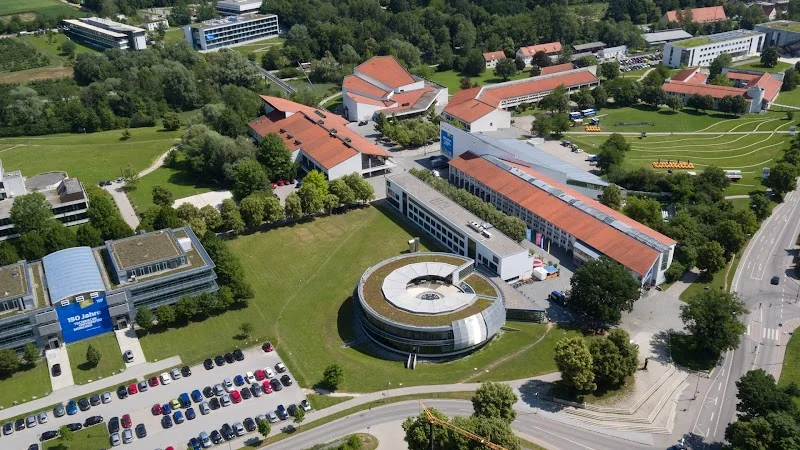
The TUM School of Life Sciences at the Weihenstephan Campus in Freising is the place where the Technical University of Munich consolidates its expertise in the life sciences. Here, research, teaching, and practice converge on a campus that has grown historically while remaining clearly focused on future topics. The School sees itself as a center for integrated life sciences and works in the spirit of a comprehensive One Health understanding: from molecules to cells and organisms, to plants, animals, humans, soil, and ecosystems. Since its founding in 2000, the location has developed into one of the important addresses for interdisciplinary research and education; in 2020, it was incorporated into the current structure of the TUM School of Life Sciences. Those who know the campus experience not just a university, but a network of study services, research institutions, exchange opportunities, career paths, and vibrant campus life. ([ls.tum.de](https://www.ls.tum.de/en/ls/about-us/))
Campus Office, Academic Advising, and Recognition
For all questions related to studies, the Campus Office is the central point of contact for the TUM School of Life Sciences. The page explicitly describes it as a hub for all study matters, where concerns are bundled quickly and reliably. Typical topics such as study orientation, decision counseling, questions about the course of study, examination matters, room management, exam planning, TUMonline support, and inquiries regarding recognition are handled there. This is particularly helpful for students, as the School not only provides general information but also clearly structures specific processes: recognition of achievements, withdrawal from exams, compensation for disadvantages, study organization, and questions about international stays are clearly assigned. The academic advising also supports students with personal or organizational challenges, questions about the access and application phase, and the classification of study decisions. Additionally, the School refers to the counseling service of the Studentenwerk München and the TUM Family Service for further support. The Campus Office is located at Weihenstephaner Steig 22 in Freising; the School Office is at Alte Akademie 8. This creates a clear service network for students, faculty, and staff in a compact space. ([ls.tum.de](https://www.ls.tum.de/en/ls/studies/campus-office-and-student-advising/))
Especially relevant for the frequently searched terms recognition, academic advising, and Campus Office is the structured handling of applications and documents. The official recognition page names specific documents such as fully completed applications, module descriptions, transcripts of records, and information about the grading system. It also explains that recognitions of foreign achievements, achievements from other German universities, or stays without a learning agreement are possible. If an equivalency assessment is necessary, the Campus Office informs about it and organizes the further steps. This is particularly important for students who want to remain mobile during their studies without disrupting their academic planning. The advisory function for international students and for anyone who needs to document individual modules, exams, or a change to another course of study is also relevant. The School thus relies on a service understanding that not only processes formalities but also provides orientation and creates decision-making security. Therefore, anyone looking for reliable academic advising at the TUM School of Life Sciences will find it not as a loose individual offering but as a central, well-organized structure with clear responsibilities and direct proximity to the most important study processes. ([ls.tum.de](https://www.ls.tum.de/en/ls/studies/during-studies/recognition/))
Thesis, Final Thesis, and Doctorate
Those searching for thesis, final thesis, or doctorate at the TUM School of Life Sciences will encounter clearly regulated processes. Bachelor’s and Master’s theses are registered digitally in the School's Thesis Portal. The official page makes an important point very clear: The so-called Issue Date is the day when the actual work begins, not the day of technical registration. This means that the processing time of three or six months is linked to the actual start of the work. The documents should be submitted to the Campus Office about four weeks before the planned start to allow sufficient time for review and approval. After that, the system confirms the registration, and the entry also appears in TUMonline. This process is not only formally correct but also enormously helpful for planning the final thesis, as it transparently brings together deadlines, responsibilities, and digital processes. For search queries such as final thesis, thesis, or thesis registration, this clarity is important because many students want to know when they can start, which signatures are needed, and how long the process takes. The School provides a precise answer to this and avoids unnecessary uncertainty. ([ls.tum.de](https://www.ls.tum.de/en/ls/studies/graduation/theses-certificates/))
For the doctorate, the Graduate Center of Life Sciences is the key institution. It is simultaneously an institution of the TUM Graduate School and part of the TUM School of Life Sciences. The page describes it as a structure that best supports doctoral candidates and adapts the framework of the TUM Graduate School to local requirements. For doctoral candidates, this means: There are points of contact for starting the doctorate, guidance during the supervision phase, information on regulations, and assistance with many practical questions related to the doctoral thesis. Official information is also provided for guest doctoral candidates, supervision, and formal documents. This makes the School visible not only as a study location but also as a research and doctoral location with clear pathways into the scientific workforce. Particularly for search terms like doctorate, graduate school, and thesis, this connection is central: The School not only organizes the final steps in the study but also accompanies the transition into an academic career. Those pursuing an academic career in the life sciences will find here an institutionally strong environment with direct connections to the TUM Graduate School, subject departments, and research groups. ([ls.tum.de](https://www.ls.tum.de/en/ls/research/doctorate/))
Erasmus, Exchange, and International Paths
The TUM School of Life Sciences is strongly internationally oriented. The official exchange page explicitly names Erasmus+ and TUMexchange as central programs, as well as partner universities and support from the Study Exchange Coordinators. For incoming students, there is a wide selection of modules and additional research insights in the form of research internships. For outgoing students, the School provides information on studying abroad, preparation, and the classification of partner universities. Particularly concrete is the requirement that exchange students must complete at least 50 percent of their workload at the TUM School of Life Sciences Weihenstephan and that the modules must be specified in the learning agreement with WZ or LS module codes. The principle that only complete modules are credited at TUM is also important for planning. These details make the School particularly relevant for search queries like erasmus, exchange semester, and international exchange, as they not only name programs but also explain practical implementation. Additionally, welcome events, language cafés, international meeting formats, and a campus tour via video that shows the Weihenstephan campus from the air are provided. The School thus understands internationality not as an addition but as an integral part of its everyday life. ([ls.tum.de](https://www.ls.tum.de/en/ls/international-exchange/))
The international focus is also very concrete in everyday study life. The pages on International Exchange and Campus Office name specific contacts for international questions, for incoming and outgoing students, as well as for research collaborations. At the same time, references are made to language courses, accommodations, TUMonline, and orientation after arrival. This is important because international students in Freising are not only expected to arrive but also to integrate into a very vibrant campus. The campus offers structural support and social connection opportunities. The Language Café Weihenstephan, the International Day, and the Welcome Events create spaces for exchange, cultural encounters, and practical orientation. Thus, the School is particularly well-positioned for search terms like international academic advising, erasmus, and campus office international. Therefore, anyone coming from abroad or planning a stay abroad will find here a system that connects academic requirements, learning agreements, module selection, and personal orientation. This combination makes the location attractive in the international context and explains why the School of Life Sciences is also a popular address for exchange students and international research internships. ([ls.tum.de](https://www.ls.tum.de/en/ls/international-exchange/))
Jobs, Careers, and Chairs on Campus
Even in terms of jobs and careers, the TUM School of Life Sciences is very clearly structured. The official jobs and careers page brings together internships, student jobs, final theses, and direct entries. Additionally, the School refers to career events such as the Market of Opportunities, the Agricultural Entrepreneur Day, and the IKOM Life Science, where companies, institutions, and authorities present themselves. For the search intent jobs, it is particularly important that current job postings for professorships, scientific staff, research management, administration, and technology can be found on the TUM job portal. The School also collects its own offers, internship databases, and portals that are specifically relevant for students and graduates from the life sciences. This makes the location interesting not only for academic education but also for entering the professional world. Those looking for final theses can find concrete points of contact through the School; those interested in student positions, internships, or PhD positions receive a clear, up-to-date structure on the pages. This way, the career area does not appear random or scattered but like a consciously built transition from education to practice. ([ls.tum.de](https://www.ls.tum.de/ls/jobs-und-karriere/))
The terms chairs and departments lead directly to the research structure at the School of Life Sciences. The pages display professorships, academic program directors, and the three research departments in which the subject-related work is organized. This is important for SEO as well as for real orientation, as many users are not only looking for a position but also for responsibilities, professors, or thematic focuses. The School links these levels with research groups, professorships, and departments, allowing one to trace the internal structure. Therefore, anyone wanting to learn about a final thesis, a doctorate, or a job does not end up in an opaque system but in a scientific environment with traceable responsibilities. Career advancement is also actively supported: The School refers to the TUM Career Service, applicant training, CV checks, and personal counseling. This combination of research, project work, internships, and career entry is an important advantage, especially for students of the life sciences. Thus, the search intent jobs indeed leads to a clear information path that leads from the first internship to a scientific or industrial career. ([ls.tum.de](https://www.ls.tum.de/ls/jobs-und-karriere/))
Research Departments and One Health Profiles
Research at the TUM School of Life Sciences is divided into three departments: Life Science Engineering, Life Science Systems, and Molecular Life Sciences. This structure is not only organizational but also methodical. The official page explains that the departments bundle research according to their methods and thus form an integrative research and teaching system. More than 90 professorships work within this framework, highlighting the content breadth and international visibility of the location. Life Science Engineering connects natural, life, and material sciences with biotechnology and engineering, focusing on innovative solutions for agriculture, nutrition, forestry, wood, and biopharmaceutical development. Life Science Systems examines natural and managed ecosystems, including ecological, social, and economic aspects. Molecular Life Sciences is dedicated to biomolecular basic research from the molecular level through cells and organisms to humans, animals, and plants. Therefore, anyone searching for departments or chairs will find here not just a mere list but a meaningful ordering system for research in the life sciences. ([ls.tum.de](https://www.ls.tum.de/en/ls/research/research-departments/))
The thematic focuses of the departments are reflected in many search queries: agriculture, food, forestry, ecosystems, biotechnology, genetics, microbiology, protein science, bioinformatics, and nutrition. Particularly, Life Science Systems is closely linked to the One Health strategy and emphasizes natural and managed ecosystems as well as their sustainable management. Life Science Engineering demonstrates in its focus areas agricultural technology, smart food processing, wood science & biotechnology, and biopharmaceutical engineering how closely technology and application are interconnected. Molecular Life Sciences, in turn, covers, among other things, health & nutrition, plant science, protein science & proteomics, bioinformatics & data science, animal science, and microbiology & microbiomes. This is attractive for visitors because the School clearly shows what it is about: the connection between basic research and socially relevant solutions. The official self-presentation emphasizes that the School, with its One Health approach, places healthy and resilient living spaces, the health of humans and animals, and healthy and sustainable food at the center. This is precisely why the location is strongly positioned both academically and communicatively. ([ls.tum.de](https://www.ls.tum.de/en/ls/research/research-departments/life-science-engineering/))
Address, Directions, Campus, and History in Freising-Weihenstephan
The most important address for orientation is officially Alte Akademie 8, 85354 Freising for the School Office; the Campus Office is located at Weihenstephaner Steig 22. Additionally, the Graduate Center of Life Sciences is at Alte Akademie 8a, and the IT Helpdesk is at Maximus-von-Imhof-Forum 3. On campus, the central area is arranged around the Central Lecture Hall Building, the cafeteria, and the university library; the School Office and administrative areas are located on Weihenstephaner Berg and can be reached from the campus center in about five minutes on foot. For arrival, the website mentions Freising train station, the S-Bahn S1, bus lines 635, 637, 638, 639, and X660. There are also campus maps, room maps, a map of the dining options, and NavigaTUM for room searches. Thus, the address and campus office are not just postal data but real orientation points for everyday life on campus. This is particularly important for visitors, students, and staff because Weihenstephan is a campus with many individual buildings, service areas, and research facilities. ([ls.tum.de](https://www.ls.tum.de/en/ls/contact-and-directions/))
Historically, the location is as exciting as it is current. The history of Weihenstephan dates back a long way, but for the present TUM School of Life Sciences, the scientific milestones are particularly decisive: In 1803, the School of Agriculture was founded, relocated to Weihenstephan in 1852, developed into the Royal Bavarian Academy of Agriculture and Brewing in 1895, in 1998 TUM Biology was moved to Weihenstephan, and in 2000 the Science Center for Nutrition, Land Use, and Environment was formed as a joint school association. In 2020, the transformation into the present TUM School of Life Sciences followed. The history page also shows a photo series with historical and current images, exactly the kind of photos that are interesting for many searchers: not just decorative campus images but visual insights into the development of the location. Therefore, anyone visiting the campus does not simply experience a modern university but a place with depth, tradition, and visible scientific history. The School connects old structures like the historic Weihenstephaner Berg with contemporary research, international exchange, and a campus life characterized by the library, cafeteria, family service, StudiTUM, and diverse service offerings. Thus, Freising-Weihenstephan becomes a campus that convinces both practically and atmospherically. ([ls.tum.de](https://www.ls.tum.de/en/ls/about-us/history/))
Sources:
- TUM School of Life Sciences - About Us
- TUM School of Life Sciences - Contact and Directions
- TUM School of Life Sciences - Campus Office and Student Advising
- TUM School of Life Sciences - Theses & Certificates
- TUM School of Life Sciences - International Exchange
- TUM School of Life Sciences - Jobs and Career
- TUM School of Life Sciences - Research Departments
- TUM School of Life Sciences - History Weihenstephan
Show moreShow less
TUM School of Life Sciences | Academic Advising & Erasmus
The TUM School of Life Sciences at the Weihenstephan Campus in Freising is the place where the Technical University of Munich consolidates its expertise in the life sciences. Here, research, teaching, and practice converge on a campus that has grown historically while remaining clearly focused on future topics. The School sees itself as a center for integrated life sciences and works in the spirit of a comprehensive One Health understanding: from molecules to cells and organisms, to plants, animals, humans, soil, and ecosystems. Since its founding in 2000, the location has developed into one of the important addresses for interdisciplinary research and education; in 2020, it was incorporated into the current structure of the TUM School of Life Sciences. Those who know the campus experience not just a university, but a network of study services, research institutions, exchange opportunities, career paths, and vibrant campus life. ([ls.tum.de](https://www.ls.tum.de/en/ls/about-us/))
Campus Office, Academic Advising, and Recognition
For all questions related to studies, the Campus Office is the central point of contact for the TUM School of Life Sciences. The page explicitly describes it as a hub for all study matters, where concerns are bundled quickly and reliably. Typical topics such as study orientation, decision counseling, questions about the course of study, examination matters, room management, exam planning, TUMonline support, and inquiries regarding recognition are handled there. This is particularly helpful for students, as the School not only provides general information but also clearly structures specific processes: recognition of achievements, withdrawal from exams, compensation for disadvantages, study organization, and questions about international stays are clearly assigned. The academic advising also supports students with personal or organizational challenges, questions about the access and application phase, and the classification of study decisions. Additionally, the School refers to the counseling service of the Studentenwerk München and the TUM Family Service for further support. The Campus Office is located at Weihenstephaner Steig 22 in Freising; the School Office is at Alte Akademie 8. This creates a clear service network for students, faculty, and staff in a compact space. ([ls.tum.de](https://www.ls.tum.de/en/ls/studies/campus-office-and-student-advising/))
Especially relevant for the frequently searched terms recognition, academic advising, and Campus Office is the structured handling of applications and documents. The official recognition page names specific documents such as fully completed applications, module descriptions, transcripts of records, and information about the grading system. It also explains that recognitions of foreign achievements, achievements from other German universities, or stays without a learning agreement are possible. If an equivalency assessment is necessary, the Campus Office informs about it and organizes the further steps. This is particularly important for students who want to remain mobile during their studies without disrupting their academic planning. The advisory function for international students and for anyone who needs to document individual modules, exams, or a change to another course of study is also relevant. The School thus relies on a service understanding that not only processes formalities but also provides orientation and creates decision-making security. Therefore, anyone looking for reliable academic advising at the TUM School of Life Sciences will find it not as a loose individual offering but as a central, well-organized structure with clear responsibilities and direct proximity to the most important study processes. ([ls.tum.de](https://www.ls.tum.de/en/ls/studies/during-studies/recognition/))
Thesis, Final Thesis, and Doctorate
Those searching for thesis, final thesis, or doctorate at the TUM School of Life Sciences will encounter clearly regulated processes. Bachelor’s and Master’s theses are registered digitally in the School's Thesis Portal. The official page makes an important point very clear: The so-called Issue Date is the day when the actual work begins, not the day of technical registration. This means that the processing time of three or six months is linked to the actual start of the work. The documents should be submitted to the Campus Office about four weeks before the planned start to allow sufficient time for review and approval. After that, the system confirms the registration, and the entry also appears in TUMonline. This process is not only formally correct but also enormously helpful for planning the final thesis, as it transparently brings together deadlines, responsibilities, and digital processes. For search queries such as final thesis, thesis, or thesis registration, this clarity is important because many students want to know when they can start, which signatures are needed, and how long the process takes. The School provides a precise answer to this and avoids unnecessary uncertainty. ([ls.tum.de](https://www.ls.tum.de/en/ls/studies/graduation/theses-certificates/))
For the doctorate, the Graduate Center of Life Sciences is the key institution. It is simultaneously an institution of the TUM Graduate School and part of the TUM School of Life Sciences. The page describes it as a structure that best supports doctoral candidates and adapts the framework of the TUM Graduate School to local requirements. For doctoral candidates, this means: There are points of contact for starting the doctorate, guidance during the supervision phase, information on regulations, and assistance with many practical questions related to the doctoral thesis. Official information is also provided for guest doctoral candidates, supervision, and formal documents. This makes the School visible not only as a study location but also as a research and doctoral location with clear pathways into the scientific workforce. Particularly for search terms like doctorate, graduate school, and thesis, this connection is central: The School not only organizes the final steps in the study but also accompanies the transition into an academic career. Those pursuing an academic career in the life sciences will find here an institutionally strong environment with direct connections to the TUM Graduate School, subject departments, and research groups. ([ls.tum.de](https://www.ls.tum.de/en/ls/research/doctorate/))
Erasmus, Exchange, and International Paths
The TUM School of Life Sciences is strongly internationally oriented. The official exchange page explicitly names Erasmus+ and TUMexchange as central programs, as well as partner universities and support from the Study Exchange Coordinators. For incoming students, there is a wide selection of modules and additional research insights in the form of research internships. For outgoing students, the School provides information on studying abroad, preparation, and the classification of partner universities. Particularly concrete is the requirement that exchange students must complete at least 50 percent of their workload at the TUM School of Life Sciences Weihenstephan and that the modules must be specified in the learning agreement with WZ or LS module codes. The principle that only complete modules are credited at TUM is also important for planning. These details make the School particularly relevant for search queries like erasmus, exchange semester, and international exchange, as they not only name programs but also explain practical implementation. Additionally, welcome events, language cafés, international meeting formats, and a campus tour via video that shows the Weihenstephan campus from the air are provided. The School thus understands internationality not as an addition but as an integral part of its everyday life. ([ls.tum.de](https://www.ls.tum.de/en/ls/international-exchange/))
The international focus is also very concrete in everyday study life. The pages on International Exchange and Campus Office name specific contacts for international questions, for incoming and outgoing students, as well as for research collaborations. At the same time, references are made to language courses, accommodations, TUMonline, and orientation after arrival. This is important because international students in Freising are not only expected to arrive but also to integrate into a very vibrant campus. The campus offers structural support and social connection opportunities. The Language Café Weihenstephan, the International Day, and the Welcome Events create spaces for exchange, cultural encounters, and practical orientation. Thus, the School is particularly well-positioned for search terms like international academic advising, erasmus, and campus office international. Therefore, anyone coming from abroad or planning a stay abroad will find here a system that connects academic requirements, learning agreements, module selection, and personal orientation. This combination makes the location attractive in the international context and explains why the School of Life Sciences is also a popular address for exchange students and international research internships. ([ls.tum.de](https://www.ls.tum.de/en/ls/international-exchange/))
Jobs, Careers, and Chairs on Campus
Even in terms of jobs and careers, the TUM School of Life Sciences is very clearly structured. The official jobs and careers page brings together internships, student jobs, final theses, and direct entries. Additionally, the School refers to career events such as the Market of Opportunities, the Agricultural Entrepreneur Day, and the IKOM Life Science, where companies, institutions, and authorities present themselves. For the search intent jobs, it is particularly important that current job postings for professorships, scientific staff, research management, administration, and technology can be found on the TUM job portal. The School also collects its own offers, internship databases, and portals that are specifically relevant for students and graduates from the life sciences. This makes the location interesting not only for academic education but also for entering the professional world. Those looking for final theses can find concrete points of contact through the School; those interested in student positions, internships, or PhD positions receive a clear, up-to-date structure on the pages. This way, the career area does not appear random or scattered but like a consciously built transition from education to practice. ([ls.tum.de](https://www.ls.tum.de/ls/jobs-und-karriere/))
The terms chairs and departments lead directly to the research structure at the School of Life Sciences. The pages display professorships, academic program directors, and the three research departments in which the subject-related work is organized. This is important for SEO as well as for real orientation, as many users are not only looking for a position but also for responsibilities, professors, or thematic focuses. The School links these levels with research groups, professorships, and departments, allowing one to trace the internal structure. Therefore, anyone wanting to learn about a final thesis, a doctorate, or a job does not end up in an opaque system but in a scientific environment with traceable responsibilities. Career advancement is also actively supported: The School refers to the TUM Career Service, applicant training, CV checks, and personal counseling. This combination of research, project work, internships, and career entry is an important advantage, especially for students of the life sciences. Thus, the search intent jobs indeed leads to a clear information path that leads from the first internship to a scientific or industrial career. ([ls.tum.de](https://www.ls.tum.de/ls/jobs-und-karriere/))
Research Departments and One Health Profiles
Research at the TUM School of Life Sciences is divided into three departments: Life Science Engineering, Life Science Systems, and Molecular Life Sciences. This structure is not only organizational but also methodical. The official page explains that the departments bundle research according to their methods and thus form an integrative research and teaching system. More than 90 professorships work within this framework, highlighting the content breadth and international visibility of the location. Life Science Engineering connects natural, life, and material sciences with biotechnology and engineering, focusing on innovative solutions for agriculture, nutrition, forestry, wood, and biopharmaceutical development. Life Science Systems examines natural and managed ecosystems, including ecological, social, and economic aspects. Molecular Life Sciences is dedicated to biomolecular basic research from the molecular level through cells and organisms to humans, animals, and plants. Therefore, anyone searching for departments or chairs will find here not just a mere list but a meaningful ordering system for research in the life sciences. ([ls.tum.de](https://www.ls.tum.de/en/ls/research/research-departments/))
The thematic focuses of the departments are reflected in many search queries: agriculture, food, forestry, ecosystems, biotechnology, genetics, microbiology, protein science, bioinformatics, and nutrition. Particularly, Life Science Systems is closely linked to the One Health strategy and emphasizes natural and managed ecosystems as well as their sustainable management. Life Science Engineering demonstrates in its focus areas agricultural technology, smart food processing, wood science & biotechnology, and biopharmaceutical engineering how closely technology and application are interconnected. Molecular Life Sciences, in turn, covers, among other things, health & nutrition, plant science, protein science & proteomics, bioinformatics & data science, animal science, and microbiology & microbiomes. This is attractive for visitors because the School clearly shows what it is about: the connection between basic research and socially relevant solutions. The official self-presentation emphasizes that the School, with its One Health approach, places healthy and resilient living spaces, the health of humans and animals, and healthy and sustainable food at the center. This is precisely why the location is strongly positioned both academically and communicatively. ([ls.tum.de](https://www.ls.tum.de/en/ls/research/research-departments/life-science-engineering/))
Address, Directions, Campus, and History in Freising-Weihenstephan
The most important address for orientation is officially Alte Akademie 8, 85354 Freising for the School Office; the Campus Office is located at Weihenstephaner Steig 22. Additionally, the Graduate Center of Life Sciences is at Alte Akademie 8a, and the IT Helpdesk is at Maximus-von-Imhof-Forum 3. On campus, the central area is arranged around the Central Lecture Hall Building, the cafeteria, and the university library; the School Office and administrative areas are located on Weihenstephaner Berg and can be reached from the campus center in about five minutes on foot. For arrival, the website mentions Freising train station, the S-Bahn S1, bus lines 635, 637, 638, 639, and X660. There are also campus maps, room maps, a map of the dining options, and NavigaTUM for room searches. Thus, the address and campus office are not just postal data but real orientation points for everyday life on campus. This is particularly important for visitors, students, and staff because Weihenstephan is a campus with many individual buildings, service areas, and research facilities. ([ls.tum.de](https://www.ls.tum.de/en/ls/contact-and-directions/))
Historically, the location is as exciting as it is current. The history of Weihenstephan dates back a long way, but for the present TUM School of Life Sciences, the scientific milestones are particularly decisive: In 1803, the School of Agriculture was founded, relocated to Weihenstephan in 1852, developed into the Royal Bavarian Academy of Agriculture and Brewing in 1895, in 1998 TUM Biology was moved to Weihenstephan, and in 2000 the Science Center for Nutrition, Land Use, and Environment was formed as a joint school association. In 2020, the transformation into the present TUM School of Life Sciences followed. The history page also shows a photo series with historical and current images, exactly the kind of photos that are interesting for many searchers: not just decorative campus images but visual insights into the development of the location. Therefore, anyone visiting the campus does not simply experience a modern university but a place with depth, tradition, and visible scientific history. The School connects old structures like the historic Weihenstephaner Berg with contemporary research, international exchange, and a campus life characterized by the library, cafeteria, family service, StudiTUM, and diverse service offerings. Thus, Freising-Weihenstephan becomes a campus that convinces both practically and atmospherically. ([ls.tum.de](https://www.ls.tum.de/en/ls/about-us/history/))
Sources:
- TUM School of Life Sciences - About Us
- TUM School of Life Sciences - Contact and Directions
- TUM School of Life Sciences - Campus Office and Student Advising
- TUM School of Life Sciences - Theses & Certificates
- TUM School of Life Sciences - International Exchange
- TUM School of Life Sciences - Jobs and Career
- TUM School of Life Sciences - Research Departments
- TUM School of Life Sciences - History Weihenstephan
TUM School of Life Sciences | Academic Advising & Erasmus
The TUM School of Life Sciences at the Weihenstephan Campus in Freising is the place where the Technical University of Munich consolidates its expertise in the life sciences. Here, research, teaching, and practice converge on a campus that has grown historically while remaining clearly focused on future topics. The School sees itself as a center for integrated life sciences and works in the spirit of a comprehensive One Health understanding: from molecules to cells and organisms, to plants, animals, humans, soil, and ecosystems. Since its founding in 2000, the location has developed into one of the important addresses for interdisciplinary research and education; in 2020, it was incorporated into the current structure of the TUM School of Life Sciences. Those who know the campus experience not just a university, but a network of study services, research institutions, exchange opportunities, career paths, and vibrant campus life. ([ls.tum.de](https://www.ls.tum.de/en/ls/about-us/))
Campus Office, Academic Advising, and Recognition
For all questions related to studies, the Campus Office is the central point of contact for the TUM School of Life Sciences. The page explicitly describes it as a hub for all study matters, where concerns are bundled quickly and reliably. Typical topics such as study orientation, decision counseling, questions about the course of study, examination matters, room management, exam planning, TUMonline support, and inquiries regarding recognition are handled there. This is particularly helpful for students, as the School not only provides general information but also clearly structures specific processes: recognition of achievements, withdrawal from exams, compensation for disadvantages, study organization, and questions about international stays are clearly assigned. The academic advising also supports students with personal or organizational challenges, questions about the access and application phase, and the classification of study decisions. Additionally, the School refers to the counseling service of the Studentenwerk München and the TUM Family Service for further support. The Campus Office is located at Weihenstephaner Steig 22 in Freising; the School Office is at Alte Akademie 8. This creates a clear service network for students, faculty, and staff in a compact space. ([ls.tum.de](https://www.ls.tum.de/en/ls/studies/campus-office-and-student-advising/))
Especially relevant for the frequently searched terms recognition, academic advising, and Campus Office is the structured handling of applications and documents. The official recognition page names specific documents such as fully completed applications, module descriptions, transcripts of records, and information about the grading system. It also explains that recognitions of foreign achievements, achievements from other German universities, or stays without a learning agreement are possible. If an equivalency assessment is necessary, the Campus Office informs about it and organizes the further steps. This is particularly important for students who want to remain mobile during their studies without disrupting their academic planning. The advisory function for international students and for anyone who needs to document individual modules, exams, or a change to another course of study is also relevant. The School thus relies on a service understanding that not only processes formalities but also provides orientation and creates decision-making security. Therefore, anyone looking for reliable academic advising at the TUM School of Life Sciences will find it not as a loose individual offering but as a central, well-organized structure with clear responsibilities and direct proximity to the most important study processes. ([ls.tum.de](https://www.ls.tum.de/en/ls/studies/during-studies/recognition/))
Thesis, Final Thesis, and Doctorate
Those searching for thesis, final thesis, or doctorate at the TUM School of Life Sciences will encounter clearly regulated processes. Bachelor’s and Master’s theses are registered digitally in the School's Thesis Portal. The official page makes an important point very clear: The so-called Issue Date is the day when the actual work begins, not the day of technical registration. This means that the processing time of three or six months is linked to the actual start of the work. The documents should be submitted to the Campus Office about four weeks before the planned start to allow sufficient time for review and approval. After that, the system confirms the registration, and the entry also appears in TUMonline. This process is not only formally correct but also enormously helpful for planning the final thesis, as it transparently brings together deadlines, responsibilities, and digital processes. For search queries such as final thesis, thesis, or thesis registration, this clarity is important because many students want to know when they can start, which signatures are needed, and how long the process takes. The School provides a precise answer to this and avoids unnecessary uncertainty. ([ls.tum.de](https://www.ls.tum.de/en/ls/studies/graduation/theses-certificates/))
For the doctorate, the Graduate Center of Life Sciences is the key institution. It is simultaneously an institution of the TUM Graduate School and part of the TUM School of Life Sciences. The page describes it as a structure that best supports doctoral candidates and adapts the framework of the TUM Graduate School to local requirements. For doctoral candidates, this means: There are points of contact for starting the doctorate, guidance during the supervision phase, information on regulations, and assistance with many practical questions related to the doctoral thesis. Official information is also provided for guest doctoral candidates, supervision, and formal documents. This makes the School visible not only as a study location but also as a research and doctoral location with clear pathways into the scientific workforce. Particularly for search terms like doctorate, graduate school, and thesis, this connection is central: The School not only organizes the final steps in the study but also accompanies the transition into an academic career. Those pursuing an academic career in the life sciences will find here an institutionally strong environment with direct connections to the TUM Graduate School, subject departments, and research groups. ([ls.tum.de](https://www.ls.tum.de/en/ls/research/doctorate/))
Erasmus, Exchange, and International Paths
The TUM School of Life Sciences is strongly internationally oriented. The official exchange page explicitly names Erasmus+ and TUMexchange as central programs, as well as partner universities and support from the Study Exchange Coordinators. For incoming students, there is a wide selection of modules and additional research insights in the form of research internships. For outgoing students, the School provides information on studying abroad, preparation, and the classification of partner universities. Particularly concrete is the requirement that exchange students must complete at least 50 percent of their workload at the TUM School of Life Sciences Weihenstephan and that the modules must be specified in the learning agreement with WZ or LS module codes. The principle that only complete modules are credited at TUM is also important for planning. These details make the School particularly relevant for search queries like erasmus, exchange semester, and international exchange, as they not only name programs but also explain practical implementation. Additionally, welcome events, language cafés, international meeting formats, and a campus tour via video that shows the Weihenstephan campus from the air are provided. The School thus understands internationality not as an addition but as an integral part of its everyday life. ([ls.tum.de](https://www.ls.tum.de/en/ls/international-exchange/))
The international focus is also very concrete in everyday study life. The pages on International Exchange and Campus Office name specific contacts for international questions, for incoming and outgoing students, as well as for research collaborations. At the same time, references are made to language courses, accommodations, TUMonline, and orientation after arrival. This is important because international students in Freising are not only expected to arrive but also to integrate into a very vibrant campus. The campus offers structural support and social connection opportunities. The Language Café Weihenstephan, the International Day, and the Welcome Events create spaces for exchange, cultural encounters, and practical orientation. Thus, the School is particularly well-positioned for search terms like international academic advising, erasmus, and campus office international. Therefore, anyone coming from abroad or planning a stay abroad will find here a system that connects academic requirements, learning agreements, module selection, and personal orientation. This combination makes the location attractive in the international context and explains why the School of Life Sciences is also a popular address for exchange students and international research internships. ([ls.tum.de](https://www.ls.tum.de/en/ls/international-exchange/))
Jobs, Careers, and Chairs on Campus
Even in terms of jobs and careers, the TUM School of Life Sciences is very clearly structured. The official jobs and careers page brings together internships, student jobs, final theses, and direct entries. Additionally, the School refers to career events such as the Market of Opportunities, the Agricultural Entrepreneur Day, and the IKOM Life Science, where companies, institutions, and authorities present themselves. For the search intent jobs, it is particularly important that current job postings for professorships, scientific staff, research management, administration, and technology can be found on the TUM job portal. The School also collects its own offers, internship databases, and portals that are specifically relevant for students and graduates from the life sciences. This makes the location interesting not only for academic education but also for entering the professional world. Those looking for final theses can find concrete points of contact through the School; those interested in student positions, internships, or PhD positions receive a clear, up-to-date structure on the pages. This way, the career area does not appear random or scattered but like a consciously built transition from education to practice. ([ls.tum.de](https://www.ls.tum.de/ls/jobs-und-karriere/))
The terms chairs and departments lead directly to the research structure at the School of Life Sciences. The pages display professorships, academic program directors, and the three research departments in which the subject-related work is organized. This is important for SEO as well as for real orientation, as many users are not only looking for a position but also for responsibilities, professors, or thematic focuses. The School links these levels with research groups, professorships, and departments, allowing one to trace the internal structure. Therefore, anyone wanting to learn about a final thesis, a doctorate, or a job does not end up in an opaque system but in a scientific environment with traceable responsibilities. Career advancement is also actively supported: The School refers to the TUM Career Service, applicant training, CV checks, and personal counseling. This combination of research, project work, internships, and career entry is an important advantage, especially for students of the life sciences. Thus, the search intent jobs indeed leads to a clear information path that leads from the first internship to a scientific or industrial career. ([ls.tum.de](https://www.ls.tum.de/ls/jobs-und-karriere/))
Research Departments and One Health Profiles
Research at the TUM School of Life Sciences is divided into three departments: Life Science Engineering, Life Science Systems, and Molecular Life Sciences. This structure is not only organizational but also methodical. The official page explains that the departments bundle research according to their methods and thus form an integrative research and teaching system. More than 90 professorships work within this framework, highlighting the content breadth and international visibility of the location. Life Science Engineering connects natural, life, and material sciences with biotechnology and engineering, focusing on innovative solutions for agriculture, nutrition, forestry, wood, and biopharmaceutical development. Life Science Systems examines natural and managed ecosystems, including ecological, social, and economic aspects. Molecular Life Sciences is dedicated to biomolecular basic research from the molecular level through cells and organisms to humans, animals, and plants. Therefore, anyone searching for departments or chairs will find here not just a mere list but a meaningful ordering system for research in the life sciences. ([ls.tum.de](https://www.ls.tum.de/en/ls/research/research-departments/))
The thematic focuses of the departments are reflected in many search queries: agriculture, food, forestry, ecosystems, biotechnology, genetics, microbiology, protein science, bioinformatics, and nutrition. Particularly, Life Science Systems is closely linked to the One Health strategy and emphasizes natural and managed ecosystems as well as their sustainable management. Life Science Engineering demonstrates in its focus areas agricultural technology, smart food processing, wood science & biotechnology, and biopharmaceutical engineering how closely technology and application are interconnected. Molecular Life Sciences, in turn, covers, among other things, health & nutrition, plant science, protein science & proteomics, bioinformatics & data science, animal science, and microbiology & microbiomes. This is attractive for visitors because the School clearly shows what it is about: the connection between basic research and socially relevant solutions. The official self-presentation emphasizes that the School, with its One Health approach, places healthy and resilient living spaces, the health of humans and animals, and healthy and sustainable food at the center. This is precisely why the location is strongly positioned both academically and communicatively. ([ls.tum.de](https://www.ls.tum.de/en/ls/research/research-departments/life-science-engineering/))
Address, Directions, Campus, and History in Freising-Weihenstephan
The most important address for orientation is officially Alte Akademie 8, 85354 Freising for the School Office; the Campus Office is located at Weihenstephaner Steig 22. Additionally, the Graduate Center of Life Sciences is at Alte Akademie 8a, and the IT Helpdesk is at Maximus-von-Imhof-Forum 3. On campus, the central area is arranged around the Central Lecture Hall Building, the cafeteria, and the university library; the School Office and administrative areas are located on Weihenstephaner Berg and can be reached from the campus center in about five minutes on foot. For arrival, the website mentions Freising train station, the S-Bahn S1, bus lines 635, 637, 638, 639, and X660. There are also campus maps, room maps, a map of the dining options, and NavigaTUM for room searches. Thus, the address and campus office are not just postal data but real orientation points for everyday life on campus. This is particularly important for visitors, students, and staff because Weihenstephan is a campus with many individual buildings, service areas, and research facilities. ([ls.tum.de](https://www.ls.tum.de/en/ls/contact-and-directions/))
Historically, the location is as exciting as it is current. The history of Weihenstephan dates back a long way, but for the present TUM School of Life Sciences, the scientific milestones are particularly decisive: In 1803, the School of Agriculture was founded, relocated to Weihenstephan in 1852, developed into the Royal Bavarian Academy of Agriculture and Brewing in 1895, in 1998 TUM Biology was moved to Weihenstephan, and in 2000 the Science Center for Nutrition, Land Use, and Environment was formed as a joint school association. In 2020, the transformation into the present TUM School of Life Sciences followed. The history page also shows a photo series with historical and current images, exactly the kind of photos that are interesting for many searchers: not just decorative campus images but visual insights into the development of the location. Therefore, anyone visiting the campus does not simply experience a modern university but a place with depth, tradition, and visible scientific history. The School connects old structures like the historic Weihenstephaner Berg with contemporary research, international exchange, and a campus life characterized by the library, cafeteria, family service, StudiTUM, and diverse service offerings. Thus, Freising-Weihenstephan becomes a campus that convinces both practically and atmospherically. ([ls.tum.de](https://www.ls.tum.de/en/ls/about-us/history/))
Sources:
- TUM School of Life Sciences - About Us
- TUM School of Life Sciences - Contact and Directions
- TUM School of Life Sciences - Campus Office and Student Advising
- TUM School of Life Sciences - Theses & Certificates
- TUM School of Life Sciences - International Exchange
- TUM School of Life Sciences - Jobs and Career
- TUM School of Life Sciences - Research Departments
- TUM School of Life Sciences - History Weihenstephan
Upcoming Events
No events found
Frequently Asked Questions
Reviews
Tim ONeil
2. April 2026
nice place to get a meal and walk around.
Ejona Gjika
6. April 2022
An amazing campus. The auditoriums are well maintained and laboratories are modern. There is a lot of greenery on campus and quite a few nice architectural highlights (my favorite ones being the StudiTUM house on top of the Weihenstephaner Berg and the bridge in the middle of the campus). It is easy to walk around and there are several bus stations on campus too. The mensa has good and super cheap food and there are also food trucks for more options. All in all, a great place to study and pass time in good sunny days.
Yves Zhao
20. November 2024
24ws freshman & love the place
sangam subedi
23. December 2025
Just wow🤟
Kristijan Kuš
20. April 2019
...What I found the most interesting part of this science campus complex is the big modern bridge that connects two parts of the complex, and goes above beautiful lake of Thalhauser Graben, with nice walking path along this small lake...