Katharina Grosse
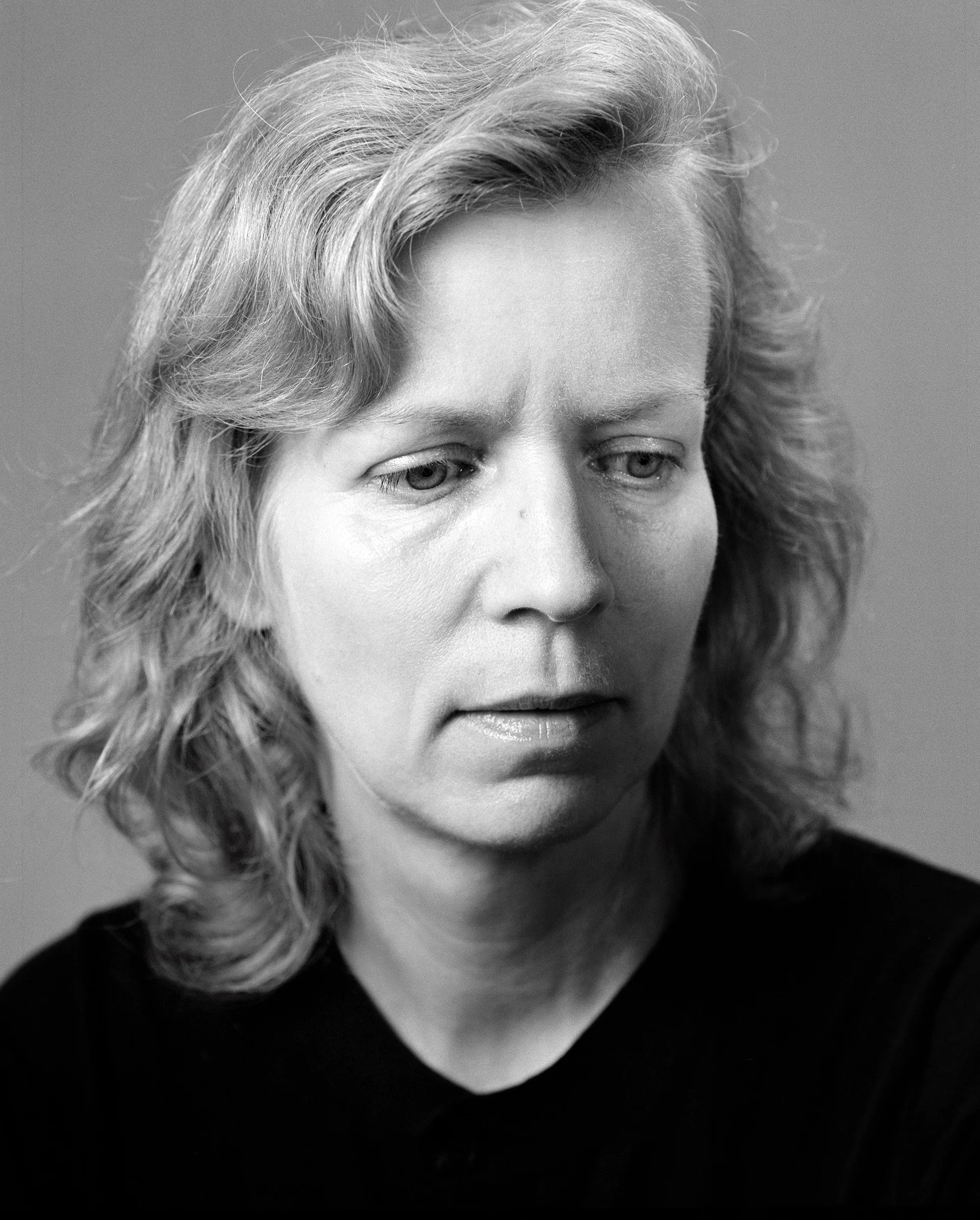
Image from Wikipedia
Image from Wikipedia
Katharina Grosse – Painting as a Spatial Event, Color Drama, and International Contemporary Art
An artist who transforms architecture, perception, and color into a single event
Katharina Grosse, born on October 2, 1961, in Freiburg im Breisgau, ranks among the most internationally recognized German artists of our time. Her painting consistently departs from the canvas and becomes a spatial experience that encompasses walls, floors, ceilings, and entire architectures. An overview of her work reveals a career characterized by academic training, experimental rigor, and a distinctive visual language. ([de.wikipedia.org](https://de.wikipedia.org/wiki/Katharina_Grosse))
Biographical Roots and Artistic Formation
Katharina Grosse is the daughter of the artist Barbara Grosse and the Germanist and later rector of Ruhr University Bochum, Siegfried Grosse. She attended school in Bochum and studied at the art academies in Münster and Düsseldorf under Norbert Tadeusz and Gotthard Graubner. This education forms the foundation of an artistic development that views color not as decoration but as an autonomous, spatial, and physical medium. ([de.wikipedia.org](https://de.wikipedia.org/wiki/Katharina_Grosse))
Early on, a stance emerged that systematically transcends the boundaries of classical painting. The artist works with a compressor-driven spray gun, creating image spaces that oscillate between abstraction, illusion, and physical presence. The first spray-painted wall works were created in 1998 in Sydney in the context of the 11th Biennale of Sydney and in the same year at the Kunsthalle Bern. From there, her practice expanded to cover ever-larger areas and later also outdoor spaces. ([de.wikipedia.org](https://de.wikipedia.org/wiki/Katharina_Grosse))
The Breakthrough: From the Wall to Public Space
The decisive step in Grosse's work is the dissolution of the canvas in favor of a location-specific, installational approach. Since 2001, her painting increasingly includes outdoor spaces, utilizing floors, ceilings, furniture, fabrics, stones, and architectural elements. Museums, private homes, stairwells, cafeterias, and training rooms have become carriers of her color compositions, which not only cover surfaces but also restructure perception. ([de.wikipedia.org](https://de.wikipedia.org/wiki/Katharina_Grosse))
Particularly striking is the tension between monumental gesture and precise control. The exhibition Ellipse at Kunsthalle Düsseldorf in 2010 made clear how Grosse transforms architectural spaces into dynamic fields of images. The spray-gun technique, which hit visible concrete surfaces there, produced a painting that extends beyond the boundaries of its supports and makes the viewer an actor. The work does not treat space as background but as an active stage of perception. ([kunsthalle-duesseldorf.de](https://www.kunsthalle-duesseldorf.de/media/presse.pdf))
Awards, Institutional Recognition, and Authority
Grosse's reputation is based not only on visibility but also on continuous recognition by significant institutions. She was a professor at the Berlin-Weißensee School of Art from 2000 to 2010 and subsequently a professor of painting at the Kunstakademie Düsseldorf from 2010 to 2018. Since 2010, she has been a member of the Academy of Arts in Berlin. Her awards include the Fred Thieler Prize, the Oskar Schlemmer Prize, and the Otto Ritschl Prize. ([de.wikipedia.org](https://de.wikipedia.org/wiki/Katharina_Grosse))
Her presence in collections also underscores her authority in the art world. Works by Katharina Grosse are found in prominent collections, including the Centre Georges-Pompidou in Paris, Kunsthaus Zürich, Staatsgalerie Stuttgart, Kunstmuseum Bonn, Albertinum Dresden, Lenbachhaus Munich, and various other significant public and institutional collections. This anchoring in international museums illustrates how strongly her work shapes the canon of contemporary painting. ([de.wikipedia.org](https://de.wikipedia.org/wiki/Katharina_Grosse))
Current Projects and Major Presence in 2025
In 2025, Katharina Grosse will continue to maintain her presence with large-scale projects. Her official website lists CHOIR for Art Basel 2025 at the Messeplatz in Basel, Wunderbild at the Deichtorhallen Hamburg, and The Sprayed Dear at Staatsgalerie Stuttgart. Additionally, the artist references current and upcoming presentations like High Noon Lumen in Berlin and further exhibitions in 2026 in London and Palma de Mallorca. Her contemporary art remains firmly rooted in the international exhibition scene. ([katharinagrosse.com](https://www.katharinagrosse.com/?utm_source=openai))
The international press particularly highlights the scale and sensual impact of these works. The Art Newspaper described CHOIR 2025 as a piece that blankets the Messeplatz and the exhibition hall with colorful veils and fields created with the spray gun. At the same time, the publication emphasizes that Grosse does not understand her image spaces as abstract surfaces but as perception spaces with their own logic. This classification confirms the significance of her current practice in the global art world. ([theartnewspaper.com](https://www.theartnewspaper.com/2025/06/16/katharina-grosse-imagination-doesnt-have-a-scale))
Style, Method, and Artistic Development
Grosse's style is radical yet precise: she works with color gradients, overlays, and large-scale gestures without leaving the composition to chance. Her paintings resemble a choreographed flow of color, where materiality, space, and movement charge each other. The works create irritations and counter-images that disrupt familiar spatial orders and shift the audience's perception. ([de.wikipedia.org](https://de.wikipedia.org/wiki/Katharina_Grosse))
Crucial to this is the open form of her image logic. Instead of delivering completed pictures, Grosse designs situations in which color appears as an event. The work Ellipse exemplifies this idea: the object seems like just a segment of a larger image that pushes itself into the space. This creates the tension of her oeuvre – the simultaneity of painting, installation, and spatial staging. ([kunsthalle-duesseldorf.de](https://www.kunsthalle-duesseldorf.de/media/presse.pdf))
Public Space, Cultural Influence, and International Reach
Some of Grosse's most significant public works include Rockaway! at Fort Tilden in New York, Just Two Of Us in New York, Blue Orange in Sweden, Seven Days Time in Bonn, and a project at Chlodwigplatz in Cologne. These works demonstrate how strongly her art interacts with urban and institutional spaces. She expands the concept of painting to include a social and architectural dimension that goes far beyond the traditional canvas. ([de.wikipedia.org](https://de.wikipedia.org/wiki/Katharina_Grosse))
Her cultural reach is also evident in collaborations and project-based formats. The official website documents a collaboration with the writer Annika Reich for a Vogue issue titled Imagine: We're Doing This as well as other media-crossing works. Another documented connection is the collaboration with Stefan Schneider, which is described as a musically resonant but primarily interdisciplinary encounter; the press document emphasizes the long shared history and the development of an instrumental album. These connections mark Grosse's work as open to exchange between art, text, sound, and space. ([de.wikipedia.org](https://de.wikipedia.org/wiki/Katharina_Grosse))
Discography, Sound-related Projects, and Media Presence
In a narrow sense, Katharina Grosse does not have a traditional discography as a musician. Nevertheless, her name appears in a documented context of musical collaboration: The press document on Grosse/Schneider describes the joint project Tiergarten as an instrumental album by two performers on analog synthesizers, arising from a long-standing artistic and personal connection. For an artist's profile, this finding is relevant because it reveals Grosse's interest in sound, rhythm, and performative perception. ([katharinagrosse.com](https://www.katharinagrosse.com/downloads/GrosseSchneiderPressRelease.pdf))
Thematically, her work also touches on the aesthetic logic of music: tempo, dynamics, crescendo, and echo are visually translated in her image spaces. In interviews, catalogs, and exhibition texts, her painting frequently appears as something that is not only seen but experienced. This is precisely where the strength of her oeuvre lies: it functions like a visual composition with high spatial tension and lasting presence. ([bundestag.de](https://www.bundestag.de/besuche/kunst/kuenstler/grosse-496930))
Conclusion: Why Katharina Grosse Remains So Engaging
Katharina Grosse is compelling because she transposes painting into a form of presence that is immediate, physical, and spatial. Her works combine academic precision, experimental freedom, and a distinctive pictorial language that asserts itself equally in museums, on facades, and in public spaces. Those who experience her art do not merely see color on the wall but rather an event that reorders architecture, perception, and imagination. ([de.wikipedia.org](https://de.wikipedia.org/wiki/Katharina_Grosse))
Her current presence with large projects in Basel, Hamburg, and Stuttgart demonstrates how vibrant and relevant her work remains. Katharina Grosse is among the artists whose works have the strongest impact when encountered directly. Anyone wanting to experience contemporary art with force, intelligence, and sensual conviction should definitely follow this position in the exhibition space. ([katharinagrosse.com](https://www.katharinagrosse.com/works/2025_4004?utm_source=openai))
Katharina Grosse's Official Channels:
- Instagram: https://www.instagram.com/katharina_grosse/
- Facebook: https://www.facebook.com/pages/KATHARINA-GROSSE/218712641977
- YouTube: No official profile found
- Spotify: No official profile found
- TikTok: No official profile found
Sources:
- Katharina Grosse – Official Website
- Katharina Grosse – Info / Exhibitions
- Wikipedia: Katharina Grosse
- German Bundestag – Katharina Grosse
- Kunsthalle Düsseldorf – Press Release Ellipse
- The Art Newspaper – Katharina Grosse: “Imagination doesn’t have a scale”
- Katharina Grosse / Stefan Schneider – Press Release
- Katharina Grosse – CHOIR (2025)
- Katharina Grosse – Wunderbild (2025)
- Katharina Grosse – The Sprayed Dear (2025)
- Wikipedia: Image and Text Source
Upcoming Events
A Guest. One Hour: Norbert Lammert in Conversation with Katharina Grosse
A Guest. One Hour: Katharina Grosse in conversation with Norbert Lammert